
Direct answer: for high-heat wood stove sealing, choose silicone sealants rated for 850°F to 2732°F, with good adhesion to brick, metal, and fiber glass gaskets. The top picks below are best for DIY hearth repairs, gasket replacements, and crack sealing in high-heat environments. The buyers most likely to benefit are homeowners performing stove door gasket repairs, DIY fireplaces, and HVAC installers seeking reliable, long-lasting sealants. A quick reference table for the five selected products is provided below.
| Product | Best For | Max Temp | Notes |
|---|---|---|---|
| Wood Stove Door Gasket Cement, 850°F RTV High Heat Silicone Sealant | Door gasket adhesion; indoor use | 850°F | Low odor; non-toxic; safe for indoor use |
| Kraken Bond High Temperature Black Fireplace Sealant 2732°F (1×10.1oz.) | High-heat fireproof joints | 2732°F | Class-A fire rated; fast dry |
| Kraken Bond High Temperature Black Fireplace Sealant 2732°F (2×10.1oz.) | Larger projects; multiple joints | 2732°F | Same benefits in a two-pack |
| Wood Stove Door Gasket Cement, High Temperature Resistance Adhesive (3.5 Fl Oz) | Small to medium gasket repairs | 500°F | Silicone-based; waterproof; low odor |
| Rutland Stove Gasket Cement Black 10.3 Oz | General gasket and small repairs | Unknown on product label; designed for stoves | Multi-use; adheres fiberglass gaskets |
Wood Stove Door Gasket Cement, 850°F RTV High Heat Silicone Sealant

Reference: This fire-retardant silicone uses room-temperature vulcanizing (RTV) silicone capable of withstanding up to 850°F (455°C). Best for sealing or adhering fiberglass gasket ropes to wood stove doors in moderately high-heat zones. It is non-toxic and low-VOC, reducing indoor air concerns. Suitable for indoor use with careful ventilation.
- Best for: indoor-door gasket work where heat peaks around 850°F.
- Why selected: balanced performance, safety, and ease of use.
Caution: Do not exceed recommended temperature; prolonged exposure near extreme heat may affect adhesion. Ensure surfaces are clean and dry before application.
Kraken Bond High Temperature Black Fireplace Sealant 2732°F (1×10.1oz.)

This Class-A fire-rated sealant withstands up to 2732°F, making it suitable for fireplaces, stoves, chimneys, ovens, and HVAC joints. It cleans up with water when uncured and applies smoothly with a putty knife. It adheres to brick, stone, concrete, and metal, offering a versatile, high-heat solution.
- Best for: extreme-heat stove seals and fireplace joints.
- Why selected: exceptionally high heat resistance and multi-surface adhesion.
Caution: Uncured material can be messy; ensure tools are close at hand for clean finishes. Follow cure times and vent as recommended.
Kraken Bond High Temperature Black Fireplace Sealant 2732°F (2×10.1oz.)
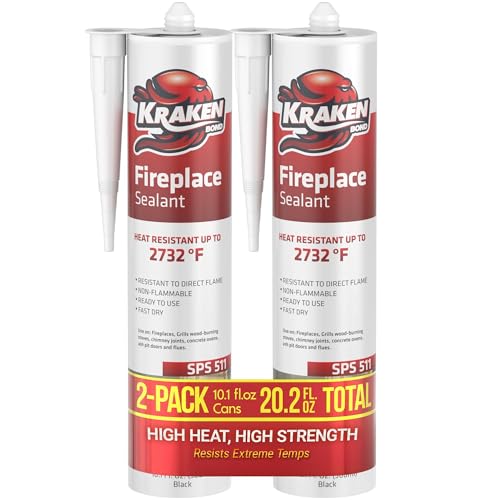
Two-pack variant for larger projects or multiple joints, with the same Class-A fire rating and heat resistance up to 2732°F. Offers the same easy application and cleanup as the single-pack version, making it efficient for contractor-scale repairs or DIY multi-joint sealing.
- Best for: bigger jobs or multiple-seal projects around stoves and chimneys.
- Why selected: economical package for higher-volume work.
Caution: Do not mix with incompatible sealants; follow surface prep guidelines for best results.
Wood Stove Door Gasket Cement, High Temperature Resistance Adhesive (3.5 Fl Oz)

This silicone-based adhesive is rated to withstand up to 500°F (260°C). It’s suitable for bonding fiberglass stove gasket ropes to doors, offering waterproofing properties and a low-odor profile. Best for mid-range heat applications and straightforward gasket installations.
- Best for: gasket rope adhesion in mid-heat areas.
- Why selected: reliable silicone adhesive with practical cure characteristics.
Caution: For extreme heat zones near the firebox, prefer higher-temperature sealants listed above.
Rutland Stove Gasket Cement Black 10.3 Oz Cartridge
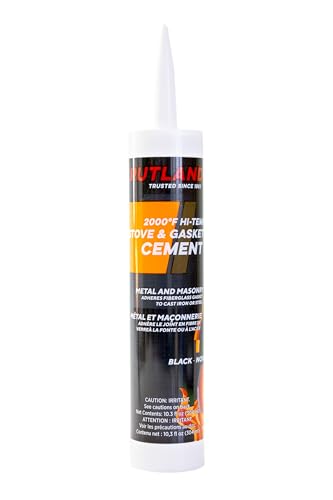
Multi-use cement designed to adhere fiberglass gaskets to metal and to repair small cracks or bond metal-to-metal. Suitable for various stove types and aging installations, not limited to wood stoves. This option provides flexibility for multiple repair scenarios beyond gasket seating.
- Best for: general stove gasket repairs and small metal repairs.
- Why selected: broad application and accessibility.
Caution: Check compatibility with gasket material, and avoid exposure to direct flame until fully cured.
Buying Guide: Key Purchase Considerations
What heat rating do you need?
Choose a sealant rated for the highest temperature your stove or chimney region may encounter. For most wood stoves, 500°F to 850°F sealants cover gasket seating and general repairs, while 2700°F+ options are ideal for direct flame zones or high-heat joints.
What surfaces will you seal?
Brick, stone, concrete, metal, and fiberglass surfaces have different adhesion needs. Look for multi-surface compatibility or explicit statements about bonding to your intended material.
Is there a fire-rated requirement?
Fire-rated (Class A or equivalent) formulations offer enhanced reliability under extreme conditions. For internal firebox areas or direct flame exposure, prefer fire-rated products.
Safety and work environment
Non-toxic, low-VOC formulas with low odor are preferable for indoor use. Ensure adequate ventilation during and after application and follow cure times strictly.
Application and cleanup
Products with easy cleanups (water-based uncured state) and simple tool work (putty knives, spoons) save time. Consider packaging size based on project scope to avoid product waste.
Installation scope
For small repairs, a single tube may suffice. For larger projects or multiple joints, consider multi-pack options to reduce downtime and ensure consistent material performance.
Durability and long-term performance
Opt for formulations with proven resistance to cracking, peeling, or loss of adhesion under repeated heating cycles. This is especially important for stoves exposed to frequent firing and significant temperature cycling.
FAQ
- Can I use these sealants on a wood stove door gasket? Yes. The products listed are designed to seal or adhere gasket materials in high-heat zones, with several options tailored for door gasket installation and repairs.
- Are these products safe for indoor use? Many are non-toxic and low-VOC, but always follow label instructions and ensure proper ventilation during application and curing.
- What is the highest temperature I should expect from these sealants? Ranges vary by product from about 500°F to 2732°F when exposed to direct flame or extreme heat; choose based on your stove’s heat exposure.
- Can I paint over these sealants after curing? Some products are paintable; check the product description to confirm paint compatibility and cure times before painting.
- Do I need a professional for gasket repairs? Small gasket repairs can be DIY with proper safety measures; for complex installations or structural repairs, professional assistance may be advisable.