
In this guide
If you’re looking to maximize warmth from a wood-burning stove, a heat-powered wood stove fan made in the USA can help spread warm air more evenly without electricity. This guide highlights five top models, focusing on who they’re best for, how they perform, and what to watch for. The featured picks favor buyers who want quiet operation, energy savings, and reliable performance in cooler rooms. The table below summarizes the five selected options to compare core traits at a glance.
| Product | Best For |
|---|---|
| JossaColar Wood Stove Fan | Sturdy, budget-friendly option for small-to-medium rooms |
| Ecofan UltrAir | High-efficiency heating with reliable thermal start |
| Miaton Wood Stove Fan | Heavy-duty aluminum with heat-to-electric power for outages |
| GALAFIRE 4-Blades | Compact design for tight spaces with safe, low-temp start |
| Ecofan AirMax | Stronger airflow for larger spaces and rapid warm-up |
JossaColar Wood Stove Fan

Best for entry-level setups where budget matters and heat is moderate. This is a heat-activated, non-electric fan that runs entirely on stove heat, spreading warmth without batteries. It includes a free magnetic thermometer for monitoring stove temperature. The upgraded aluminum curved blades enhance heat distribution and durability. It measures about 6.5 inches long by 7.7 inches high, making it a practical fit for most standard wood stoves and fireplaces.
Who it’s for: small to mid-sized rooms, homeowners seeking a simple, reliable fan with minimal maintenance. Why selected: solid value, basic heat-powered operation, and a compact footprint. Caution: performance depends on stove heat; cooler stoves may produce slower airflow.
Ecofan UltrAir Heat Powered Stove Fan

Best for households seeking high performance with quick warm-up. This classic Ecofan model powers itself from stove heat—no batteries required—and starts efficiently at typical wood stove temperatures to circulate warm air quickly. It’s designed to improve comfort by distributing heat more evenly across the room, which can help reduce fuel use over time. Caution: its airflow depends on adequate stove heat; extremely low-temperature stoves may delay activation.
Miaton Wood Stove Fan

Best for power outages and longer burn times. Miaton’s heat-powered fan uses the heat-to-electricity concept to operate without external power, helping maintain warmth even when the power is out. Built with anodized aluminum, it resists high temperatures and corrosion. It also includes a practical metal handle for portability. Caution: performance relies on sustained heat; very cool stoves may not start airflow immediately.
GALAFIRE 4-Blades Thermometer Fan
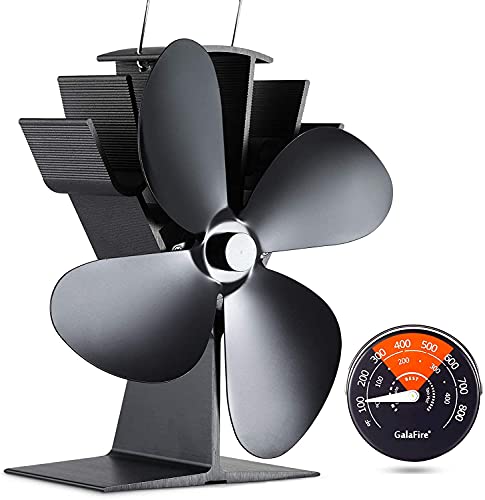
Best for tight spaces needing compact yet robust operation. This 4-blade model starts at around 50°C and uses a magnetic thermometer to help prevent overheating. Its compact design makes it suitable for various stove types, including gas, pellet, and wood stoves. Caution: maximum recommended temperature varies—avoid use if your stove do not reach the typical activation range.
Ecofan AirMax Heat Powered Stove Fan

Best for larger rooms needing stronger circulation. The AirMax model emphasizes higher CFM and efficient distribution of warm air. Like other Ecofans, it runs on heat from the stove, with no cords or batteries. It enhances comfort by spreading heat more evenly and can help reduce fuel consumption by warming spaces faster. Caution: bigger fans may be less suitable for very small stoves or narrow flues.
Buying Guide
What should you consider when choosing a wood stove fan made in the USA?
- Power source: All listed options are heat-powered; no external electricity is required. If reliability during outages matters, a model with higher airflow and robust build is preferable.
- Size and fit: Measure your stove top and available clearance. Compact designs fit tight spaces, while larger fans move more air but may require more room.
- Materials and durability: Look for anodized aluminum blades for heat resistance and longevity. A magnetic mounting system can simplify installation.
- Temperature range: Some models start at lower temperatures, others require higher heat. Consider your stove’s typical operating temperature to ensure quick activation.
- Additional features: A thermometer helps monitor stove temp; fragrance dispensers offer ambiance but are optional. Consider whether these extras add value for your setup.
- Noise and comfort: Most heat-powered fans operate quietly, but decibel levels can vary. If you need near-silent operation, prefer models marketed as quiet.
FAQ
- Do heat-powered stove fans require batteries? No. They run on the heat from the stove itself.
- Will a stove fan work on any stove? Most are compatible with wood, pellet, or gas stoves, but check mounting method and activation temperature for your specific model.
- Can these fans reduce heating costs? By circulating warm air more evenly, they can improve perceived warmth and potentially reduce fuel use.
- Is a thermometer included with every model? Some include a thermometer or offer one as an accessory; verify in the product details.
- Are these fans noisy? Most are designed to be quiet; if noise is a concern, look for models labeled as quiet operation.
- Do they work during power outages? Yes, heat-powered fans continue to operate as long as the stove provides heat.