
If you’re looking to boost warmth from a wood stove or outdoor wood furnace, a dedicated wood heater blower fan can dramatically improve heat distribution. This guide highlights five reliable options and explains who they’re best for, along with practical buying tips. Ideal buyers include: homeowners upgrading a wood stove for better room heating, DIY enthusiasts needing better air circulation, and those seeking non-electric heat-powered options.
| Product | Best For | Key Benefit |
|---|---|---|
| QAVODB Centrifugal Blower | High airflow needs | Powerful 196 CFM with a copper motor |
| VODA Wood Stove Fan | Non-electric warmth | 8-blade design for broader air spread |
| JossaColar Wood Stove Fan | Budget-friendly heat powered | Upgraded aluminum blade for durability |
| Adviace Replacement Blower | Universal compatibility | Complete kit with mounting hardware |
| WDERAIR 97mm Blower | Compact, versatile use | 12V operation with AC plug option |
QAVODB Centrifugal Blower Fan For Outdoor Wood Furnace

This centrifugal blower is designed for demanding ventilation and heat dissipation tasks. It features a 120W pure copper motor that spins up to 2600 RPM and delivers about 196 CFM, ideal for pushing air through ducts or cooling electronics in a workshop. The all-metal shell and protection grille emphasize durability in tough environments.
Best for: users needing strong airflow through damp wood-furnace ducting or large workshop spaces. It’s a robust option when high static pressure is required (around 350 Pa). Choose this if you value power and long-term metal construction over quiet operation.
Caution: its high airflow comes with more noise potential than smaller, lighter models. Ensure mounting clearance and duct routing accommodate the 2600 RPM performance.
VODA Wood Stove Fan Heat Powered 8-Blade Model
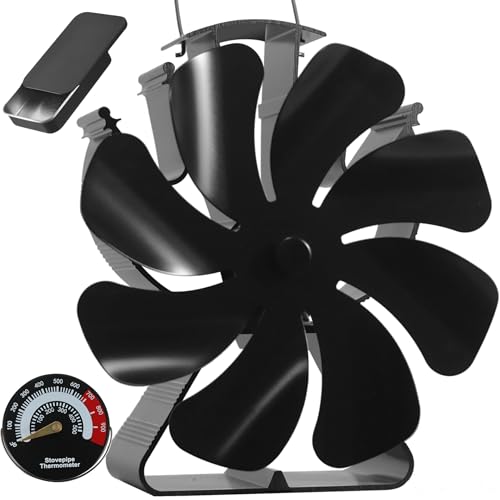
This non-electric, heat-powered fan uses eight blades to move warm air more broadly around the room. It’s designed to respond to stove heat and spreads warmth horizontally, making it a practical choice for medium rooms. The included thermometer helps monitor temperature, and the aroma pod adds a pleasant scent to your space.
Best for: small to medium rooms where you prefer a simple, maintenance-free, non-battery solution. It’s excellent for enhancing comfort without adding electricity use.
Caution: not suitable for built-in fireplaces or stoves where direct heat distribution is restricted. The fragrance feature requires extra maintenance and personal preference.
JossaColar Wood Stove Fan Heat Powered

This heat-powered fan operates without batteries, relying on heat from the stove surface. The upgraded aluminum blade helps spread heat more evenly around the room. The product includes a magnetic thermometer and a one-year replacement warranty, reinforcing its value for budget-conscious buyers.
Best for: homeowners seeking a simple, silent, eco-friendly heat boost with minimal maintenance. It’s a practical entry point into heat-powered fans.
Caution: performance depends on adequate stove surface temperature; very cool stoves may not trigger strong airflow.
Adviace Replacement Wood Stove Blower Kit

This complete blower kit includes a blower, power cord, mounting screws, a heat gasket, and a rheostat for speed control. It’s designed for broad compatibility with many MHSC, MH, and GHP model stoves and vents, with precise mounting dimensions provided for fit guidance. The included manual speed switch enables adjustable airflow.
Best for: DIY installers replacing failed blowers on multiple stove brands, or those who want a ready-to-install kit with mounting hardware.
Caution: check exact compatibility with your stove model, as fittings vary among brands and series.
WDERAIR 97mm x 33mm Variable Speed Blower

This compact 12V blower offers a versatile solution for wood stoves, BBQs, campfires, or DIY ventilation. It features a 4.3W motor with an adjustable speed control, delivering up to 26.5 CFM and 3500 RPM. The unit supports 100V-240V input, providing flexible usage across different setups.
Best for: users needing a small, adjustable blower that can be used both indoors and outdoors, including as a barbecue or small stove vent. It suits portable or temporary heating scenarios.
Caution: not designed for high-heat, long-term continuous operation on very large stoves; verify heat tolerance and mounting method before extended use.
Buying Guide: Wood Heater Blower Fans
What matters most when choosing a wood heater blower fan? Consider airflow (CFM), static pressure (Pa), power source (electric vs. heat-powered), durability, and compatibility with your stove or furnace model.
- Airflow needs: Larger rooms or dense ducting may require higher CFM and static pressure. For high resistance ducts, prioritize units rated around 150–350 Pa.
- Power source: If you want independence from electricity, heat-powered models like the VODA or JossaColar can be attractive, but require adequate stove surface heat.
- Durability: All-metal housings and protective grilles improve longevity in harsh environments. Copper motors offer speed, while aluminum blades reduce weight and corrosion risk.
- Fit and compatibility: Adviace and similar universal kits are helpful when matching multiple stove brands. Double-check mounting dimensions and connector cords before purchase.
- Noise and maintenance: Higher-speed fans can be noisier. Consider placement and acoustic tolerance in living spaces. Maintenance-free options may suit busy households.
Frequently Asked Questions
- What is a wood stove blower fan best used for?
It accelerates warm air circulation from a wood stove, improving room warmth and reducing heat pockets.
- Do heat-powered fans require electricity?
No. They rely on heat from the stove surface to operate, making them energy-efficient choices.
- Can a blower cause a stove to overheat?
Blowers are designed to handle typical stove temperatures, but ensure proper clearance and avoid direct contact with hot surfaces beyond recommended limits.
- How do I know which blower fits my stove?
Check the model compatibility lists, mounting dimensions, and the included hardware. When in doubt, choose a universal kit or consult the manufacturer guidelines.
- Are aluminum blades safer than steel?
Aluminum blades are lighter and often resist corrosion better, but durability depends on build quality and operating conditions.