
Looking for wood-fired outdoor heaters that deliver real heat with a rustic ambiance? This guide profiles five strong options suited for patios, backyards, campsites, and larger gatherings. Each choice targets a different setting—from portable pellet pits to traditional wood-burning stoves—so you can pick the one that fits your space and vibe. Read on to see who each heater is best for, plus practical trade-offs to consider.
| Product | Best For | Key Strength |
|---|---|---|
| COWVIE 56 Inch Patio Wood Pellet Heater | Small to medium outdoor seating areas; portability matters | Low-smoke pellet burn with sturdy base |
| Wood Burning Patio Heater with Glass Window | Showpiece flames and wide viewing for patios | 360° flame view with easy front-loading |
| Wood Burning Sauna Heater & Chimney Kit | Off-grid saunas and remote setups | Authentic wood-fired heat with heat-retaining build |
| Smokeless Firepit 35inch | Compact, transportable heat for groups | Low-smoke design with easy mobility |
| Wood Pellet Patio Heater – Smokeless Flame | Modern look with easy mobility | Smokeless operation and wheel mobility |
Product Comparisons At a Glance
Use the table above to compare heat source types, portability, and smoke level. Pellet-based models are typically easier to control and produce less smoke, while wood-burning units offer authentic flames and higher heat output. Saunas require a dedicated setup but deliver a unique, immersive experience. Consider space, fuel availability, and maintenance when choosing.
COWVIE 56 Inch Patio Wood Pellet Heater
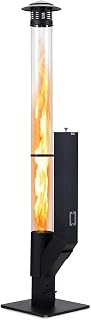
The COWVIE unit uses hardwood pellets (6mm) to create a low-smoke, clean-burning flame. It features a reinforced square steel base for stable placement on lawns, decks, or soil. Each full pellet load burns for about 90-120 minutes, providing localized warmth with a visible flame effect. Best for smaller patios or balcony setups where portability and reduced emissions are priorities. Limitation: pellet availability and ongoing refueling are required for longer gatherings.
Wood Burning Patio Heater with Glass Viewing Window

This model delivers a real wood heat output with a 360° view of authentic flames through four-sided quartz glass. A front-load door simplifies wood loading and cleaning, while an integrated ash drawer makes disposal quick. Best for showpiece fire pits where aesthetics and easy maintenance matter. Limitation: glass can cloud with soot over time and may require regular cleaning to preserve clarity.
Wood Burning Sauna Heater & Chimney Kit

Designed for dry or wet sauna use, this 15kW-equivalent wood-fired heater supports off-grid warmth. It uses a durable 304 stainless steel and iron build with a safety-focused chimney featuring an anti-scald cover. Best for remote cabins, backyard saunas, or any setting seeking an electric-free sauna experience. Limitation: sauna stones and proper ventilation are essential for safe operation; check local codes before installation.
Smokeless Firepit 35inch

The 35-inch smokeless fire pit uses a double-wall design with an internal airflow system and top vent holes to promote efficient combustion and reduce smoke. It includes side handles for portability and is designed for easy transport to camping, beach outings, or backyard gatherings. Best for mobility and smoke-sensitive settings. Limitation: extended use may still produce some residual smoke in wind-prone areas; avoid overly windy conditions for best results.
Wood Pellet Patio Heater – Smokeless Flame

This pellet-based heater emphasizes a smokeless flame with wheel-based mobility for easy relocation around patios or campsites. It also notes quick and easy assembly, typically requiring minimal tools. Best for buyers seeking a modern aesthetic with straightforward setup. Limitation: pellet fuel must be consistently available, and long high-heat sessions require refueling pauses.
Buying Guide
What fuel type should you choose?
Pellet models provide more predictable, cleaner burning and are easier to regulate heat with less visible smoke. Wood-burning units deliver authentic flames and higher heat output but require more maintenance and cleaning. Determine your tolerance for smoke and your access to fuel when deciding.
How portable does it need to be?
Consider weight, base stability, and whether wheels or handles are essential. For patios or decks, a stationary unit may be preferred. For campsites and beaches, a lighter, mobile model is advantageous.
What maintenance is required?
Wood-burning models need regular ash disposal and chimney cleaning. Pellet models need pellet refills and occasional cleaning of burn pots. Glass panes on viewing models require occasional wiping to maintain visibility.
What safety features matter?
Look for stable bases, heat shields, and proper venting. For saunas, ensure the unit is rated for high heat and includes safe clearance guidelines. Always follow local fire codes and manufacturer instructions.
Size and heat coverage
Choose based on the seating area size. Smaller pits heat nearby seating better, while larger units cover bigger spaces. If heating efficiency is a priority, prefer models with higher BTU output or robust wall/thick metal construction.
Maintenance-friendly design
Front-load doors, ash drawers, and accessible cleaning pathways simplify upkeep. Models with easy ash disposal reduce handling mess and time spent maintaining the heater.
FAQ
- What is the main difference between pellet and wood-burning heaters? Pellet heaters offer cleaner burning and more controllable heat; wood-burning units provide authentic flames and higher heat output but require more maintenance.
- Are smokeless designs truly smoke-free? They reduce smoke through design and airflow, but some smoke may still occur in windy or poor combustion conditions.
- Can these heaters be used on wood decks? Yes, if they have a heat-resistant base and proper clearance from combustibles. Always follow the manufacturer’s installation guidelines.
- Do these units require venting for outdoor use? Outdoor heaters generally do not require building venting; check local codes and product instructions for installation specifics.
- How long does fuel typically last? Pellet loads vary by model; most offer a few hours per load depending on burn rate and heat setting.
- Is assembly difficult? Most models are designed for quick setup, with some requiring minimal tools and 5–10 minutes for assembly.