
In this guide
If you want to maximize warmth from a wood stove or fireplace, a blower fan can circulate heat more evenly and reduce warm-up time. This guide highlights five well-suited options for different needs, from heat-powered models that require no electricity to robust electric blowers designed for larger stoves or outdoor setups. The following picks are best for homeowners seeking reliable heat distribution, easy installation, and practical compatibility with common stove lines. Each product section notes who benefits most and a key limitation to consider.
| Product | Best For | Notes |
|---|---|---|
| JossaColar Wood Stove Fan | Small to mid-sized wood stoves | Heat-powered; no batteries |
| KUNRISE Blower Fan | Outdoor cooking, BBQs, and smaller fireplaces | AC-powered, multi-speed |
| Replacement Wood Stove Blower (Adviace) | Universal fit for many stoves | Complete kit; universal mounting |
| CB36 Circulator Blower | Popular US stoves and brands | Wide compatibility |
| Squirrel Cage Blower | High airflow needs and workshop cooling | Copper motor, high CFM |
JossaColar Wood Stove Fan Heat Powered Fireplace Fan

Best for: Homeowners with wood-burning stoves who want a battery-free, heat-activated option. This model uses heat to power the fan, distributing warm air without electrical reliance. The included magnetic thermometer helps monitor stove temperature to optimize performance. A 6.5-inch fan length and 7.7-inch height make it suitable for standard fireplace setups.
Why selected: It provides silent operation, steady heat circulation, and an upgrade from basic clips or static vents. The upgraded aluminum blade design is intended to spread heat more evenly across the room and reduce hot spots.
Limitations: Performance depends on stove surface temperature; too low a surface temperature may stall airflow. Not ideal for very large rooms without additional fans.
KUNRISE 97mm × 33mm Blower Fan
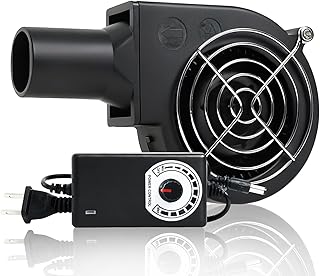
Best for: Cast-iron stoves, campers, or outdoor cooking setups needing higher airflow. This centrifugal blower offers a 3V–12V multi-speed controller powered from AC, making it versatile for varying heating tasks. It can complement fire pits, grills, or wood stoves where higher throughput is beneficial.
Why selected: The centrifugal design provides strong airflow and the adjustable speed helps tailor warmth. A finger guard and duct-connecting features aid safe, directed ventilation.
Limitations: Requires an AC outlet; not ideal for purely battery-powered or off-grid scenarios. Some users may need additional ducting for optimal placement.
Replacement Wood Stove Blower (Adviace)

Best for: Users seeking a universal-fit blower kit that works with many popular stove brands. This complete kit includes a blower, power cord, mounting screws, a heat gasket, and a rheostat for variable speed control.
Why selected: The universal fit broadens compatibility across MHSC Windsor Series and various GHP Group vented stoves, helping replace older blowers without major modifications.
Limitations: The listing indicates compatibility with a wide range of models, but cross-checking specific stove models is advised to ensure a perfect fit. Some installations may require basic electrical wiring for the rheostat.
CB36 Circulator Blower for US Stove and Others

Best for: Homeowners with US Stove Country Hearth, Ashley, Vogelzang, or King stoves seeking a reliable replacement blower. This model emphasizes broad compatibility with popular stove brands.
Why selected: Its compatibility with multiple stove lines reduces the need for separate parts when upgrading or restoring an older stove’s blower.
Limitations: Model compatibility varies; verify the exact stove model to ensure a proper fit and mounting alignment before purchase.
Squirrel Cage Blower Fan, Wood Boiler Blower

Best for: Environments requiring high airflow, such as wood boilers or workshop ventilation. The high-velocity design helps push air through ducts or around large heat emitters.
Why selected: A robust copper motor delivers strong performance, with a high airflow rating (196 CFM) and 2600 RPM. All-metal construction and a protective grille enhance durability in demanding settings.
Limitations: It is a high-capacity unit, which may be louder and more powerful than needed for small rooms. Ensure it suits the space and electrical capacity of the installation site.
Buying Guide: Key Considerations for Wood Burner Blower Fans
- Heat-activated vs electric: Choose heat-powered models for off-grid use and quiet operation, or electric blowers for constant airflow and adjustable speed.
- Compatibility: Verify stove brand and model compatibility, mounting dimensions, and electrical requirements before buying.
- Airflow and noise: Consider CFM, RPM, and perceived noise level. Higher airflow is beneficial for large spaces, but may increase sound in compact rooms.
- Power and control: For electric blowers, check voltage (AC 110–120V typical in the US) and whether a rheostat or multi-speed controller is included or compatible.
- Safety features: Look for guards, heat-safe housings, and proper clearances to avoid burns or fire risks.
- Installation ease: Some units include mounting hardware, gaskets, and wiring harnesses; others may require professional installation.
- Maintenance: Aluminum blades resist corrosion and wear; copper motors indicate durability but may require occasional cleaning.
FAQ
- Do wooden stoves require a blower? No, but a blower can improve heat distribution and reduce fuel use by spreading warmth more evenly.
- Are heat-powered stoves safe to use? Yes, when used as directed, with appropriate clearances and guards by the manufacturer.
- Can I install a blower on any wood stove? Most stoves support a compatible blower kit, but always verify model compatibility and mounting requirements.
- What is CFM and why does it matter? CFM (cubic feet per minute) measures airflow; higher CFM indicates more air moved and faster heat distribution.
- Should I choose a universal vs model-specific blower? Universal kits offer broad fit options, but model-specific blowers may guarantee an easier install and optimal airflow.
- Is an electric blower better than a heat-powered one? It depends on your space and preference. Electric blowers offer adjustable speed, while heat-powered units run without electricity but depend on stove heat.