
Answer: These heaters are designed to keep water from freezing in troughs and buckets, making sure horses stay hydrated in cold weather. The best options vary by tank size, power needs, and placement, so choose based on your trough capacity and whether you prefer submersible or floating models. This guide highlights five top picks and explains who each is best for, plus practical buying considerations.
The following table summarizes the five selected products, including best use case and typical application. Use this as a quick reference when comparing features, installation needs, and energy considerations.
| Product | Best For | Typical Tank Type |
|---|---|---|
| Farm Innovators W-409 Submergible Bucket Heater | Small farms with 5‑gallon buckets | Buckets or small containers |
| Farm Innovators 1500 Watt Cast Aluminum Submergible Heater Deicer | Medium to large livestock water tanks | Stock tanks or troughs |
| K&H Stock Tank Deicer, 750W | Medium troughs and versatile use | Plastic, rubber, or metal stock tanks |
| JXJHOVV 250W Submersible De‑Ice | Smaller tanks or bird/bathing setups | Buckets, troughs (5–25 gallons) |
| Farm Innovators H-418C Floating & Submergible De‑Icer | Flexible placement in larger troughs | Stock tanks of various shapes/sizes |
Farm Innovators W-409 Submergible Bucket Heater, 1000W

The W-409 is a 1000-watt submersible heater designed for up to 5 gallons of water. It is thermostatically controlled, operating only when water approaches freezing. Best for small buckets on colder days, this unit reduces energy use with a simple, low-profile design that sits at the bottom of the container. It’s suited for owners who want easy placement and reliable ice protection in limited volumes. A potential limitation is its smaller capacity, which may require more frequent cycling in very cold conditions.
Farm Innovators 1500 Watt Cast Aluminum Submergible Heater Deicer

This 1500-watt deicer is built from rust-resistant cast aluminum and features a self-regulating thermostat to automatically activate as water nears freezing. It’s best for medium to large livestock troughs where consistent open-water access is essential with energy-conscious operation. The included protective cage and anti-chew cord protector add durability around animals. A limitation is that higher wattage may mean more electricity use if the heater runs frequently in milder winter days.
K&H Stock Tank Deicer, Pond Heater, 500W
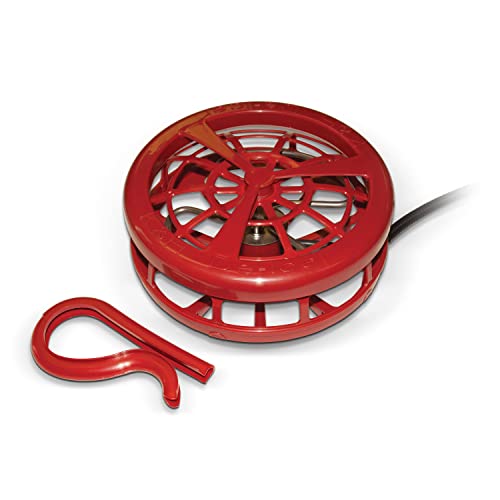
The 500W K&H deicer offers automatic thermostat control and can be used as a floating or submersible heater. It fits a wide range of tanks and includes a protective cage and cord clip for secure placement. This option is best for owners who want flexible installation in plastic, rubber, or metal stock tanks. A potential drawback is its lower wattage, which may require longer run times in deeply freezing conditions.
K&H Stock Tank Deicer, Pond Heater, 750W
The 750W variant provides a balance between energy use and heating capacity. Like its 500W sibling, it can operate as floating or submersible and includes a protective cage for safe placement. It’s well suited for mid-sized tanks and households seeking reliable open-water access without excessive electricity consumption. A limitation is that performance depends on tank size and ambient temperature, so very large troughs might benefit from higher wattage models.
JXJHOVV 250W Submersible De‑Ice

The 250W unit is designed for smaller tanks (5–25 gallons) or bird/bath setups, offering automatic thermostat cycling to save energy. It’s best for smaller farms or when you need a secondary heater in a limited space. A note: its lower wattage may be insufficient for larger troughs or very cold climates unless used in conjunction with another heater.
ABitmax 1000W Utility De-Icer
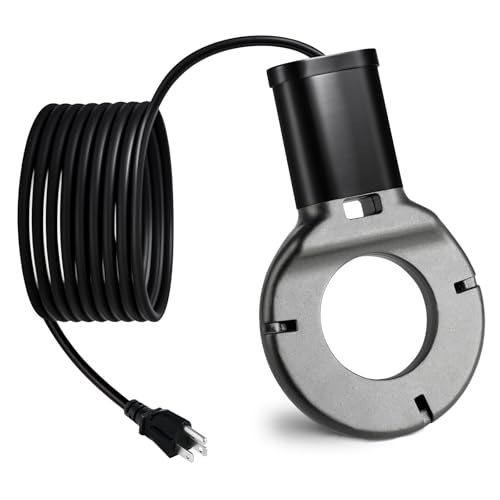
The 1000W ABitmax de-icer uses cast aluminum with an anti-rust coating and a thermostat that turns on below 35°F (2°C) and off around 77°F (25°C). It’s versatile for home or farm use and suitable for mid-sized tanks. A limitation is that it may require proper submersion or floating placement to maximize contact with water in irregularly shaped troughs.
Farm Innovators H-418C Floating & Submergible De‑Icer

The H-418C offers a versatile approach by functioning as both a floating de-icer and a submersible heater when the float is removed. It features a patented cast aluminum construction for efficient heating and safe operation. Best for owners who want flexibility in placement across different tank shapes and sizes. A consideration is that floating operation may require monitoring to ensure the open drinking area remains accessible in large troughs.
Buying Guide: Key Purchase Considerations
What tank size do you need to heat? Choose wattage to match trough capacity and climate. Smaller tanks (5–25 gallons) can use 250–1000W units, while larger troughs may require 750–1500W models or dual-heater setups. Consider submersible versus floating designs based on tank material and installation ease.
Is automatic thermostat control important? Thermostatic models conserve energy by turning on only when water approaches freezing. For hands-off operation in fluctuating temperatures, prefer thermostatic units with a defined on/off range.
Do animals pose a risk to the heater? Look for protective cages, anti-chew cords, and durable materials like rust-resistant cast aluminum. For barns with multiple animals, a tethered or cage-protected model reduces the chance of damage or electrical hazards.
What installation flexibility is required? Floating deicers suit open tanks, while submersible heaters work well in tight spaces or deeper troughs. Some models also offer dual-use options, enabling both floating and submerged use as needed.
What about energy efficiency and operating cost? Models with automatic shutoff within a reasonable temperature band can reduce electricity use. In very cold regions, higher-wattage units can maintain open water with less run time overall.
Frequently Asked Questions
- What size heater do I need for a 50-gallon trough? Look for 750–1500W depending on climate and whether the tank is insulated. Larger tanks may benefit from higher wattage or multiple heaters.
- Can I use a heater in a plastic stock tank? Yes, many de-icers are designed for plastic, rubber, or metal tanks, but check the product’s compatibility notes.
- Are these heaters safe for horses? When used as directed with a proper protective cage or housing and proper cord management, these heaters provide open-water access without introducing hazards.
- Do I need a thermostat? A thermostat helps conserve energy by turning the heater on only when necessary, important in fluctuating winter temperatures.
- Should I choose a floating or submersible model? Floating models are easy to deploy in larger troughs, while submersibles work well in deeper or irregular containers. Some models offer both options.
- Can these heaters prevent all ice formation? They significantly reduce freezing but may not prevent surface icing in extreme cold or if water levels drop. Maintain adequate water volume for best results.