
This guide helps buyers choose effective water-to-water and water-to-air heat exchangers for home heating, snow melting, and related applications. Each top pick is chosen for reliability, material quality, and suitability to common residential or light commercial setups. The best options cater to different needs: compact installations, high flow, or outdoor use with wood-fired or solar systems. Read on to compare five strong contenders and find the right fit for your project.
| Product | Type | Best For | Key Benefit |
|---|---|---|---|
| AB Plate Heat Exchanger, 4″x12″ (30 Plates) | Water to Water | Medium to large residential heating | High BTU capacity, robust 316L steel with copper brazing |
| Water to Air Heat Exchanger 15×20 | Water to Air | Residential heating and cooling with air handling | High heat transfer from fins and copper tubes |
| Water to Air Heat Exchanger 18×18 | Water to Air | Outdoor wood furnace integration | Versatile copper ports and strong performance |
| AB 300 kBTU Heat Exchanger | Water to Water | Outdoor wood boiler, pools, solar, spa | 316L stainless steel, large capacity |
| ALECOIL 4″x12″ 30 Plates | Water to Water | High-temperature/high-pressure needs | Asymmetric fishbone plate design for efficiency |
AB Plate Heat Exchanger, 4×12, 30 Plates

This water-to-water exchanger uses high-quality 316L stainless steel with copper brazing at the edges, delivering a rugged, leak-resistant unit suitable for floor heating and water heating. It has a capacity of 250,000 to 330,000 BTU per hour, making it a strong choice for mid- to large-volume applications. The smooth-threaded connections simplify installation and reduce leaks. Best for homes with robust heating loads, or small commercial spaces needing reliable heat transfer without electricity use.
Best for: Homes with steady, mid-to-high heating demands; those prioritizing durability and a compact 4″x12″ footprint. Choose this if you need multiple brazed plates to achieve high transfer efficiency in a compact package. Caution: Larger BTU range means system design should ensure proper pump sizing to avoid excessive pressure drops.
Water to Air Heat Exchanger 15×20

Designed for integration with outdoor wood furnaces and residential heating/cooling, this unit features 110,000 BTU typical capacity, with the potential to reach up to 360,000 BTU per hour. It uses 12 aluminum fins and copper tubes with epoxy-coated fins for wear resistance. Best for: homeowners seeking energy efficiency by pairing with renewable sources and using a robust water-to-air transfer for climate control. Limitation: installation may require careful plenum integration and airflow considerations.
Water to Air Heat Exchanger 18×18
This 18×18 water-to-air exchanger emphasizes strong heat transfer with 12 fins per inch and 3 rows of 3/8″ copper tubes. It can handle up to 360kBtu per hour in suitable setups. Best for: air-side heating or cooling in outdoor wood furnace installations where a compact, efficient coil coil fits into the plenum. Caution: ensure airflow and duct design avoid excessive pressure drop across the coil.
AB 300 kBTU Heat Exchanger
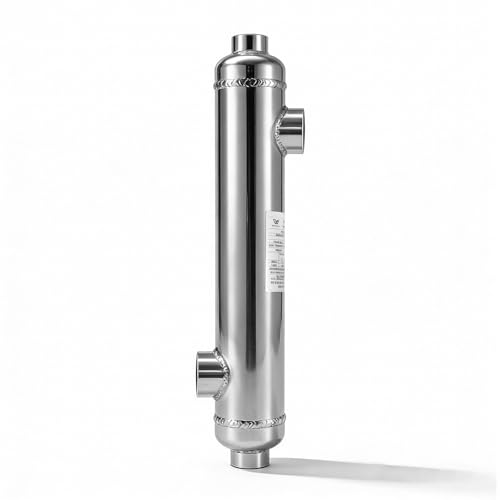
This 316L stainless steel unit is built for outdoor wood boiler, pool, solar, spa, or chlorinated water applications. It handles up to 23,800 gallons in pool heating scenarios, rated at 300 kBtu/hr, with a two-port arrangement that supports heavy-duty installations. Best for: outdoor or high-temperature transfer tasks requiring corrosion resistance and substantial flow. Limitation: the unit’s size and porting may require professional installation for optimal performance.
ALECOIL 4″x12″ 30 Plates

ALECOIL’s 4×12 inch plate exchanger uses 316L stainless steel with copper brazing at the edges, featuring 30 plates and a 4″x12″ footprint for efficient heating transfer with 363,000 BTU/h capacity. The asymmetric fish bone plate design promotes strong turbulence and reduces secondary-side pressure drop, which can lower energy use for pumping. Best for: high-demand heating systems needing strong heat transfer with lower pump requirements. Limitation: design may require precise flow balancing to maximize benefits of the fish bone geometry.
Buying Guide
What should you consider when choosing a heat exchanger?
- Material and corrosion resistance: 316L stainless steel with copper brazing is common for longevity in hot water and chlorinated environments.
- BTU capacity and plate count: match to your heating load and flow requirements. More plates generally means higher transfer, but watch for pressure drops.
- Port sizing and connections: ensure MPT or FPT ports align with your piping and pump setup. Consider accessibility for maintenance.
- Water-to-water vs. water-to-air: use water-to-water for hydronic heating without air handling; water-to-air suits forced-air HVAC or outdoor wood systems.
- Installation environment: outdoor units need robust weather protection and compatible mounting; indoor units care about space and duct or plenum integration.
How to compare options quickly?
- Check maximum operating temperature and pressure ratings to ensure compatibility with your system.
- Look for designs that minimize pressure drop, such as fish bone plates, to reduce pump energy use.
- Assess ease of installation features, like smooth-thread connections and standard 1″ MPT ports.
Frequently Asked Questions
- What is a plate heat exchanger best used for? It transfers heat between two fluids with high efficiency in compact form, suitable for floor heating and snow melting.
- What material should I favor? 316L stainless steel with copper brazing is a common pick for durability and corrosion resistance.
- Water-to-water vs. water-to-air which is better for homes? Water-to-water is ideal for hydronic radiant floor heating; water-to-air works well when integrating with forced-air systems.
- Can these units handle outdoor installations? Yes, many models are designed for outdoor use, but verify weather resistance and porting for your climate.
- Do higher plate counts always mean better performance? Not always; higher plate counts raise capacity but can increase pressure drop. Design must balance flow and pumping energy.
- Are there maintenance needs I should plan for? Periodic inspection for leaks, gasket integrity, and flow balance helps maintain efficiency.