
Answering your search for an underfloor heating overlay system, these top picks emphasize membranes, uncoupling layers, and ready-to-install kits that pair with tile and laminate floors. This guide helps buyers find options that install over existing subfloors, provide crack isolation, waterproofing, and reliable thermostatic control. Ideal buyers range from DIY renovators upgrading bathrooms to contractors needing faster installs for kitchens or basements. The quick reference below highlights five strong choices and how they fit common living spaces.
| Product | Best For | Key Benefit |
|---|---|---|
| LuxHeat 40sqft Electric Radiant Floor System | Tile bathrooms and kitchens | Integrated uncoupling membrane for crack prevention and waterproofing |
| Prodeso Underfloor Heat Membrane PDESH | Problematic substrates | Uncoupling and vapor management to stabilize tiles |
| Warming Systems 35 Sqft Electric System | Small to mid-size baths | Complete kit with membrane, thermostat, and alarm |
| VEVOR 200 sqft Kit | Large areas | Flexible cables with smart thermostat and alarm |
| LuxHeat 25 sqft Radiant System | Smaller spaces | Easy cut-and-install mat with built-in GFCI thermostat |
LuxHeat 40sqft Electric Radiant Floor Heating System

Best for: bathroom and kitchen tiles where rapid, room-by-room control matters. This kit includes a 40sqft 120V heating cable, the Prova Flex-Heat uncoupling membrane, a touchscreen thermostat with GFCI, a floor sensor, alarm, and installation accessories. The 3-in-1 membrane design aids crack isolation, waterproofing, and load distribution, making it a strong overlay option for tile installations. Caution: heating wires must be embedded in a self-leveling underlayment or thinset and should not be cut or shortened.
- Pros: Built-in GFCI, 7-day scheduling, dual air/floor sensing, self-learning features, and a 3-year warranty.
- Cons: Requires careful substrate preparation and appropriate top-level flooring compatibility (tiles preferred).
FloorHeat Essential Hydronic Panel (1 Zone)

Best for: retrofit projects where a ready-to-install distribution system speeds up installation. This pre-assembled hydronic panel includes pumps, valves, gauges, and control components needed for radiant floor heating, reducing on-site sourcing time. It is suited for larger areas where hydronic systems are preferred over electric kits. Caution: Hydronic systems require a boiler or heat source and additional plumbing connections beyond a simple electric mat.
- Pros: Time-saving pre-assembly, integrated components, suitable for ongoing floor warming projects.
- Cons: Requires plumbing connections and a compatible heat source; more complex than basic electric mats.
Prodeso Underfloor Heat Membrane (PDESH)

Best for: challenging substrates, including wood or cracked concrete, where you need reliable uncoupling and vapor management. The Prodeso membrane provides a dedicated heat channel and rounded reliefs to hold cables, preventing tile cracks. It also balances vapor content to protect flooring. Caution: The membrane must be installed with compatible heat cables and appropriate top-layer material.
- Pros: Excellent crack isolation, effective vapor management, versatile for various subfloors.
- Cons: Requires precise layout and compatible heating cables for best results.
Warming Systems 35 Sqft Electric System
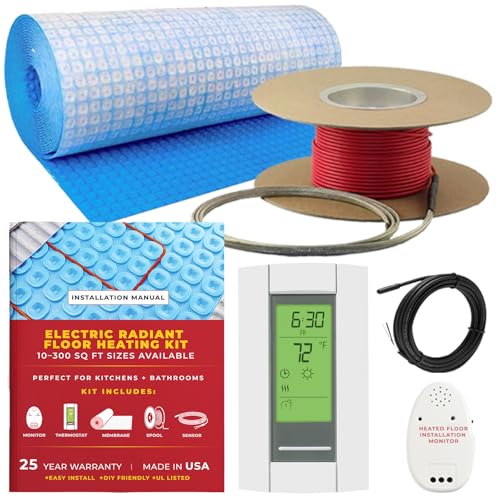
Best for: mid-sized baths or kitchens where a complete kit including an installation monitor is helpful. The 35 sq ft system includes heating cable, an uncoupling membrane, a digital thermostat, and an alarm monitor to detect wire damage during installation. Caution: The system is designed for 120V operation and should be matched to appropriate subfloor readiness and self-leveling requirements.
- Pros: All-in-one kit simplifies installation; alarm monitor adds safety during setup.
- Cons: Slightly smaller heating area than some other kits; verify compatibility with floor type.
VEVOR 200 Sqft Underfloor Heating Cable Kit
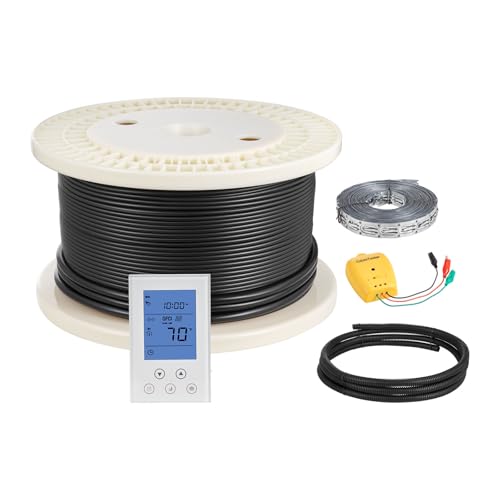
Best for: larger spaces or projects needing substantial wiring flexibility. This 200 sq ft kit uses a smart thermostat with dual-sensor control and an alarm for damage indication, offering energy-efficient operation at 12W per square foot. Caution: Ensure the layout accommodates longer cable runs and that the thermostat wiring is correctly integrated.
- Pros: Flexible free-form cable design supports various room shapes; strong safety features.
- Cons: Installation planning is important to maximize efficiency and avoid cable overlap.
LuxHeat 25 sqft Radiant Floor Heating System

Best for: compact spaces or entry-ways where quick warmth is desired. This kit includes a 25 sq ft self-adhesive heating mat, a cable monitor/alarm, and a UDG4-4999 programmable thermostat with a floor sensor and GFCI. The mat design is easy to install in tile or laminate environments. Caution: The heating wires should be embedded in a suitable underlayment, and the mat should not be cut in ways that alter its matrix.
- Pros: Simple installation with pre-spaced mat; reliable 25-year warranty commentary in product materials.
- Cons: Limited heating area compared to larger kits.
Buying Guide: Key Considerations For Overlay Systems
What type of overlay system best fits my space?
- Crack isolation and waterproofing: Look for uncoupling membranes (Prova Flex-Heat, Prodeso) that protect tile from subfloor movement and moisture.
- Subfloor compatibility: Substrates like wood or cracked concrete benefit from vapor-management membranes and robust decoupling layers.
- Heating method: Electric systems are quicker for remodels; hydronic panels suit larger areas with existing boiler access.
How do I choose the right kit size?
- Measure the heated area in square feet and choose a kit that offers a little extra coverage for irregular spaces to avoid cold spots.
- Check the recommended floor types: tiles and stone pair well with membranes; laminate and wood may require stricter substrate preparation.
What controls and safety features are important?
- Look for thermostats with floor sensing, dual air/floor sensors, and built-in GFCI protection for wet areas.
- Consider a model with alarm monitors to detect wire damage during installation and a clear 7-day scheduling option for energy efficiency.
Installation considerations
- Follow manufacturer notes about embedding wires in self-leveler, thinset, or mortar. Do not cut heating cables unless explicitly allowed.
- Ensure the subfloor is prepared to accommodate a thin underlayment; verify tile compatibility and floor thickness requirements.
Frequently Asked Questions
- What is an underfloor heating overlay system? It is a heating solution installed over an existing subfloor, using membranes, uncoupling layers, and heating cables or mats to warm floors, typically with tile or laminate surfaces.
- Is electric or hydronic better for overlays? Electric systems are usually easier for small to mid-size remodels, while hydronic panels can handle larger areas with a dedicated heat source.
- Do these systems require professional installation? Many installations are DIY-friendly, but they demand careful planning, subfloor preparation, and adherence to electrical and moisture standards.
- Can I install over existing tiles? Yes, provided the subfloor is sound, the tiles are well-adhered, and the overlay membrane is compatible with tile installation.
- Will these systems work under laminate or wood? Some systems are designed for multiple floor types, but most overlays require a robust underlayment or leveling compound for best performance.
- How long does installation take? Time varies by project scale; smaller bathrooms can be completed faster, while larger areas with membranes and monitors require more planning.