
Answer: For reliable, energy-efficient control of radiant floors, choose systems that fit your floor type, voltage, and programming needs. Hydronic panels suit larger spaces with home-run piping, while electric mats and cables are ideal for quick installs in smaller rooms. The top picks below cover a mix of hydronic and electric options, with clear control features to meet residential needs.
| Product | System Type | Best For |
|---|---|---|
| Hydronic Radiant Heat Control Panel | Hydronic | Homes seeking centralized hot-water radiant control |
| LuxHeat 40sqft Electric System | Electric mat & thermostat | Medium-room renovations with tile or stone |
| LuxHeat 20sqft Floor Heating Mat Kit | Electric mat | Small spaces needing fast, straightforward install |
| Programmable Thermostat by BOWSEN | Electric radiant thermostat | Flexible voltage control for various regions |
| VEVOR 50 sqft Cable Kit | Electric cable system | Modular layouts with smart control |
Hydronic Radiant Heat Control Panel

Brand: Floorheat. Features include a PREASSEMBLED hydronic heat distribution panel for convenient installation and energy efficiency. The design is attractive and space-saving, intended to simplify radiant heating in a home setting. Direct phone number is needed for delivery, indicating a specialized setup process.
Best for: Homeowners planning centralized hydronic radiant heating in living areas or multiple zones. This panel is chosen for its out-of-the-box readiness and compact footprint, which helps streamline installation in retrofit projects.
Caution: Delivery requires a direct phone number, and professional installation may be needed to ensure correct piping and safety. This system is best used where a hydronic loop already exists or is planned by a professional installer.
LuxHeat 40sqft Electric Radiant Floor Heating System

Brand: LuxHeat. Kit includes: 40 sq ft heating cable, uncoupling membrane, UDG4 programmable touchscreen thermostat with GFCI, floor sensor, alarm, and installation accessories. Designed for tile applications and provides 3-in-1 benefits: heating, crack prevention, and waterproofing/load support.
Best for: Rooms where precise room-by-room control is desired and tiling is the final floor finish. This is a strong choice for bathrooms or kitchens requiring a premium, flexible underfloor heating solution.
Limitation: The heating wires must be fully embedded under a self-leveler or thinset; avoid cutting or shortening heater wire, and ensure proper cover to maintain warranty and performance.
LuxHeat 20sqft Floor Heating Mat Kit

Brand: LuxHeat. This kit provides 20 sq ft of 120V heating mat, alarm, UDG-4999 thermostat with floor sensor and built-in GFCI. It’s designed for tile, laminate, and more, with a flexible mat that can be cut and placed to cover targeted areas.
Best for: Small rooms or bathrooms where quick DIY installation is desired and flooring is tile or laminate. The system offers a balance of control and coverage for compact spaces.
Limitation: Do not cut or shorten the heater wire; ensure the mat is embedded in a compatible underlayment or mortar for long-term reliability.
Programmable Thermostat for Radiant Underfloor Heating (BOWSEN)
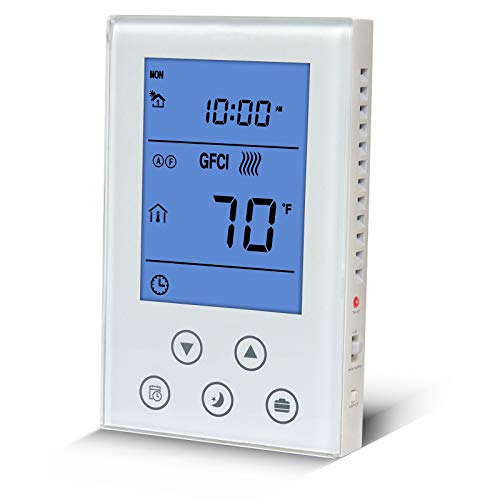
Brand: BOWSEN. Dual voltage (120/240V) thermostat with dual-sensing (air & floor) and built-in Class A GFCI. Features include an adaptive self-learning function, a 7-day program, and a warning system if GFCI trips. Heavily focused on safety and energy efficiency.
Best for: Homeowners needing flexible voltage compatibility and robust safety features, especially in regions with strict electrical codes. This thermostat can be a versatile control core for various electric floor systems.
Caution: The GFCI requires proper testing after installation to ensure safety; incorrect wiring or leakage may trigger alarms.
VEVOR 50 Sqft Underfloor Heating Cable Kit

Brand: VEVOR. Features a smart 15A thermostat with GFCI protection and dual-sensor monitoring (air & floor). Flexible free-form heating cables support tile, stone, laminate, and wood floors. The design emphasizes secure shielding and energy efficiency.
Best for: Larger areas or spaces with varied layouts where flexible cable routing is advantageous. The kit suits renovations that demand careful zone planning and smart control.
Limitation: Ensure the floor substrate is prepared to accommodate the cable layout and that the thermostat wiring complies with local electrical codes.
Nuheat Home AC0056 Programmable Thermostat

Brand: Nuheat. High-resolution 3.5″ color touchscreen with 7-day scheduling. Designed for 120V or 240V radiant floor cables with Class A GFCI protection. Includes an extra floor temperature sensor and built-in energy monitoring features to manage usage.
Best for: Users seeking a polished, easy-to-program thermostat with energy-tracking capabilities and broad compatibility with different floor types.
Limitation: Requires compatible Nuheat cables for optimal performance and may have a steeper setup for first-time installers.
Buying Guide
What type of system should I choose?
– Hydronic vs. electric: Hydronic panels are ideal for larger areas with existing or planned hot-water loops and centralized control. Electric mats and cables are typically faster to install, good for retrofits, and offer room-by-room flexibility.
How do I match a thermostat to my floor?
– Look for dual-sensing (air and floor) capabilities for better comfort and energy use. A built-in GFCI improves safety in damp environments. Ensure voltage compatibility (120V vs 240V) with your home wiring.
What installation considerations matter?
– Floor type and subfloor prep are critical. Tiles and stone require proper uncoupling and leveling to prevent cracks. For electric systems, embedment under appropriate underlayment or thinset is often required. Hydronic systems depend on proper piping and boiler or heat source compatibility.
How important is energy management?
– Thermostats with 7-day schedules, multiple events per day, and learning algorithms help reduce operating costs. Look for models with floor and air sensors to adjust heat output based on occupancy and temperature.
What should I watch out for?
- Ensure compatibility between components from the same system family if possible to avoid control conflicts.
- Follow local electrical codes and consider professional installation for complex or high-wattage setups.
- Check warranty terms and ensure proper installation to maintain protection.
Frequently Asked Questions
- What is the difference between hydronic and electric underfloor systems?
Hydronic uses heated water circulating through pipes; electric uses heating mats or cables. Hydronic is often better for large areas and higher efficiency when paired with a compatible boiler, while electric is simpler for retrofits and smaller spaces. - Do I need a separate thermostat for each room?
Not necessarily. Many systems support multiple zones or rooms through a single controller or separate thermostats, depending on the model and wiring. - Can I install underfloor heating under any floor type?
Most systems are compatible with tile, stone, and some laminates or engineered woods, but installation requirements vary. Ceramic or stone floors typically work best with uncoupling membranes and self-leveling underlayment. - Is professional installation required?
For hydronic systems or high-wattage electric systems, professional installation is recommended to ensure safety and code compliance. Electric systems can be DIY in simple layouts, but accuracy is crucial for efficiency and safety. - How do I program an energy-efficient schedule?
Set a 7-day program with lower temperatures during typical unoccupied hours, and use floor sensors to avoid overheating. Some thermostats include adaptive or self-learning features to optimize run times. - What maintenance is needed for these systems?
Most thermostats and control panels require minimal maintenance beyond button and sensor checks. Hydronic systems may require periodic boiler servicing; always follow manufacturer guidance.