
In this guide
- 6iE Smart WiFi Thermostat For Underfloor Heating
- Nuheat F2512 UnderFloor Heating Standard Mat
- Nuheat F3009 UnderFloor Heating Standard Mat
- LuxHeat 25sqft Electric Radiant Floor Heating System
- Floor Heater Ultra-Thin 2cm System
- Buying Guide
- What thickness do you need?
- Which control features matter?
- What floor coverings are compatible?
- How important is customization?
- What safety features should you expect?
- What is the preferred installation path?
- FAQ
For buyers seeking an unobtrusive, easy-to-install heating upgrade, ultra-thin underfloor heating offers a discreet, efficient way to warm spaces. This guide highlights five suitable options, focusing on ease of installation, compatibility with common floor coverings, and smart controls. Ideal buyers include DIY homeowners upgrading a single room, renovators needing minimal floor height increase, and users who want programmable or smartphone-controlled comfort.
| Product | Best For | Notes |
|---|---|---|
| 6iE Smart WiFi Thermostat for Underfloor Heating | Smart control enthusiasts | Ultra-thin thermostat with SmartGeo tech |
| Nuheat F2512 UnderFloor Heating Standard Mat | Customizable layouts | Thin, pre-wired mat |
| Nuheat F3009 UnderFloor Heating Standard Mat | Large spaces | Wide size options |
| LuxHeat 25sqft Electric Radiant Floor Heating System | Complete kit with sensors | Includes thermostat, sensor, and uncoupling membrane |
| Floor Heater Ultra-Thin 2cm System | DIY friendly, ultra-thin | 2mm heating film, easy modular design |
Note: Each option prioritizes thin profiles and straightforward installation, but suitability depends on your room size, floor construction, and preferred control method. The following sections provide concise comparisons to help you pick the best match.
6iE Smart WiFi Thermostat For Underfloor Heating
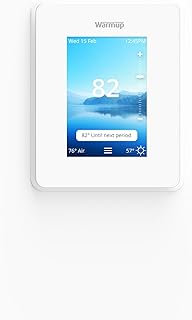
The 6iE thermostat is designed for electric underfloor heating systems and does not require manual programming. Its SmartGeo technology helps the system learn when you are away to reduce energy waste, with potential savings cited by the manufacturer. The unit features a smartphone touchscreen for easy temperature control. Best for tech-savvy homeowners who want automatic adjustments and remote access. Caution: Requires compatible electric underfloor heating setup and a connected app for full functionality.
Nuheat F2512 UnderFloor Heating Standard Mat

Nuheat F2512 features an ultra-thin 1/8″ (3 mm) pre-wired heating fabric for quick installation and even heat distribution. It offers extensive size options, including curves and irregular spaces, making it ideal for custom layouts. Compatible with ceramic tile, cement, and various stone or tile coverings. Best for renovators needing high customization. Caution: Ensure floor covering and substrate are compatible with thin mats and planning space for sensor placement.
Nuheat F3009 UnderFloor Heating Standard Mat
This Nuheat mat mirrors theF2512’s ultra-thin 1/8″ profile with a broad set of standard sizes and customizable options. It’s well-suited for larger rooms where even heat distribution is critical. Best for builders seeking a scalable solution with minimal floor height impact. Caution: Like other mats, proper embedding and covering are essential to avoid overheating or cold spots.
LuxHeat 25sqft Electric Radiant Floor Heating System
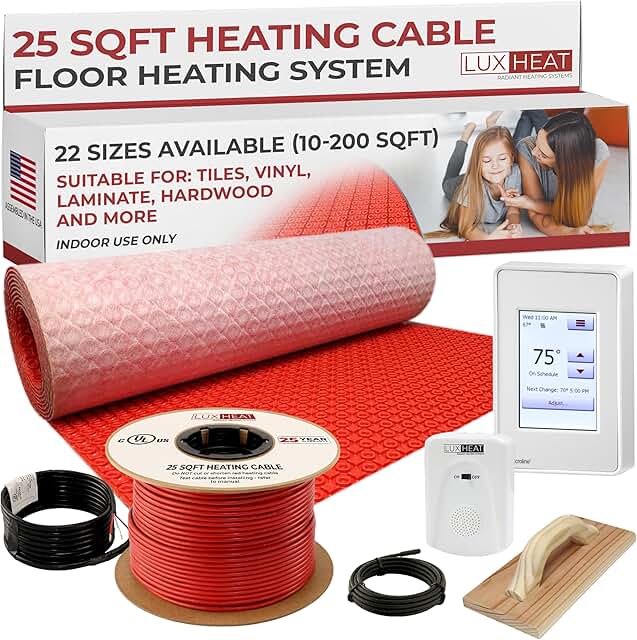
LuxHeat offers a complete 25 sq ft kit with a programmable UDG4 touchscreen thermostat and integrated GFCI, floor sensor, and uncoupling membranes. The system emphasizes design flexibility and a 3-in-1 solution—heating, crack prevention, and waterproofing. Best for bathrooms or kitchens where you want a turnkey install with built-in safety features. Limitation: The kit requires proper mounting and leveling when installing under tile or stone floors.
Floor Heater Ultra-Thin 2cm System

This DIY-friendly system uses a 2mm ultra-thin heating film with a modular design that minimizes height impact. It’s suitable for new builds and renovations where door clearance and floor height must be tightly controlled. Best for homeowners who want a straightforward layout and minimal floor thickness. Caution: Ensure floor coverings and subfloor can accommodate the 2cm total system height in combination with chosen insulation and flooring materials.
Buying Guide
What thickness do you need?
Ultra-thin solutions minimize height increase, typically 1/8″ mats or 2mm heating film. Consider total system height with insulation and final flooring to avoid door clearance issues.
Which control features matter?
Smart thermostats and app control offer remote heat scheduling and energy savings. Look for geolocation, scheduling, and energy-use reports if your goal is efficiency.
What floor coverings are compatible?
Most thin mats work with ceramic, porcelain, or stone floors. Some systems support wood or laminate with proper underlayment. Verify compatibility with your chosen flooring and subfloor.
How important is customization?
If you have irregular room shapes, curved walls, or multiple zones, choose a system with flexible sizing options and easy layout planning.
What safety features should you expect?
Look for built-in GFCI protection, moisture resistance, and sensor compatibility to prevent overheating and ensure safe operation in moisture-prone areas like bathrooms and kitchens.
What is the preferred installation path?
Pre-wired mats and modular designs simplify DIY installation. If you lack experience, consider professional help for complex layouts or high-heat scenarios.
FAQ
- Are ultra-thin underfloor heating systems easy to install? Yes, many options are designed for DIY with pre-wired mats or modular sheets and straightforward thermostat connections.
- Will these systems work with existing flooring? Most are compatible with tile, stone, and cement substrates. Some may support certain wood or laminate coverings with proper underlayment.
- Do these systems heat evenly? Ultra-thin mats and films are engineered to distribute heat evenly, reducing cold spots when correctly installed.
- Can I use a smart thermostat with it? Many options include or pair with smart thermostats for remote control and energy management.
- Is there a risk of overheating? Reputable kits include temperature sensors and humidity or floor-sensor integration to minimize overheating.
- What’s the best choice for bathrooms? Systems with moisture protection, sensors, and GFCI-enabled thermostats are ideal for damp environments.