
When shopping for a thermostat for hydronic heating, the goal is precise temperature control, reliable performance, and compatibility with your boiler or radiant system. This guide highlights five well-suited models for hydronic setups, spanning programmable, smart, and non-programmable options. Each choice is described with who it’s best for, why it was selected, and practical limitations to consider. The top picks target homeowners, renovators, and energy-conscious buyers seeking steady comfort and energy savings.
| Product | Type | Best For | Why It Stands Out |
|---|---|---|---|
| Honeywell Home Aube TH140-28-01-B | 7-Day Programmable | Homes with traditional hydronic boiler systems | Wide voltage range and precise control to minimize temperature swings |
| Google Nest Thermostat | Smart Wi‑Fi | Tech-savvy homes seeking remote access | Smart learning features and easy integration with other devices |
| Coiiwsei Programmable Thermostat | Multi-Stage Programmable | Multi-stage hydronic or boiler setups | Broad compatibility and user-friendly interface |
| Programmable Thermostat with Auto Changeover | 2H/2C or 4H/2C | Comfort-focused heating zones | Flexible changeover operation and backlit display |
| Aube by Honeywell TH135-01-B/U | Non-Programmable | Simple reno or retrofit projects | Hydronic floor heating and boiler compatibility |
Note: Each product description below includes who it’s best for, what makes it ideal for hydronic systems, and any practical caveats. Gifted with straightforward setup and clear controls, these models help maintain consistent warmth while avoiding excessive energy use.
Honeywell Aube TH140-28-01-B Hydronic Thermostat

This 7-day programmable thermostat is designed to manage hydronic heating from millivolt to 240 V systems, making it versatile for various boiler configurations. Its advanced temperature control minimizes swings, helping maintain steady comfort. Choose this if you want a reliable, traditional programmable option that supports hot water heating and provides predictable scheduling for weekday and weekend routines. A potential limitation is the need for compatible wiring and system types; verify your boiler’s voltage range before purchase.
Google Nest Thermostat
The Nest Thermostat suits households seeking remote control and learning capabilities. It supports programmable schedules and works with smart home ecosystems, which can simplify hydronic heating management. Best for tech-forward users who want automation features and energy reports. A limitation is that some advanced boiler configurations may require additional integrations or accessories to maximize efficiency.
Coiiwsei Multi-Stage Programmable Thermostat
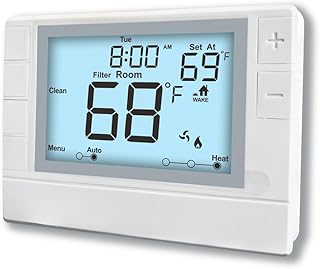
This thermostat supports single-stage and multi-stage systems and is compatible with various hydronic setups, including gas, oil, electric furnaces, and hot water radiants. It features a large backlit LCD for easy visibility and straightforward controls. Choose this if you need broad compatibility and a user-friendly install. A caveat is ensuring your system is within its supported stage configurations and voltage range.
Programmable Thermostat With Auto Changeover
This model offers flexible changeover logic, supporting two heat/one cool or four heat/two cool configurations. It is ideal for comfort-focused homes seeking dependable scheduling across multiple heating stages. Best for installers or DIYers who want a reliable non-smart option that still provides clear, backlit display and straightforward operation. Limitations include fewer modern automation features compared with smart thermostats.
Aube By Honeywell TH135-01-B/U Hydronic Thermostat

This non-programmable thermostat is compatible with hydronic floor heating and central heating. It supports 24-Volt R and W Millivolt configurations and offers remote input to enable mode changes by phone when used with additional Honeywell accessories. Best for simple retrofits or where a straightforward, reliable hydronic control is needed without scheduling. A potential drawback is the absence of built-in programming, which means manual operation for temperature adjustments.
Buying Guide: Hydronic Thermostat Essentials
What should I consider when choosing?
- System compatibility: Verify voltage, stage support (single, multi-stage), and whether the thermostat can interface with a boiler, radiant floor, or hydronic system.
- Programming needs: If you want automatic scheduling, choose a programmable or smart thermostat. If you prefer simple control, a non-programmable model may suffice.
- Ease of installation: Some units come with universal sub-base and wide terminal blocks, simplifying retrofit projects.
- Smart features: For energy efficiency, look for remote access, scheduling ahead of time, and potential integration with home assistants.
- Display and usability: A backlit or large LCD display improves readability. Consider whether you need auto-changeover for heat pumps or multi-zone control.
Which option fits different scenarios?
- Best for traditional hydronic systems with boiler controls: Honeywell Aube TH140-28-01-B.
- Best for tech lovers who want remote control and learning features: Google Nest Thermostat.
- Best for complex hydronic setups with multiple stages: Coiiwsei Programmable Thermostat.
- Best for homes prioritizing comfort with flexible changeover: Programmable Thermostat With Auto Changeover.
- Best simple retrofit solution where programming isn’t needed: Aube TH135-01-B/U Non-Programmable.
Install considerations
Before purchasing, confirm wiring compatibility, voltage, and stage support. Some hydronic systems require specific relays or accessories to operate correctly. If in doubt, consult a licensed technician to determine the right thermostat for your boiler and floor heating configuration.
FAQ
- What is the main benefit of a hydronic-compatible thermostat? It maintains even water temperature and reduces boiler cycling, improving comfort and efficiency.
- Do smart thermostats work with hydronic heating? Yes, many do, but verify compatibility with your boiler and any required adapters or relays.
- Is a non-programmable thermostat ever enough for hydronic systems? For simple control or retrofit projects, a non-programmable model can be adequate.
- Can I install these thermostats myself? Many are DIY-installable, but check your system’s wiring and local codes. Consider professional help if uncertain.
- Should I choose auto-changeover? Auto-changeover helps maintain comfortable temperatures when heating and cooling needs fluctuate, especially with heat pumps.
- Are there energy-savings advantages with programmable thermostats? Yes, scheduling reduces unnecessary boiler operation, saving energy without sacrificing comfort.