
In this guide
If you’re heating rooms with ceiling-mounted or radiant ceiling systems, a line-voltage or electric-heat thermostat is essential for steady comfort. This guide highlights five reliable options that fit ceiling heat setups, explaining who each is best for and why. Pick the model that matches your wiring, voltage, and installation preferences. The top picks are suitable for DIY replacements or quick upgrades when replacing an old thermostat. A concise buying table follows to help you compare key points quickly.
| Product | Voltage Range | Best For | Notes |
|---|---|---|---|
| Dr. Infrared Heater DR-001 Wall Thermostat | 120-277 VAC | Broad compatibility; flush wall mounting | 4 wires; includes C and F dials |
| Honeywell Home Digital Non-Programmable Thermostat | 2 wires; electric baseboard/convectors | Precise, silent control for basic electric heat | ±0.27°F accuracy; TRIAC switching |
| Cadet Double Pole Line Voltage Thermostat | 120/208/240 VAC | DIY replacement; double pole for stability | |
| Google Nest Thermostat (Smart) | Wi-Fi enabled; programmable | Smart home integration; energy saving | |
| Google Nest Learning Thermostat (4th Gen) | Wi‑Fi; programmable | Advanced learning features; sensors |
Dr. Infrared Heater DR-001 Wall Thermostat Review
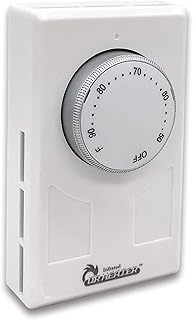
The Dr. Infrared Heater DR-001 wall thermostat is designed for high-heat zones and ceiling-friendly electric systems. Best for: homeowners who need broad compatibility with various voltages and a flush-mount installation. This model supports 3360W at 120V up to 7756W at 277V, making it suitable for larger ceiling-heated spaces. It includes both C and F control dials, providing familiar temperature adjustments for precise comfort. Caution: configuration drift can occur if wiring isn’t matched to the system’s voltage. Best for DIY upgrades when you want a versatile, hard-wired thermostat.
Honeywell Home Digital Non-Programmable Thermostat
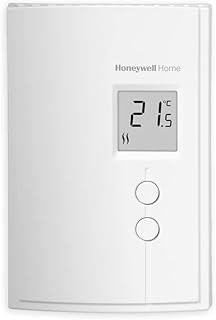
This Honeywell digital thermostat is designed for electric baseboard heaters and convectors with 2-wire installations. Best for: users who want precise temperature tracking with minimal setup and no programming. It advertises high accuracy (±0.27°F) and a TRIAC switching mechanism for quiet, smooth temperature control. It’s ideal for single-zone rooms where baseboard heat dominates. Limitation: only two wires are supported, so it isn’t suitable for more complex multi-zone control without additional wiring or devices.
Cadet Double Pole Line Voltage Thermostat

Cadet’s double pole line voltage thermostat is built for 120, 208, and 240-volt electric baseboard and wall heaters. Best for: installations requiring a robust double-pole switch that controls both legs of the circuit. It handles up to 5,280 watts at 240V and 2,640 watts at 120V. It’s a straightforward DIY replacement with color-coded wires. Choose this if you want reliable, simple dial-based control and easy wiring. Caution: ensure your wiring matches the device’s voltage rating to avoid overheating or tripping breakers.
Google Nest Thermostat (Smart)

The Google Nest Thermostat is a Wi-Fi-enabled, programmable option. Best for: users seeking smart-home integration with energy-saving routines. It supports remote control via apps and works with common ecosystems. It’s positioned as a flexible option for ceiling heat in a connected home. Limitation: some features require ongoing app access and compatible devices; setup assumes an existing network and basic comfort with app-based programming.
Nest Learning Thermostat (4th Gen)

The Nest Learning Thermostat (4th Gen) combines learning features with temperature sensing and sensor-based adjustments. Best for: households seeking automatic optimization and multi-room awareness, especially when paired with a Nest Temperature Sensor. It supports integration with Alexa, Apple HomeKit, and Google Home. It learns preferences over time to reduce energy use. Caution: advanced features depend on a stable Wi-Fi connection and compatible smart-home setups; some users may prefer simple manual control.
Buying Guide: Thermostats For Ceiling Heat
What should you consider when selecting a ceiling-heat thermostat? Start with voltage compatibility and wiring: 120V, 208V, and 240V systems require different thermostat types and connection methods. Double-pole designs offer better circuit control by switching both legs, which is helpful for baseboard and wall heaters. Consider smart features, ease of installation, and whether you want silent switching or programmable schedules. For DIY buyers, replaceable, color-coded wiring and clear installation instructions reduce setup time. For smart-home enthusiasts, choose a thermostat with Wi-Fi, voice assistant compatibility, and temperature-sensor support to optimize energy use.
Key questions to answer before buying:
- What voltage is your ceiling heat system?
- Do you need a two-wire or four-wire thermostat?
- Is silent operation important for your living space?
- Do you want smart features and remote access?
- Will you replace an existing thermostat or install a new one?
Frequently Asked Questions
- Can a thermostat control ceiling heat systems?
- Are smart thermostats compatible with ceiling heat?
- What is a double-pole thermostat?
- Do I need professional installation for ceiling heat thermostats?
- What features help save energy with ceiling heat?
- Which thermostat is best for a multi-zone ceiling heat setup?
Yes. Line-voltage thermostats are designed to switch electric ceiling heat on and off to maintain the desired temperature.
Some smart thermostats can control ceiling heat if they support line-voltage wiring or a suitable relay module. Check product specifications carefully.
A double-pole thermostat switches both hot legs of a circuit, providing more reliable and safer control for 240V or higher installations.
DIY replacement is possible for many models if you are comfortable with electrical wiring and local codes. When in doubt, consult a licensed electrician.
Accurate temperature sensing, programmable schedules, and smart adjustments based on occupancy or remote control can reduce energy use significantly.
Look for thermostats that support multiple circuits or are compatible with a zoning system. Double-pole designs and models with easy wiring diagrams are beneficial for multi-zone layouts.