
Answering the question, these thermostat-controlled baseboard heaters help you save energy while keeping spaces comfortable. This guide highlights five top options: smart Wi‑Fi bases like Mysa LITE, reliable mechanical line-voltage models from Cadet and Stelpro, a versatile YeloDeer, and a modern Meross option. Each product is best for different setups—new smart homes, older electric baseboard systems, or multi-room control. Read on to compare suitability, installation notes, and potential limitations.
| Product | ||
|---|---|---|
| Mysa Smart Thermostat LITE for Electric Baseboard Heaters | Wi‑Fi Smart | Modern homes seeking app control and scheduling |
| Cadet F Series Double Pole Built-In Baseboard Thermostat (BTF2W) | Mechanical / Line‑Voltage | Two‑wire or end‑mounted Cadet baseboards |
| Stelpro SWT1F Mechanical Line Voltage Thermostat | Mechanical / Line‑Voltage | Versatile baseboard and heater types |
| YeloDeer Dual Voltage 4‑Wire Manual Thermostat | Manual / Dual Voltage | High‑voltage setups needing precise control |
| Meross Matter Smart Thermostat for Electric Baseboard Heaters | Smart / Matter Compatible | Multi‑brand smart home with Matter ecosystem |
Mysa Smart Thermostat LITE for Electric Baseboard Heaters
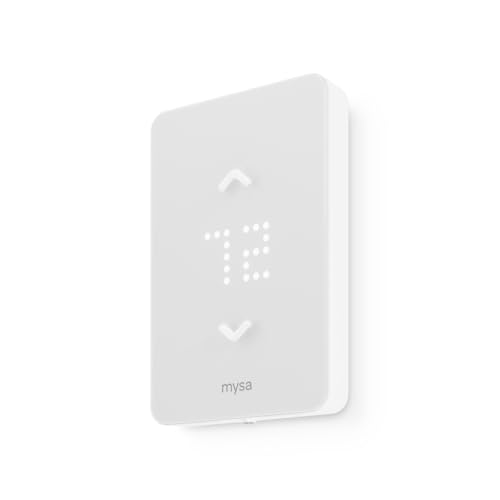
Best for: Homes with 120V–240V baseboard heating looking for app control and schedules. The Mysa LITE supports up to 26% heating cost savings through configurable daily schedules and away modes. It connects directly to Wi‑Fi without a hub, and works with Apple HomeKit, Amazon Alexa, and Google Home for voice control. Avoid if your system is older, uses a two‑wire configuration, or lacks neutral/second live wire for full functionality.
- Remote control: Change temperature, adjust schedules, and monitor rooms via the app.
- Voice integration: Works with HomeKit, Alexa, and Google Assistant.
- Energy savings: Schedules and away modes reduce energy use without sacrificing comfort.
- Compatibility note: Requires a compatible high/line voltage baseboard setup.
Cadet F Series Double Pole Built-In Baseboard Thermostat

Best for: Cadet baseboard users seeking a simple, reliable, mechanical dial thermostat. This model offers a wide 45º–80ºF (7ºC–27ºC) range with an easy twist dial and straightforward installation on Cadet F series heaters. Choose this if you prefer no‑frills, direct temperature control. Caution: Only compatible with Cadet F series heaters; mismatch may reduce performance.
- Temperature range: 45º–80ºF (7ºC–27ºC).
- Type: Built‑in, two‑pole, line‑voltage control.
- Installation: Mounts at either end of the heater for convenient wiring.
- Limitation: Designed specifically for Cadet F series heaters.
Stelpro SWT1F Mechanical Line Voltage Thermostat

Best for: Broad compatibility across electric baseboards, wall heaters, and commercial heaters. The SWT1F uses a simple mechanical dial for precise temperature control and is easy to install with a two‑wire connection. It suits spaces requiring reliable mechanical control without smart features. Caution: May not integrate with smart home routines or voice assistants.
- Applications: Baseboards, wall heaters, and some commercial heaters.
- Control: Mechanical dial for manual setting.
- Installation: Straightforward 2‑wire connection.
- Limitation: Lacks Wi‑Fi or smart features.
YeloDeer Dual Voltage Baseboard Thermostat

Best for: Homes with dual voltage (110–265V) baseboard systems needing precise electronic control. This 4‑wire manual thermostat offers high accuracy and a broad temperature range (40°F–80°F / 4.4°C–26.7°C). It is a solid choice if you want better precision than older mechanical models. Caution: Not a smart thermostat; no app or voice control.
- Voltage range: 110–265V, 4‑wire connection.
- Temperature range: 40°F–80°F (4.4°C–26.7°C).
- Accuracy: Higher precision than traditional mechanical units.
- Limitation: No smart features or remote control.
Meross Matter Smart Thermostat for Electric Baseboard Heaters
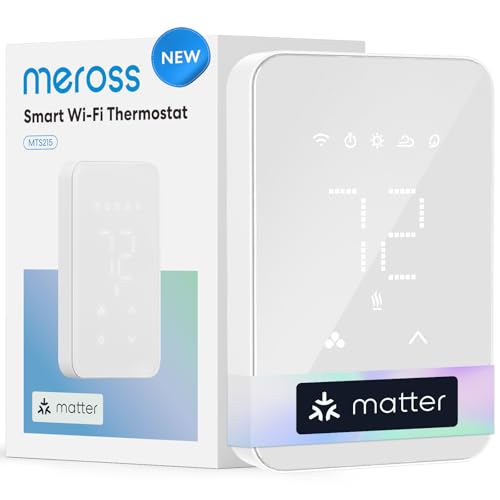
Best for: Smart homes using Matter ecosystem and multi‑brand compatibility. The Meross Matter thermostat supports Alexa, HomeKit, Google, SmartThings, and Matter, allowing centralized control. It targets high‑voltage heating and requires a compatible four‑wire setup. Caution: Not compatible with low‑voltage or two‑wire installations; verify your wiring before purchase.
- Matter ecosystem compatibility: Works with multiple smart platforms.
- Voltage: Designed for high‑line voltage (120–240V) systems.
- App control: Remote scheduling and control via Meross app.
- Limitation: Requires proper four‑wire wiring; not suitable for two‑wire systems.
Buying Guide
What should you consider before buying a thermostat for baseboard heaters?
- Voltage and wiring: Ensure your baseboard system is compatible (single‑ or dual‑voltage, four‑wire vs. two‑wire). Smart models typically require a neutral or second live wire.
- Smart features vs. mechanical: If you want app control, schedules, and voice commands, choose a Wi‑Fi or Matter thermostat. For simple on/off control, a mechanical model may suffice.
- Compatibility with existing heaters: Some units are designed for specific brands (Cadet, Stelpro) or heater types. Verify compatibility with your baseboard model.
- Power handling: Check load capacity (watts) to ensure the thermostat can safely handle your heater’s power draw.
- Installation: Some devices mount inline or at the end of the heater; others require dedicated wiring and possible professional installation.
FAQ
- Do these thermostats work with any baseboard heater? Most high‑voltage baseboards are compatible with line‑voltage thermostats, but you must match voltage and wiring. Some models are built for Cadet or Stelpro brands specifically.
- Which thermostat saves the most energy? Smart thermostats with scheduling and away modes (like Mysa LITE or Meross Matter) typically save more energy when you program heating to match occupancy.
- Is professional installation required? Mechanical, end‑mounted units may be DIY if you’re comfortable with wiring. Smart thermostats often require confirming proper four‑wire connections; consult a professional if you’re unsure.
- Can I use a single thermostat for multiple baseboards? Some thermostats are designed to control one heater or a single circuit. Check the product’s load and circuit details to avoid overloading.
- Will wireless control work without a hub? Wi‑Fi connected models generally do not require a hub, but ensure your home network is reliable for remote access.
- Are there compatibility considerations with older homes? Older wiring may be two‑wire; many smart thermostats require a neutral or a second hot wire. Verify wiring before purchase.