
When choosing a thermal expansion tank, look for units that reliably absorb excess pressure, are compatible with potable water, and offer easy installation. This guide highlights five top options that fit typical residential and small-scale needs. Best for homes with closed heating systems, pre-assembled kits for DIY installers, and spaces with limited installation area. The buyer’s intent is to protect water heaters and plumbing from thermal expansion without complicating DIY work.
Summary table of selected products:
| Product | Capacity | Connection | Best For |
|---|---|---|---|
| EFIELD Water Heater Expansion Tank | 2.1 Gallon | 3/4 in MNPT | Residential homes needing reliable thermal pressure protection |
| Eastman 2-Gallon Mini Thermal Expansion Tank | 2 Gallon | 1/2 Inch Threaded | Tankless and compact installations |
| TT FLEX Potable Thermal Expansion Tank, 2.1 Gallon | 2.1 Gallon | 3/4 in MNPT | Balanced pressure in compact systems |
| oiununo Potable Thermal Expansion Tank | 2.1 Gallon | 3/4 in MNPT | Potable water systems with stringent material standards |
| GUOFIS 2.1 Gallon Water Heater Expansion Tank | 2.1 Gallon | 3/4 in MNPT | Cost-effective, standard-connection option |
EFIELD Water Heater Expansion Tank

The EFIELD device provides reliable pressure protection by absorbing excess thermal pressure in the system. It is certified as safe for potable water, ensuring clean water for the household. It uses a standard 3/4-inch MNPT connection for straightforward installation, making it a practical choice for typical residential water heaters. Best for homeowners who want a ready-to-install solution with potable water compatibility. A potential limitation is the fixed 2.1-gallon capacity, which may be smaller than needs in some larger or multi-tap systems.
Eastman 2-Gallon Mini Thermal Expansion Tank

Eastman’s Mini Thermal Expansion Tank is built to absorb pressure increases in water heaters and is especially suitable for tankless systems to prevent leaks and repairs. It features durable 304 stainless steel construction for longevity and supports indoor or outdoor installation. The 1/2-inch MIP threaded connection offers flexible mounting options and adjustable pressure for system tuning. Best for tight spaces or outdoor setups, where a compact unit is preferred. A limitation is the smaller 2-gallon capacity, which may require more frequent cycling in high-use homes.
TT FLEX Potable Thermal Expansion Tank, 2.1 Gal
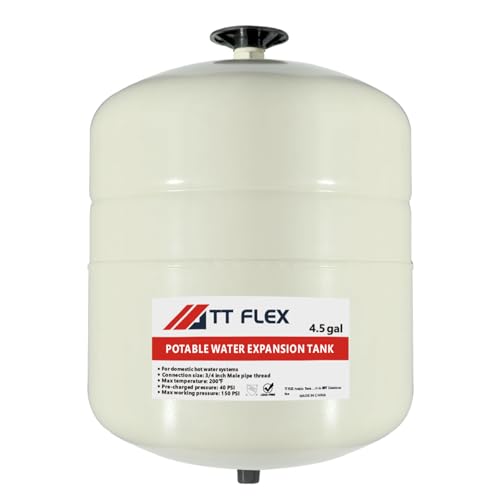
TT FLEX’s 2.1-gallon model is designed to manage thermal expansion with a 3/4-inch MNPT connection. It uses a 100% butyl diaphragm and a plastic liner to separate system water from air precharge, reducing corrosion risk and maintaining water quality. It’s easy to install and suitable for both professional and DIY projects. Best for users who want a robust diaphragm design and straightforward setup. Caution: ensure the unit is properly precharged to your system’s pressure to avoid miscalibration.
oiununo Potable Thermal Expansion Tank

The oiununo model emphasizes potable-grade materials and safety for drinking water. It features a 3/4″ MNPT connection and uses stainless steel construction with a food-grade EPDM rubber diaphragm for compatibility with potable water. It is positioned for households needing strict material standards and reliable pressure management. Best for those prioritizing water purity and compliance with drinking-water standards. Limitation: some users may require additional configuration to optimize precharge pressure for their system.
GUOFIS 2.1 Gallon Water Heater Expansion Tank

GUOFIS offers a cost-effective 2.1-gallon expansion tank with a standard 3/4 inch MNPT connection. It prioritizes straightforward installation and reliable thermal pressure control for typical residential setups. Best for budget-conscious buyers who still want reliable protection. Caution: the product may have fewer premium features compared with higher-priced models, so verify if advanced precharge options are needed for your system.
Buying Guide: Key Considerations For Choosing The Right Tank
- Capacity versus system size: Larger homes or systems with higher usage may require bigger tanks. For smaller apartments or RV setups, 2.1–2.5 gallon tanks are often sufficient.
- Connection type: Most units use 3/4 inch MNPT; confirm your water heater supply line compatibility and if adapters are needed.
- Diaphragm material and water compatibility: If you need potable-water compatibility, choose tanks with food-grade diaphragms and stainless steel construction.
- Pressure ratings: Look for precharge pressure and maximum operating pressure that align with your system’s PSI. Adjustable models offer flexibility for different homes.
- Installation considerations: Some tanks are rated for indoor or outdoor use and may require different mounting or supportive brackets.
- Durability and corrosion resistance: Stainless steel builds and corrosion-resistant diaphragms extend service life in challenging environments.
- Maintenance and accessibility: Check for serviceability, such as replaceable diaphragms or straightforward valve access for maintenance checks.
Frequently Asked Questions
- What is a thermal expansion tank used for? It absorbs excess thermal pressure in closed plumbing systems to protect the water heater and piping from pressure fluctuations.
- Do all water heaters require expansion tanks? No, but systems with a closed hot-water supply line and backflow preventers often benefit from one to prevent valve leaks and reduce stress on the system.
- What capacity should I choose? Choose based on your system size and peak water usage. A 2.1-gallon unit fits many residential setups, while larger homes may need 4.5 gallons or more.
- Is potable-water compatibility important? Yes. If the tank contacts drinking water, select models with food-grade diaphragms and corrosion-resistant materials.
- Can I install it myself? Many models are designed for DIY installation with standard 3/4″ connections, but consult a plumber if you’re unsure about pressure settings and mounting.
- What maintenance is required? Periodic inspection of diaphragms and seals, plus ensuring precharge pressure matches your system’s pressure, keeps performance optimal.