
When choosing a tankless water heater, the best options deliver reliable on-demand hot water, fit your space, and meet your family’s daily usage. This guide highlights five well-rounded picks across propane, electric, and gas models, with clear reasons for who each product suits. In short, pick based on your fuel source, number of simultaneous outlets, and installation constraints. Below is a quick summary table of the featured products to help you compare at a glance.
| Product | Brand | Fuel Type | Best For |
|---|---|---|---|
| Ranein Propane Gas Tankless Water Heater | Ranein | Propane | Small homes needing multiple outlets |
| 14kW Tankless Electric (Gray) | SIVUATEK | Electric | Under-sink use and compact spaces |
| 110V Tankless Electric (Under Sink) | xwdzswgs | Electric | Low-flow applications, space-saving |
| Rheem RTG Series 8.4 GPM | Rheem | Natural Gas | Whole-house, multi-bath homes |
| Westinghouse 14kW Electric | Westinghouse | Electric | Smart home-ready installs |
| Rinnai RX160iN | Rinnai | Propane or Natural Gas | Versatile indoor/outdoor install |
Ranein Propane Gas Tankless Water Heater, 4.3 GPM

This propane tankless unit is designed for steady hot water with 100,000 BTU input and 4.3 GPM flow, making it a strong match for households with 3–4 water points running concurrently. Best for homes without natural gas lines or for properties that rely on propane as a primary heat source, it supports four preset modes for 4-season, kitchen, bathtub, and shower settings. Its intelligent temperature linkage maintains 95°F–155°F while offering a high-temp lock to protect children and elders from scalding. Choose this if you need a compact, multi-point solution with predictable performance across seasons. A potential limitation is that propane availability or tank management can influence continuous performance in very cold climates.
14kW Tankless Electric 240V, 2 Points
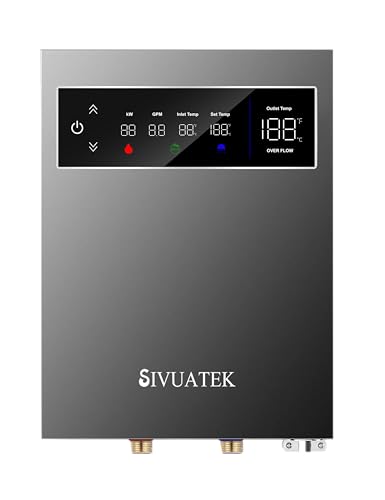
This 14kW electric model is designed to provide rapid hot water for 1–2 points, such as a kitchen and a bathroom, with a compact footprint and flexible under-sink or wall placement. It emphasizes energy savings by eliminating standby heat and idle power loss. Best for small apartments or homes where electrical panel capacity supports a dedicated circuit, it can deliver instant hot water at higher efficiency. A notable caveat: confirm your electrical service and breaker capacity to avoid overloading existing circuits.
110V Tankless Electric, 3000W Instant Hot Water

This 110V electric tankless unit uses 3000W to deliver hot water instantly at variable flow rates, supporting up to 0.3–0.5 GPM depending on temperature rise. It features an LED display and multiple safety protections including IPX4 waterproofing and dry-burn protection. Best for budget-conscious setups with limited space, it suits under-sink installations in small kitchens or bathrooms. Limitation: higher flow at the same temperature rise often requires a second unit for higher simultaneous demand.
Rheem RTG Series 8.4 GPM Natural Gas

The Rheem RTG outdoor unit is designed for whole-house use with 8.4 GPM at a 35°F rise and a peak of 180,000 BTU/hr. Its outdoor installation eliminates venting complexity and reduces indoor space requirements. Best for large homes and multi-bath scenarios where outdoor installation is feasible, this non-condensing model emphasizes reliable, on-demand performance. A consideration is the need for proper venting and outdoor protection from the elements; professional installation is recommended for optimal safety and efficiency.
Westinghouse 14kW Electric 240V, Wifi

This high-power electric model features 14kW heating with 98% thermal efficiency and smart connectivity for WiFi and voice control. It supports up to about 3.4 GPM at a 62°F inlet and 105°F outlet, making it suitable for two simultaneous outlets. It also includes a temperature memory function after power outages. Best for tech-oriented homes seeking convenient remote control, but ensure a compatible 60A circuit and wiring. Limitations include the requirement for a dedicated circuit and the need for stable WiFi coverage for full app features.
Rinnai RX160iN Condensing Smart Sense

This compact, versatile unit runs on propane or natural gas and supports up to 9 GPM, making it ideal for moderate to large homes with variable hot water needs. Its Versa Vent and Smart Sense gas control system provide flexibility for indoors or outdoors (with the appropriate venting). Best for households prioritizing space efficiency and future-proofing with smart controls, its higher flow makes it suitable for multi-outlet configurations. Limitation: control features may require additional components like a separate control module for full WiFi capabilities, and outdoor installs require proper venting compliance.
Buying Guide: Key Considerations for Tankless Water Heaters
- Fuel type: Choose propane, natural gas, or electric based on availability, installation cost, and ongoing energy costs. Gas models typically deliver higher flow for whole-house use, while electric units suit smaller spaces or retrofit installs.
- Flow rate and temperature rise: Match GPM needs to your household water usage. A higher GPM rating supports more simultaneous outlets; consider inlet water temperature and desired outlet temperature to estimate real-world performance.
- Installation space: Wall-mounted, under-sink, or outdoor outdoor installations affect unit size and venting requirements. Outdoor units need weather protection and proper venting in many regions.
- Ventilation and venting: Gas units require venting; condensing models may be more efficient and compact. Plan for vent runs and clearance around the unit.
- Electrical requirements: Electric units require appropriate circuit capacity and breaker specifications. Ensure your home electrical panel can support the added load.
- Safety features: Look for temperature lock, anti-scald protection, leak and dry-burning safeguards, and auto shutoff to minimize risk.
- Smart features: Some models offer WiFi connectivity, app control, and temperature memory. Consider whether these features align with your automation goals.
- Maintenance: Some units include quick-flush or service access features to simplify flushing and descaling, especially for hard water areas.
Frequently Asked Questions
- What size tankless water heater do I need for a family of four?
– Look for at least 6–8 GPM for simultaneous uses like showers and taps; larger homes may require 8–9 GPM or more, depending on climate and flow patterns. - Are electric tankless water heaters suitable for whole-house use?
– Electric models can supply enough hot water for compact spaces or limited outlets; for full-home use, multiple units or higher-power installations are often necessary. - Do tankless water heaters save energy?
– Yes, by heating water only when needed, they reduce standby energy. The savings depend on usage patterns and the unit’s efficiency rating. - Is professional installation required?
– For gas and vented models, professional installation is typically recommended to ensure safe venting and correct gas connections. Electric units should meet local electrical code requirements. - Can I install a tankless water heater indoors or outdoors?
– Indoor installation is common for electric and some gas models with proper venting; outdoor installs are possible for certain gas units with weather-appropriate housings and venting considerations. - What maintenance do tankless water heaters require?
– Regular descaling in hard-water areas and periodic flushing help maintain efficiency and longevity; follow manufacturer guidelines for recommended intervals.