
When choosing between tankless electric water heaters and solar-powered options, the decision often comes down to daily hot-water needs, installation space, energy costs, and climate. This guide compares five practical picks to help buyers identify which system fits their home and lifestyle. Ideal for apartments or small kitchens, the electric tankless options shine where space is tight. Solar solutions excel where outdoor exposure and long-term energy savings matter most, especially in sunny regions. Below you’ll find concise product insights, use-cases, and a practical buying guide.
| Product | Type | Best For | Key Benefit |
|---|---|---|---|
| 110V Tankless Electric, 3000W | Electric Tankless | Small spaces, point-of-use hot water | Fast hot water with compact wall-mount design |
| Westinghouse 14kW Tankless Electric | Electric Tankless | Smart homes, multi-point use | Smart WiFi, quick heating, temperature memory |
| Rheem RTG Series 7.0 GPM LP Tankless | Gas Tankless | Whole-house, families with multiple baths | High flow, outdoor install, energy efficiency |
| 4Patriots Sun Kettle | Portable Solar | Camping, emergencies | Boils water with solar focus |
| ThermoMate 4.5kW Tankless | Electric Tankless | Under-sink point-of-use | On-demand hot water with low standby |
110V Tankless Water Heater Electric: Compact On-Demand Hot Water
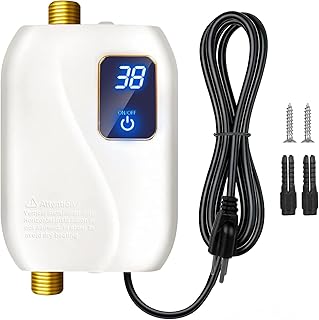
This 110V electric tankless unit uses stainless steel and ABS with a 3000W power rating. It raises water temperatures quickly and offers an LCD display for status checks. Best for users who need instant hot water at a sink or small bathroom and want a compact, wall-mounted solution.
- Best for: apartment kitchens, RVs, or under-sink installations where space is limited.
- Why selected: high thermal efficiency and rapid on-demand heating without preheating.
Limitation: 0.3–0.5 GPM flow ranges mean lower simultaneous-output performance; not ideal for whole-house needs.
Westinghouse 14kW Tankless Electric: Smart and Efficient

This 14kW electric tankless heater provides quick hot water with 98% thermal efficiency. Capable of supporting two points simultaneously at typical inlet/outlet settings, it pairs with smart home ecosystems for temperature control and monitoring via Alexa or Google Home. It also features a temperature memory function after outages.
- Best for: households needing multiple hot-water points with smart control.
- Why selected: strong GPM at modest flow and seamless smart-home integration.
Caution: Requires a dedicated 60A circuit and proper 6 AWG wiring; professional installation recommended.
Rheem RTG Series 7.0 GPM LP Tankless

This outdoor propane tankless heater delivers up to 7.0 GPM at a 35°F rise, suitable for whole-house hot water in larger homes. It avoids indoor venting and emphasizes on-demand performance with high BTU output.
- Best for: large households with multiple bathrooms in areas with adequate outdoor mounting space.
- Why selected: high flow and outdoor installation simplify internal ventilation concerns.
Caution: Outdoor installation demands proper venting and professional hookup to gas lines.
4Patriots Sun Kettle: Portable Solar Water Heater

The Sun Kettle uses solar power to boil water, trapping sunlight in a tempered-glass tube. It heats water up to 212°F in roughly 45 minutes under favorable sun. Its compact, portable design suits campers and emergencies.
- Best for: camping trips, bug-out kits, or situations without access to electricity.
- Why selected: portability and simplicity for on-the-go hot water needs.
Caution: Weather and sun exposure strongly affect performance; not suitable as a primary home hot-water source.
ThermoMate 4.5kW Tankless Under Sink Water Heater

This 4.5kW under-sink model provides instant hot water with a temperature range of 85–131°F. It features self-modulating power for efficient operation and operates on 120V with a 40A circuit break and 1/2″ NPT connections. Stainless steel tubing helps resist mineral buildup.
- Best for: point-of-use hot water at a single sink or bar area.
- Why selected: strong efficiency for small-volume, on-demand use with simple electrical requirements.
Caution: Limited flow means not suitable for multiple simultaneous outlets.
Buying Guide: Key Considerations
- Space and placement: Tankless electric units are ideal for tight spaces; propane outdoor units suit homes with outdoor mounting and high-demand needs. Solar options require outdoor exposure or dedicated solar setup.
- Fuel type and availability: Electric units are easier to install in urban settings; gas-powered models can offer higher flow but require venting. Solar depends on climate and daylight.
- Flow rate and temperature rise: Determine your peak simultaneous-use needs. For bathrooms and kitchens, aim for higher GPM or multiple units if necessary.
- Electrical/gas requirements: Some models demand dedicated circuits and specific wire gauges. Outdoor propane units require safe venting and professional gas connections.
- Smart features and maintenance: Look for temperature control, memory functions, and app or voice-control compatibility for ease of use and energy management.
- Durability and installation: Consider corrosion resistance and ease of cleaning in water lines. Under-sink units require proper mounting and clearance for service.
FAQ
- What is the main difference between tankless and solar water heaters? Tankless units heat water on demand using electricity or gas, while solar heaters rely on sunlight to heat water, often requiring storage or a supplementary heater.
- Which is best for a small apartment? A compact electric tankless model or a point-of-use under-sink heater is typically best for limited space and quick hot water at specific fixtures.
- Can I install a tankless system myself? Some models allow DIY installation for simple setups, but many require a licensed professional due to electrical or gas connections and venting requirements.
- Do solar water heaters provide consistent hot water year-round? Solar performance depends on climate and sun exposure; many systems require a backup heater for cloudy days or high-demand times.
- Is a smart-enabled tankless heater worth it? Smart features help manage temperature, track energy use, and integrate with home assistants, which can improve daily efficiency.
- What maintenance do these systems need? Regular inspection of connections, mineral buildup prevention, and periodic flushes are common, especially for gas or highly used electric units.