
Answer: Tankless water heaters offer on-demand hot water with space savings and energy efficiency, but suitability depends on your home size, hot-water usage, and fuel source. This guide compares five popular options and helps you pick the right type for apartments, cabins, or full homes. Best for compact living, RVs, or busy kitchens, these picks illustrate when tankless is worth it and when traditional storage units might still fit best.
Summary of top picks:
| Product | Type | Best For | |
|---|---|---|---|
| 110V Tankless Water Heater Electric, 3000W | Electric Tankless | Small kitchens, apartments, under-sink use | Fast hot water, compact, easy to install |
| 18L Tankless Water Heater Propane | Propane Tankless (Outdoor/Portable) | Camping, RVs, outdoor bathing | High flow for outdoor needs |
| 110V Tankless Water Heater Electric, Under Sink | Electric Tankless | Under-sink applications | Instant hot water with space saving |
| Ranein Propane Gas Tankless Water Heater | Propane Tankless (Whole Home) | Small homes with gas | Higher flow, multiple points |
| 110V Tankless Water Heater Electric, 3000W | Electric Tankless | Compact spaces, quick hot water | High efficiency, LED display |
110V Electric Tankless Water Heater With Digital Display
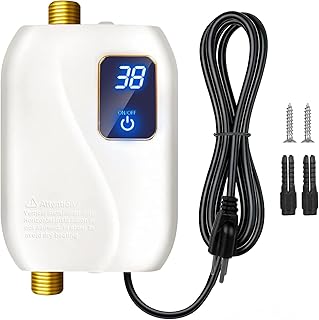
This 110V tankless unit uses stainless steel and ABS, delivering 3000W of instant hot water. It raises temperature quickly and supports Fahrenheit or Celsius display. Best for: small kitchens or under-sink setups where space is at a premium. Limitation: performance varies with water flow and inlet temperature; not ideal for whole-home heating at once.
18L Propane Tankless Water Heater With Digital Display

This propane model provides robust heating for 4.76 GPM with up to 115,425 BTU/hour. It supports outdoor or RV use and includes safety protections. Best for: camping, outdoor bathing, or mobile setups where consistent hot water is needed away from a fixed gas line. Limitation: outdoor-only design means not suitable for indoor installation in most homes.
110V Under-Sink Instant Tankless Water Heater

The under-sink model delivers hot water in seconds from 82°F to 131°F with a compact, wall-mounted design. It’s ideal for kitchens, bathrooms, or RVs needing quick, localized hot water. Best for: small-task areas where water use is brief. Caution: performance depends on water pressure and distance to fixtures.
Ranein Propane Gas Tankless Water Heater

With 80,000 BTU and 3.6 GPM, this propane unit supports 2–3 outlets and includes temperature control from 95°F to 149°F. Best for: small homes or cabins needing continuous hot water at multiple points. Limitation: propane models require proper venting and installation considerations for indoor use.
110V Electric Tankless Water Heater, 3000W

This 110V electric unit uses 3000W to raise water quickly, with a 98% thermal efficiency. It features IPX4 waterproofing, water-electrical isolation, and a built-in LED display. Best for: compact spaces needing reliable hot water without preheating. Caution: performance depends on inlet water temperature and flow rate; not designed for high-demand whole-home use.
Buying Guide
What type of home and usage pattern is best for tankless?
Choose electric tankless when mains power supports the load and you need localized hot water for sinks or showers in small spaces. Propane tankless is often better for off-grid use or full-home hot water in areas with reliable gas supply, especially where electrical upgrades are not feasible.
How important is flow rate and temperature control?
For frequent multi-point use or households with higher hot-water demand, select models with higher GPM capacity and consistent temperature control. Look for precise temperature ranges (e.g., 95°F–149°F) and stable output even as other outlets draw water.
What installation considerations matter?
Electric units are generally easier to install in apartments or under-sink spaces but require an appropriate circuit and GPM rating. Propane units may need venting, combustion safety features, and professional installation to meet codes.
Safety and efficiency priorities
Prioritize IPX4 or better waterproofing, dry-fire protection, leakage protection, and automatic shut-off mechanisms. Efficiency (above 95% thermal efficiency) reduces energy waste and ongoing costs.
Space and aesthetics
Compact, wall-mounted designs fit tight kitchens, bathrooms, or RVs. An LED or digital display helps monitor status and performance for daily use.
Summary of recommended approaches
- Best for under-sink or point-of-use: electric 110V units with compact design.
- Better for outdoor or RV use: propane tankless models with safety protections.
- Choose this if you need multi-point hot water in a small home: propane with higher GPM.
- Avoid this if you require whole-home simultaneous hot water on a tight budget: may need a larger system or storage tank.
FAQs
- What is the main advantage of tankless water heaters?
- Can tankless heaters supply hot water to multiple fixtures at once?
- Are electric tankless heaters safe for kitchens and bathrooms?
- Do propane tankless heaters require venting?
- What should I consider for small spaces?
- Is there a downside to tankless water heaters?
They provide on-demand hot water without storing a large amount of heated water, saving space and reducing standby energy loss.
Some models can, depending on GPM ratings and fuel type; check the unit’s maximum flow rate and consider demand when selecting.
Yes, when they include IPX4 waterproofing, leak protection, dry-boil protection, and automatic shut-off features.
Most indoor propane units require proper venting and professional installation to meet safety standards.
Focus on compact, wall-mounted designs, under-sink models, and units with an LED or digital display for status monitoring.
Initial cost and installation complexity can be higher than traditional storage heaters; performance can depend on water pressure and inlet temperature.