
Answering the question: the best solar water heater options for RV use combine solar-boosted heat with compact, travel-ready design. This guide highlights five products that either rely on solar power, integrate solar charging, or are strong complementary choices for RV setups. It helps campers, full-time RVers, and weekend travelers decide which system best fits their off-grid needs. The following quick-reference table compares key strengths and intended use to aid rapid decision-making.
| Product | Best For | Why It Stands Out | Limitation |
|---|---|---|---|
| MH-38 Marine Solar Water Heater Panel | Marine/RV with solar exposure | Durable solar panel design, sealed construction for marine environments | Requires compatible mounting and plumbing |
| 12V DC Solar Water Heater Circulation Pump | Solar-equipped water systems | Efficient circulation for solar-heated setups | Does not heat water by itself |
| Camping Shower With Heater And 5-Gallon Jug | Off-grid camping with solar charging | Integrated solar panel charging option and portable setup | Recharge panel included; power source varies by trip |
| Upgraded 110V Electric Tankless Water Heater | RVers with shore power | Instant hot water; compact and safe | Needs AC power at campsite |
| Xenjum RV Tankless Water Heater | Full-time RVers needing on-demand hot water | High BTU rating and remote control for on-demand hot water | Propane/engine-dependent; not solar by itself |
MH-38 Marine Solar Water Heater Panel
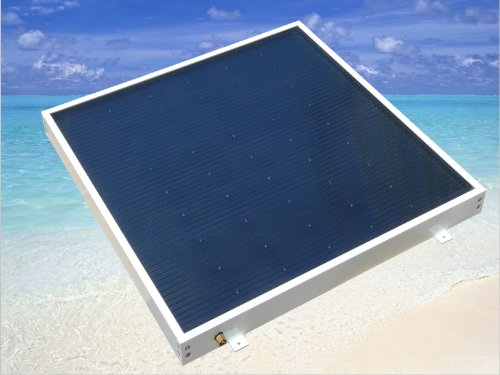
Best for: RVs and boats where solar exposure is reliable. This solar water heater panel is designed for compact spaces and harsh environments. It emphasizes a powder-coated frame, stainless steel hardware, and a silicone-sealed construction to resist marine conditions. Select this if your camping or cruising setup prioritizes solar-assisted heating and rugged durability. A potential limitation is the need for proper installation and integration with your existing water system to maximize solar efficiency.
12V DC Solar Water Heater Circulation Pump

Best for: RVs with an existing solar or low-voltage water heater system. This mini inline pump handles water circulation for solar-heated setups, supporting up to about 3.43 GPM with a 19.6 ft lift. It requires an established water flow into the inlet, making it a complementary component rather than a standalone heater. Choose this to improve flow and heat distribution in a solar-assisted configuration; avoid if you have no circulating loop or pressurized source.
Camping Shower With Heater And 5-Gallon Jug

Best for: Campers who want an all-in-one portable solution with solar charging capability. This kit includes a 5-gallon jug, a 1500W immersion heater with auto shut-off, a 6000mAh pump, and a USB solar panel. It’s for outdoor enthusiasts who need warm showers in remote locations and who can rely on solar charging for power. A short limitation is that the immersion heater requires a power source or solar panel to provide sufficient energy; always check sun availability and power input for optimum results.
Upgraded 110V Electric Tankless Water Heater, RV Portable Water Heater

Best for: RVers with reliable access to AC power at the campsite who want instant hot water without a tank. This 110V unit provides on-demand heating with temperatures ranging from 82°F to 131°F, depending on flow. It is compact and wall-mountable, offering flexible control. A limitation is that it depends on consistent AC power and may require appropriate electrical capacity at the RV park.
Xenjum RV Tankless Water Heater

Best for: Full-time RVers seeking on-demand hot water with a compact setup. This dual-outlet, 65,000 BTU unit supports 3.9 GPM and uses a remote controller to manage temperature. It is designed to be efficient and responsive in RV environments. It is not solar-powered by itself, so users relying on solar should pair it with a solar heating strategy or shoreline power. A key limitation is the reliance on propane or electric ignition for operation depending on configuration.
Buying Guide: Solar Water Heater Options For RVs
- Power source compatibility: If you have robust solar arrays, prioritize solar-rated panels and pumps that integrate seamlessly with your system. For full hookups, electric tankless heaters are convenient.
- Heat source integration: Solar water heating works best with circulation pumps and collector panels that can support circulating ambient heat through an insulated network. Ensure compatibility with your current RV plumbing.
- Space and installation: RV space is precious. Choose compact panels, mounting-ready heaters, and modular kits that can be installed without major remodeling.
- Safety and protection: Look for auto shut-off, dry-fire protection, and leak safeguards, especially in marine or damp RV environments.
- Temperature control: Consider units with adjustable temperatures and remote control capabilities for precision. Higher BTU models provide faster heating but may require more power.
- Portability vs. permanence: A portable shower kit with solar charging is ideal for remote trips, while fixed panels and tankless heaters are better for extended stays.
Frequently Asked Questions
- Can you run a water heater on solar power in an RV? Yes, by using solar-heated water systems with circulation pumps designed for solar input and appropriate storage or direct heating elements where possible.
- Do RV tankless heaters require propane or electricity? Many units use either propane or electricity; some can be adapted with alternative power sources for off-grid use.
- Is a solar water heater suitable for cold-weather RVing? Solar heating is more effective in sunny conditions; in cold weather, consider supplemental heating or camping showers with insulated storage.
- What maintenance do solar water heater components need? Regular inspection of seals, fittings, and insulation; check for leaks and ensure electrical connections are safe and dry.
- Can a single system meet all RV hot water needs? It depends on water demand, climate, and power availability. A combination of solar heating with a backup heater often works best.
- What should I consider before buying for off-grid use? Assess sun exposure, available power, space for mounting, and how water will circulate through the system.