
In this guide
Staying warm and preventing freezing in engine compartments, bilges, and storage areas is essential for boat longevity. The following small heaters are designed for marine use, with self-regulating elements, waterproof components, and compact footprints that suit tight spaces. The selections below cover a range of power, from 400W to 700W, and include models with thermostats, ignition protection, and automatic safety features.
Summary Of Chosen Products
| Product | Brand | Main Benefit | Power (W) |
|---|---|---|---|
| Boat Engine Compartment Heater (400W) | Xtreme Heaters | Compact, self-regulating, versatile mounting | 400 |
| Caframo True North Heater | Caframo | Quiet, low-profile with adjustable thermostat | Unknown (low-profile unit) |
| Boat Engine Compartment Heater With Thermostat (500W) | Therelmax | Adjustable thermostat for precise temps | 500 |
| Caframo SEEKR by Caframo | CAFRAMO | Ignition-protected, self-regulated PTC | 400 |
| Twin Hornet 45 (700W) | BoatBilgeHeaters.com | Next-gen stainless heating module, waterproof | 700 |
Below are five highly relevant options for small boats, selected for varied boat sizes, installation constraints, and safety requirements. Each entry includes a direct product page link, an image, and core features to help you compare at a glance.
Boat Engine Compartment Heater (400W)

This compact, marine-certified bilge heater is designed for boats, RVs, campers, and greenhouses. The unit is 10% smaller with a 150W power increase for extended protection in tight spaces. It features a self-regulating PTC element that turns on at 40°F and off at 55°F, delivering consistent engine compartment temperatures and peace of mind. The anodized housing and sealed electronics module provide durability, while the 58 CFM waterproof fan supports flexible mounting, including upside-down installation.
Caframo True North Heater

The True North is a rugged electric heater with an adjustable thermostat that keeps spaces warm on cold nights. It offers multiple settings, including steady heat and high output, to optimize room temperature and air circulation. An anti-freeze mode automatically activates when temperatures fall to 38°F (3°C), helping winterize storage areas while maintaining above-freezing conditions. Its solid steel housing and low-profile design simplify storage when not in use. It provides solid climate control with three heat and two fan settings.
Therelmax 500W Boat Engine Compartment Heater (Yellow)
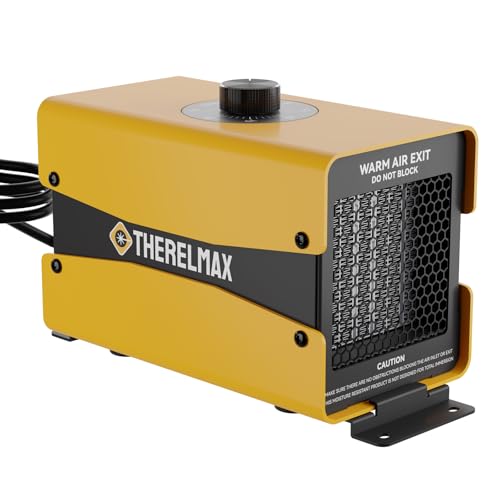
The 500W THERELMAX model extends boating seasons by preventing freezing in bilges and other compartments. It includes a built-in adjustable thermostat (temperature range: 41°F-86°F) for precise control and applies to bilges, RV bays, wellhouses, greenhouses, and more. It uses safe PTC ceramic heating technology to deliver rapid heating, with a targeted 3-second warm-up for quick protection. The unit emphasizes safety with a 3s fast heating cycle and a 40CFM waterproof fan for even air distribution in up to 500 cubic feet.
Therelmax 500W Boat Engine Compartment Heater (White)
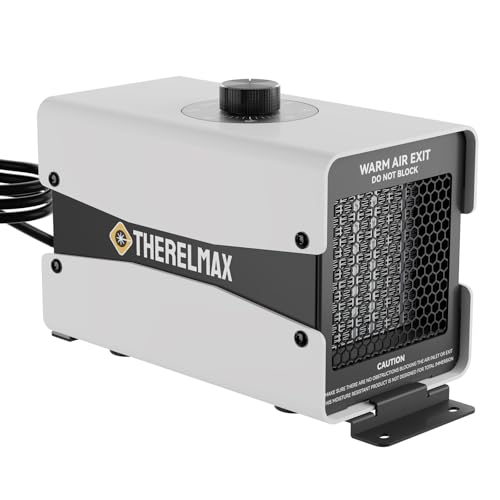
This white variant of the Thermelmax 500W model mirrors the yellow version with the same benefits: extended boating season, adjustable thermostat (41°F-86°F), and rapid 3-second heating. It is designed for use in boat bilges, RV bays, wellhouses, greenhouses, and more. The setup prioritizes safety and easy integration into compact spaces, helping prevent freezing of critical components while offering straightforward temperature control.
Caframo SEEKR by Caframo (400W, Black)

The SEEKR model from Caframo uses an ignition-protected, self-regulated PTC element for safe operation in bilge compartments and other enclosed spaces. It features dual airflow redundancy with two fans for added reliability, ensuring continued warmth even if one fan fails. This rugged heater focuses on safety and dependable operation in marine environments where ignition protection and stable heating are critical.
Twin Hornet 45 700W Boat Bilge Heater

The Twin Hornet 45 delivers higher power in a compact package, designed for wet locations and areas with combustible gases. It uses a patented stainless steel heating module and safe, self-regulating heating technology. Waterproof fans and thermostats provide reliable operation in harsh marine settings. The unit aims to balance robust heating with safety and durability in small engine compartments and bilges.
Buying Guide: Key Purchase Considerations
When choosing a small boat heater, consider the following factors to match your space and needs:
- Heat output and space: Estimate the volume of the target area (bilge, engine compartment, or cabin) and select a heater with appropriate wattage (e.g., 400–700W) to avoid over- or under-heating.
- Thermostat and control: Look for models with an adjustable thermostat and temperature range that suits your climate and storage requirements. Self-regulating PTC elements provide consistent performance and safer operation.
- Safety features: Prioritize ignition protection, waterproof fans, and automatic shutoff in case of tipping or overheating. This is critical in damp marine environments.
- Durability and materials: Anodized housings, sealed electronics, and corrosion-resistant components extend life in saltwater and humid conditions.
- Installation flexibility: Consider mounting options (wall, ceiling, or upright) and whether the unit can operate in various orientations (including upside down) if space is limited.
- Maintenance and reliability: Fans and thermistors should be easily accessible for inspection and replacement. Dual-fan designs add redundancy for reliability in critical compartments.
- Size and power source: Ensure the heater fits the allotted space and works with the boat’s electrical system, including 12V or 24V configurations if applicable.
Each model above emphasizes safety, reliability, and marine suitability. For smaller boats with restricted spaces, models in the 400–500W range with thermostatic control often provide a balance of warmth and efficiency. For larger bilge spaces or colder climates, a 700W option can offer quicker heat and better protection for critical components. Always follow manufacturer installation instructions and consult a marine electrician if uncertain about wiring or mounting in high-moisture areas.