
Answering the buyer’s search for reliable self-cleaning hot water tank tools, this guide highlights five top options that help remove sediment, improve efficiency, and extend tank life. Best for homeowners who want simple, effective maintenance without professional help, these tools suit different tank types and cleaning approaches. The table below compares key aspects to aid quick decisions.
| Product | Best For | Why It’s Selected |
|---|---|---|
| The Original Sediment Buster Water Heater Flushing Tool | DIY homeowners with standard tanks | UL Verified safety; uses a pressurized flush method with CO2 or air; comprehensive instructions |
| Water Heater Cleaning Tool for Sediment Removal | All sediment buildup, proactive maintenance | Breaks up large deposits, universal for gas/electric tanks |
| InSinkErator HWT300 Digital Instant Hot Water Tank | Instant hot water needs | Integrated system for quick hot water without long preheats |
| AIRHOP 3L Instant Hot Water Dispenser | Compact, fast hot water in homes | Zero-wait, multi-temp options, portable and easy to clean |
| The Original Sediment Gone Water Heater Flush Kit | Stubborn sediment cleanup | Active agitation during draining to loosen compacted sediment |
The Original Sediment Buster Water Heater Flushing Tool
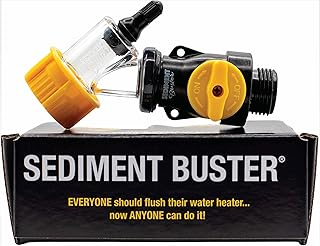
The Original Sediment Buster Flushing Tool is designed to help remove sediment buildup from residential water heater tanks. It is UL Verified for heat and pressure, ensuring safe operation under high temperature and pressure conditions. The tool supports use with compressed gas such as CO2, air compressors, or hand/bicycle pumps (sold separately). Clear instructions and video tutorials accompany the product to guide installation and operation.
Best for: DIY homeowners who prefer a structured, pressurized flush method and value safety verification. This tool is especially useful when the goal is to aggressively dislodge settled sediment and restore flow. A potential limitation is reliance on an external gas source or pump, which may require additional purchases if not already owned.
Water Heater Cleaning Tool for Sediment Removal

This Turbo Tank Cleaner tool focuses on breaking up large sediment deposits rather than just loosening surface grime. It’s marketed as universal for all water heater tank types, including gas and electric units (not designed for tankless systems). The product promises extended tank life, improved efficiency, and potential energy savings, with a claim that it can pay for itself in a single use.
Best for: Homeowners dealing with heavy sediment buildup or who want a method that physically disrupts large deposits. Better for households facing frequent sediment issues. A caution: it is not suitable for tankless water heaters, so specification checks are essential.
InSinkErator HWT300 Digital Instant Hot Water Tank

The InSinkErator HWT300 Digital Instant Hot Water Tank provides a digital instant hot water solution. While positioned as a self-contained hot water tank, it emphasizes rapid delivery of hot water, aligning with users seeking immediate availability rather than traditional sediment flush routines. It’s suitable for kitchens or spaces needing on-demand hot water without delay.
Best for: Buyers prioritizing instant hot water delivery and compact, integrated systems. Limitation: it may not be a direct sediment removal tool; its core value lies in instant hot water provision rather than a long-term tank flush solution.
A I R H O P 3L Instant Hot Water Dispenser

The AIRHOP 3L Instant Hot Water Dispenser is a compact countertop option offering five temperatures and three volume settings. It heats water on demand with no preheating delay, delivering as little as 180 milliliters in six seconds, or 500 milliliters in 15 seconds. A transparent water tank and a detachable, easy-clean design support maintenance and monitoring for scale and odors.
Best for: Busy households, small kitchens, or offices needing quick hot water with precise portion control. Consideration: while convenient, it is a dispenser rather than a full tank flush system, so it serves as a supplemental hot water solution rather than a complete tank maintenance tool.
The Original Sediment Gone Water Heater Flush Kit

The Sediment Gone Flush Kit is designed to actively loosen and flush stubborn sediment from the bottom of a water heater tank. It threads onto the drain valve and connects to a standard garden hose for controlled draining. Short bursts of air from a bicycle or hand pump during draining create internal agitation that helps carry sediment out of the tank.
Best for: Homeowners with compacted or stubborn sediment that standard flushes struggle to remove. It’s useful for maintenance cycles that need active agitation. Caution: operation involves draining and air bursts; proper safety steps and valve handling are essential to prevent leaks or damage.
Buying Guide
What should I consider before choosing a self-cleaning tool?
Identify your tank type (gas vs. electric; standard vs. tankless) and sediment level. Tools that rely on external air or compressed gas require access to a compatible power source or cartridge, while flush kits demand a drain valve and garden hose compatibility.
Which tool offers the best maintenance value?
For routine sediment removal, tools that combine ease of use with proven flush methods and clear instructions deliver consistent results. If heavy sediment is an issue, consider devices that physically disrupt deposits rather than just loosening them.
Are instant hot water solutions relevant to tank maintenance?
Instant hot water dispensers and digital tanks focus on delivery efficiency rather than sediment removal. They can complement a cleaning plan by reducing reliance on a large storage tank, but they do not replace a flushing tool for sediment control.
What safety considerations matter?
Look for UL or equivalent safety verifications, especially for high-temperature and high-pressure applications. Ensure you have proper drains, hoses, and any required gas or air sources before starting a flush.
How do I plan a maintenance schedule?
Schedule annual or semi-annual flush sessions, adjusted for water hardness and sediment buildup in your area. Use a combination approach if needed: periodic flushing with a dedicated sediment tool, plus periodic inspection of the anode rod and tank interior where applicable.
FAQ
- Is a self-cleaning tool necessary for all water heaters? Not always, but it helps maintain efficiency and extend tank life, especially in hard-water areas where sediment buildup is common.
- Can I use these tools on electric and gas water heaters? Some tools claim universal compatibility; verify the product notes for your specific tank type before use.
- Do these tools require professional installation? Most are designed for DIY use with clear instructions, though extreme cases may benefit from a plumber’s assistance.
- Will flushing improve my hot water temperature and flow? Yes, by removing sediment that narrows the heating surface and obstructs flow, you can see improved efficiency and flow consistency.
- Are there risks using compressed air or CO2? Follow tool instructions closely to avoid over-pressurization or leaks; use the specified sources and pressures recommended by each product.
- How often should I flush my water heater? A typical schedule is once a year, but manufacturers may recommend different intervals based on water quality and tank design.