
In this guide
- Dyna-Glo RMC-55R7 Indoor Kerosene Radiant Heater
- Dyna-Glo Indoor Kerosene Convection Heater — 23,800 BTU
- Sengoku HeatMate 110 Indoor/Outdoor Kerosene Heater
- Sengoku Indoor & Outdoor Kerosene Heater — 23,500 BTU
- Dura Heat Radiant Kerosene Heater With Glass Burner — 10,000 BTU
- Buying Guide: Key Purchase Considerations And Comparisons
Winter can test comfort and energy budgets. Radiant kerosene heaters offer portable warmth without electricity, making them valuable for emergency heating, cabins, garages, and off-grid living. This article highlights five standout models, detailing their BTU output, area coverage, and key safety features to help you choose the right heater for your space and needs.
Summary of chosen products:
- Dyna-Glo RMC-55R7 Indoor Kerosene Radiant Heater — 10,000 BTU, heats up to 500 sq. ft., requires no electricity
- Dyna-Glo Indoor Kerosene Convection Heater — 23,800 BTU, heats up to 1,000 sq. ft., no electricity
- Sengoku HeatMate 110 Indoor/Outdoor Kerosene Heater — 10,000 BTU, portable, long runtime
- Sengoku 23,500 BTU Indoor/Outdoor Kerosene Heater — portable, up to 900 sq. ft.
- Dura Heat Radiant Kerosen Heater with Glass Burner — 10,000 BTU, heats up to 450 sq. ft.
Dyna-Glo RMC-55R7 Indoor Kerosene Radiant Heater

The Dyna-Glo RMC-55R7 is a compact radiant heater designed for indoor spaces without requiring electricity. Delivering 10,000 BTU, it can heat roughly up to 500 square feet, making it suitable for living rooms, bedrooms, or home office spaces during colder months. Its no-electricity operation makes it a dependable option during power outages or in off-grid setups. The model emphasizes safety with features common to Dyna-Glo products, and its ivory finish offers a neutral look that blends with many decors.
Key considerations include its simple ignition and fuel management, ensuring quick warm-up without relying on electrical power. For smaller rooms, this heater delivers steady warmth without noise or fan distraction, preserving a comfortable ambiance while staying economical on fuel use.
Dyna-Glo Indoor Kerosene Convection Heater — 23,800 BTU

Designed for larger spaces, the Dyna-Glo WK95C8 Convection Heater delivers 23,800 BTU with coverage up to about 1,000 square feet. It operates without electricity, making it versatile for homes and cabins that experience power outages or that require a reliable, off-grid heat source. The convection design helps circulate warm air more evenly, distributing comfort across open floor plans. This model is well-suited for living rooms, basements, or workshops that demand more robust warmth.
When evaluating this heater, consider the trade-off between higher output and fuel consumption. While it warms bigger areas efficiently, it will draw more fuel for continuous operation. Proper kerosene handling and venting (where applicable) improve performance and safety in enclosed spaces.
Sengoku HeatMate 110 Indoor/Outdoor Kerosene Heater

The Sengoku HeatMate 110 is a portable 10,000 BTU kerosene space heater designed for both indoor and outdoor use. Its 1.2-gallon tank supports extended runtimes, enabling up to 14 hours of continuous warmth on a single fill. Built for portability, it’s suitable for garages, workshops, campsites, or rooms that require temporary heat without a wired power source. Safety features include an automatic shut-off and push-button start for quick ignition without matches, contributing to safer operation during power outages or emergency scenarios.
For spaces where mobility matters, this unit provides a practical balance of temperature control, fuel efficiency, and ease of use. It is a strong candidate for cabins or backup heating in barns and sheds where electricity may be unreliable or unavailable.
Sengoku Indoor & Outdoor Kerosene Heater — 23,500 BTU

With a higher output of 23,500 BTU and a design meant for both indoor and outdoor use, this Sengoku model covers larger spaces, up to roughly 900 square feet. Its portability makes it suitable for big rooms, garages, basements, or temporary heat needs during cold snaps. The heater features automatic safety shut-off, a tip-over switch, and protective grills that improve user safety in homes with children or pets. A 1.9-gallon tank reduces frequency of refueling while delivering steady heat over longer sessions.
Users should weigh the benefits of higher BTU output against fuel costs and the size of the space to be heated. The dual-use capability adds flexibility for seasonal use, camping trips, or emergency planning, but it requires careful setup and ventilation to maintain air quality indoors.
Dura Heat Radiant Kerosene Heater With Glass Burner — 10,000 BTU
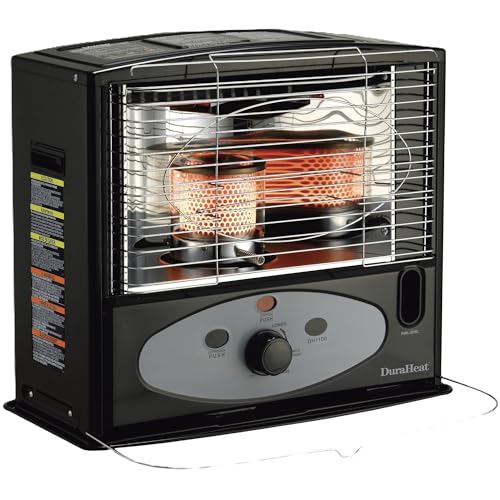
The Dura Heat DH1100 provides radiant heat for up to 450 square feet with a 10,000 BTU rating. It operates without electricity and features a glass burner for visible flame heat, which some users find reassuring visually. The device is portable and designed for emergency heating in unheated rooms or off-grid spaces. Its compact footprint makes it suitable for apartments, small houses, or campers where space is at a premium.
While radiant heaters like this one offer immediate warmth, they can require more careful ventilation in tightly sealed spaces. Consider room size, occupancy, and ventilation needs to minimize indoor air quality concerns while maximizing warmth efficiency during cold periods.
Buying Guide: Key Purchase Considerations And Comparisons
- Heat output and room size: Match BTU ratings to the square footage you intend to heat. Larger spaces typically benefit from higher BTU models or two-room configurations, while smaller rooms can be comfortable with 10,000 BTU units.
- Fuel stability and availability: All models rely on kerosene or compatible fuels. Check local fuel availability, shelf life, and handling requirements to ensure long-term value and safety.
- Electricity independence: Radiant kerosene heaters excel when power is unreliable or unavailable. If you expect frequent outages, prioritize units marketed as no-electricity-needed or push-button ignition systems that do not require electrical power to run.
- Safety features: Look for automatic shut-off, tip-over protection, flame guards, and sturdy bases. These features reduce risk in homes with kids, pets, or high-traffic areas.
- Ventilation and indoor air: Even radiant heaters require some ventilation. Ensure there is adequate air exchange to avoid buildup of combustion byproducts. Follow product manuals for placement and clearance guidelines.
- Portability and setup: If you need heat in multiple rooms or outdoors, select lighter, portable models with easy fuel handling. Tanks and carrying handles improve usability during winter events or emergencies.
- Maintenance and longevity: Regular maintenance, including wick care, fuel quality, and cleaning of grills, extends the life of kerosene heaters. Verify that spare parts and replacement wicks are readily available from the manufacturer.
- Noise and comfort: Some heaters use fans or blowers, while radiant units minimize noise. Consider whether you prefer quiet operation in living rooms or workspaces where conversation occurs.
- Cost of operation: Fuel efficiency varies by model. Compare runtime per gallon and typical consumption to estimate ongoing costs for extended use during cold periods.
- Legal and safety standards: Ensure compliance with local fire codes and manufacturer safety guidelines. Some units may be better suited for garages or outdoor settings rather than living areas with restricted ventilation.
Overall, the five highlighted models provide a spectrum from compact radiant heaters suitable for small rooms to larger, high-output units appropriate for bigger spaces or emergency use. When selecting, prioritize room size, how often you expect to use the heater, and whether electricity-free operation is essential for your home or retreat.