
Answer: A radiant heat programmable thermostat is best for homeowners who want precise, energy-efficient control of underfloor heating. This guide highlights five top options, clarifying who each is best for and why it stands out. Whether you need simple non-programmable control or advanced 7-day scheduling, these models cover common floor-heating setups and voltage systems. The buyer-friendly table below summarizes core strengths to help you compare at a glance.
| Product | Best For | Key Benefit |
|---|---|---|
| 1 PC Dual Voltage 120V/240V WiFi Heated Radiant Floor Thermostat | Smart homes, energy savers | WiFi with 5+1+1/7-day programming |
| OJ Microline UTN4 Radiant Floor Heat Thermostat | Simple, quick setup | Non-programmable with Built-in GFCI |
| Honeywell TH115-AF-GA/U Radiant Heating Thermostat | Reliable basic programmable control | Programmable with floor sensor |
| VEVOR 7-Day Programmable Thermostat | Comprehensive weekly scheduling | GFCI, LED screen, energy focus |
| Google Nest Thermostat | Smart, ecosystem-friendly users | WiFi, learns routines, wide compatibility |
1 PC Dual Voltage WiFi Radiant Floor Thermostat

Best for: Homeowners seeking modern smart control and flexible voltage. This model supports 120V and 240V floor heating cables and works with popular smart assistants. It’s ideal for those who want remote access and voice activation through the Smart Life app, plus schedules that align with weekday routines. The 5+1+1/7-day programming enables Wake, Work, Return, and Sleep modes, reducing manual adjustments and helping save on heating costs. Caution: Verify compatibility with your specific underfloor heating system before installation.
OJ Microline UTN4 Radiant Floor Heat Thermostat
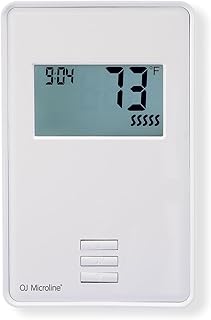
Best for: Quick-install, non-programmable control with essential safety. The UTN4 includes a built-in Class A GFCI, meeting safety requirements for many underfloor heating setups. It’s dual-voltage and compatible with 120V, 208V, and 240V circuits, making it a straightforward plug-and-play option for users who want reliable warmth without scheduling complexity. Limitation: Lacks programmable scheduling, so it’s less suitable for people who want energy-saving routines.
Honeywell TH115-AF-GA/U Radiant Heating Thermostat

Best for: Traditional programmable control with basic floor-sensor integration. The Honeywell TH115-AF-GA/U is designed for reliability with programmable modes and floor-sensor compatibility for more accurate heat targeting. It’s a sensible pick for established systems that require proven performance. Caution: The product description is minimal on advanced features; confirm sensor compatibility with your flooring type before purchase.
VEVOR 7-Day Programmable Thermostat
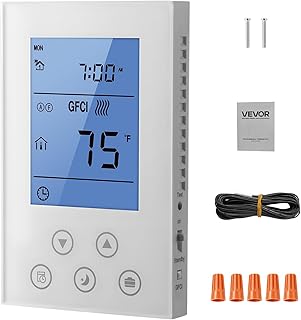
Best for: Energy-conscious homes that benefit from full-week scheduling. The VEVOR thermostat supports high/low voltage systems (120V/240V) and is compatible with underfloor heating and snow-melting setups. Built-in GFCI and a sensitive sensor enable precise climate control, while the LED backlit display helps readability in dim rooms. Caution: Some users may find programming steps less intuitive; consult the manual for step-by-step setup.
Google Nest Thermostat

Best for: Smart-home users seeking automated learning and ecosystem compatibility. The Google Nest Thermostat offers WiFi connectivity and programmable features within a broader smart-home environment. It learns routines to optimize comfort and energy use over time, making it a strong option for households invested in a connected ecosystem. Limitation: Some users may prefer manual control without ongoing learning, which can be less transparent in how it adjusts settings.
Buying Guide: Key Purchase Considerations
What should you check before buying a radiant heat programmable thermostat?
- Voltage compatibility: Ensure the unit supports your system’s voltage (most radiant floor systems use 120V or 240V).
- Programmability: Decide between non-programmable, 5+1+1, or full 7-day programming based on your schedule.
- Sensor and floor compatibility: Confirm whether a floor sensor is included and if it matches your floor type (tile, wood, carpet).
- Safety features: Look for built-in GFCI on devices designed for wet environments or heat mats to prevent electrical faults.
- Smart-home integration: If you use Alexa, Google Assistant, or Apple HomeKit, verify compatibility and app ease of use.
- Ease of installation: Check wiring requirements and whether the thermostat is a plug-and-play or requires professional installation.
- Display and accessibility: Consider LED displays, backlighting, and app reliability for easy daily use.
Frequently Asked Questions
- What is a radiant heat programmable thermostat?
A thermostat designed to control underfloor heating systems with programmable schedules and, often, smart connectivity to manage temperatures efficiently.
- Do radiant floor thermostats require a floor sensor?
Not all models require a floor sensor, but many benefit from one to improve accuracy for floor temperatures and comfort.
- Is GFCI required for underfloor heating thermostats?
In many installations, especially in wet areas, a GFCI/ground fault protection helps prevent electrical hazards.
- Can I control these thermostats remotely?
Yes, several models offer WiFi or smart-home integration for remote control via smartphone apps or voice assistants.
- Which thermostat is best for a simple setup?
Non-programmable options like the UTN4 or straightforward programmable units provide quick setup and reliable warming without complex scheduling.
- Are smart thermostats better for energy savings?
Smart thermostats can optimize routines over time, potentially delivering greater energy savings by aligning heat with real usage patterns.