
The best radiant heat expansion tanks for closed-loop hydronic or radiant systems are 2.1-gallon units with standard MNPT connections. These tanks protect boilers and radiant loops from pressure spikes and water hammer, while maintaining system efficiency. The right choice depends on whether you need potable or non-potable water compatibility, mounting options, and installation ease. The following five products are well-suited for residential and light commercial radiant setups, with clear pros and a practical caveat for each.
| Product | Capacity | Connection | Best For |
|---|---|---|---|
| Hydronic Expansion Tank – ETX-15 Replacement | 2.1 gal | 1/2″ MNPT | Closed-loop radiant systems; non-potable water |
| Solimeta 2.1 Gallon Potable Water Expansion Tank | 2.1 gal | 3/4″ MNPT | Potable water systems; convenient mounting bracket included |
| EFIELD Water Heater Expansion Tank | 2.1 gal | 3/4″ MNPT | Potable water; simple installation |
| TT FLEX Potable Thermal Expansion Tank (2.1 gal) | 2.1 gal | 3/4″ MNPT | Compact, easy install for small systems |
| Eastman 2-Gallon Mini Thermal Expansion Tank | 2 gal | 1/2″ MIP | Flexible mounting; durable stainless steel |
Note: Each product serves radiant heating or closed-loop systems by absorbing excess thermal pressure. Always match tank precharge and connection size to your boiler or heater manufacturer’s specifications and local codes.
Hydronic Expansion Tank – ETX-15 Replacement
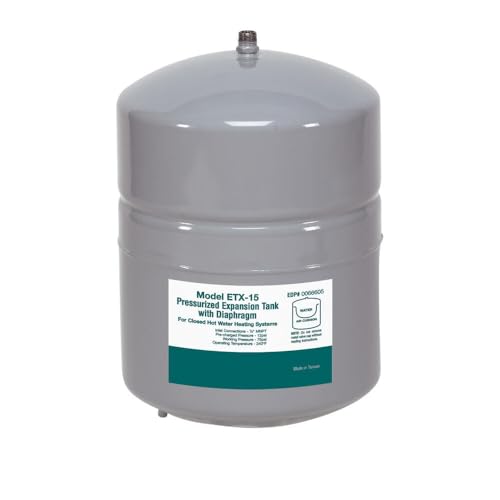
Best for non-potable radiant systems and boilers. This 2.1-gallon tank ships pre-charged at 12 PSI, with a 1/2″ MNPT connection for straightforward replacement in ETX-15-type layouts. It’s designed specifically for closed-loop hydronic heating where thermal expansion must be controlled. Choose this if your system uses non-potable water and you need a direct compatibility match to ETX-15 tanks. Caution: Verify the precharge is correct for your boiler’s operating pressure to avoid inaccurate readings.
Solimeta 2.1 Gallon Potable Water Expansion Tank
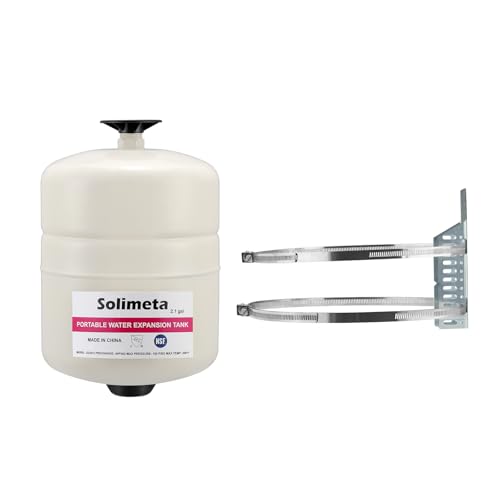
Best for potable water systems needing an integrated wall mounting bracket. This 2.1-gallon tank features a 3/4″ MNPT thread and includes a wall mounting bracket set, reducing accessory purchases. It helps prevent pressure buildup, improves system longevity, and reduces water hammer. It’s a solid pick for residential boilers or hydronic heaters that supply drinking water. Limitation: Ensure your local code permits this tank’s use with potable water in your installation area.
EFIELD Water Heater Expansion Tank

Best for households that want certified potable water compatibility with a standard 3/4″ MNPT connection. This 2.1-gallon tank protects plumbing by absorbing excess thermal pressure while ensuring the water remains safe for drinking. It’s a straightforward install for typical water heater or small boiler lines. Caution: Potable-tank selection requires confirmation of local code compliance and compatibility with your water heater model.
TT FLEX Potable 2.1 Gallon Tank

Best for compact installations where easy mounting matters. The TT FLEX 2.1-gallon tank handles thermal expansion in close-loop cooling or heating systems and is noted for simple installation. It uses a 3/4″ MNPT connection suitable for many residential setups. A potential limitation is that some users may need a deeper or larger tank for high-usage systems, so sizing should be confirmed against system volume and temperature rise.
TT FLEX Potable Thermal Expansion Tank (4.5 gal)
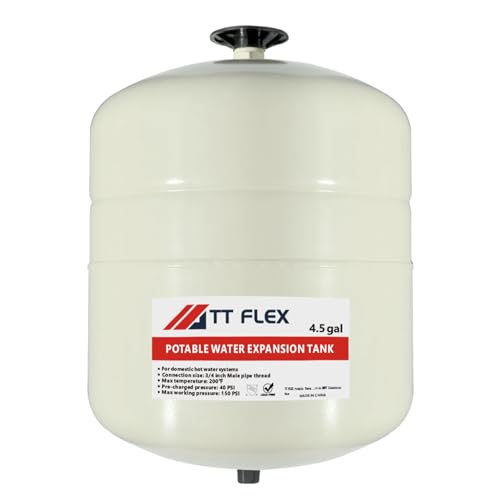
Best for larger potable systems requiring higher capacity. This 4.5-gallon model uses a 3/4″ MNPT connection and is designed with a 100% butyl diaphragm and a plastic liner to separate system water from air precharge, helping prevent leaks and valve activation. Choose this if your radiant loop has higher expansion demands; avoid if space is severely limited or your system volume is small and a 2.1-gallon tank would suffice.
Eastman 2-Gallon Mini Thermal Expansion Tank

Best for adaptable installations with stainless steel durability. This 2-gallon tank features a 1/2″ threaded connection and a durable 304 stainless steel body. It’s versatile for indoor or outdoor radiant systems and offers adjustable pressure for flexible setups. Caution: The stainless steel build adds resilience but verify the ambient temperature range for outdoor use in your locale.
Buying Guide
What matters most when choosing a radiant heat expansion tank?
- System type: Closed-loop radiant vs. non-potable vs. potable water—select based on water usage and code requirements.
- Capacity: 2.1 gallons is common for many residential radiant setups; larger or smaller needs may require different sizes.
- Connections: Match MNPT or NPT thread size to your boiler or heater and check if adapters are needed.
- Precharge: Ensure the tank is precharged to match your system’s operating pressure; incorrect precharge can cause short cycling or valve activation.
- Mounting options: Wall brackets or free-standing configurations can simplify installation in tight spaces.
Practical considerations for installation include confirming supply water quality (potable vs. non-potable), ensuring compatibility with local codes, and planning sensor or relief valve placement to minimize potential leaks or corroded connections.
Comparison Highlights
- Best for non-potable radiant systems: Hydronic Expansion Tank – ETX-15 Replacement
- Best for potable water with bracket included: Solimeta 2.1 Gallon
- Best for simple, straightforward installs: EFIELD Water Heater Expansion Tank
- Best for compact installations: TT FLEX 2.1-Gallon Potable
- Best for flexible space and stainless durability: Eastman 2-Gallon Mini
FAQ
- What is an expansion tank used for in radiant heating systems?
It absorbs pressure fluctuations caused by water heating and cooling, protecting boilers and pipes from damage.
- Do I need a potable or non-potable tank for radiant heat?
Non-potable tanks are common for radiant heat loops. Potable tanks are required only if the system is connected to drinking water lines or falls under local code requirements.
- What size expansion tank should I choose?
Common residential sizing is around 2.1 gallons, but your boiler volume, system pressure, and temperature rise will determine the best fit.
- Can I install an expansion tank myself?
Yes, with careful adherence to local codes, correct precharge pressure, and proper connection to the cold-water line or boiler loop.
- How do I verify correct precharge pressure?
Use a pressure gauge to confirm the tank is precharged to the system’s operating pressure, typically matching your boiler’s cold start pressure.