
Radiant gas wall heaters deliver targeted warmth with reliable efficiency, making them a smart choice for homes, cabins, or small apartments where quick heat is essential. This guide highlights five top options ideal for different needs—from vent-free natural gas units to electric wall heaters for zones without gas lines. The featured products are chosen for clear functionality, ease of use, and practical advantages for typical buyers such as homeowners, renters, and DIY enthusiasts. A quick comparison table below helps you spot the best fit at a glance.
Product overview table (selected models at a glance):
| Product | Best For | BTU Range | Fuel Type |
|---|---|---|---|
| Mr. Heater 30,000 BTU Vent Free Blue Flame Natural Gas Heater | Small to mid-sized spaces up to 1,000 sq ft | 30,000 | Natural Gas |
| Mr. Heater 30,000 BTU Vent Free Radiant Propane Heater | Gas-only homes with propane supply | 30,000 | Propane |
| ProCom Heating 30,000 BTU Ventless Infrared Plaque Heater | Areas with no electricity access | 30,000 | Natural Gas |
| 9815WH High-Capacity Electric Wall Heater | Electric-only rooms needing quick zone heat | 1500 | Electric |
| Mr. Heater 30,000 BTU Vent Free Radiant Natural Gas Heater | Gas-powered warmth in compact spaces | 30,000 | Natural Gas |
Mr. Heater 30,000 BTU Vent Free Blue Flame Natural Gas Heater

Best for mid-sized living rooms or workshops, this vent-free blue flame model provides steady radiant heat while venting is unnecessary. It heats up to about 1,000 square feet and uses a battery-operated electronic ignition for reliable starts. The unit is well-suited for spaces where natural gas lines are available and where users want quick, direct warmth without complex venting. A potential limitation is the requirement for proper ventilation in some installations, and the unit relies on a stable gas supply.
Who it’s best for: homeowners seeking straightforward natural gas warmth in moderately sized spaces. Why selected: strong heat output, simple ignition, and no venting required, making it a practical retrofit for many homes. Caution: ensure adequate clearance and proper installation per local codes to prevent safety concerns.
Mr. Heater 30,000 BTU Vent Free Radiant Propane Heater

This propane-only option is ideal for spaces with propane supply or off-grid scenarios where electricity is limited. It delivers 30,000 BTU and can heat up to 1,000 square feet, supported by a battery-powered electronic ignition. It’s best for structures with established propane access and where vent-free operation is acceptable. Caution: ensure appropriate ventilation and follow all safety guidelines for gas appliances in enclosed spaces.
Who it’s best for: households relying on propane as a primary fuel source or rental cabins without reliable electrical service. Why selected: robust BTU output and vent-free operation suitable for portable or secondary heating needs. Caution: consider installation space and ensure exhaust clearance to prevent overheating nearby materials.
ProCom Infrared Plaque Heater With Base Feet – 30,000 BTU
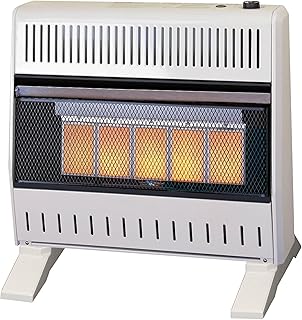
Best for off-grid or back-up heat where electricity is scarce, this natural gas infrared plaque heater operates without electric power. It provides up to 1200 square feet of warmth and includes a Piezo ignition with manual heat settings (Low/Medium/High). An Oxygen Depletion Sensor with automatic shut-off adds a safety layer. This model is best in spaces where electrical outlets are limited or non-existent. Caution: verify that natural gas supply is available and that the space has adequate ventilation.
Who it’s best for: property owners or campers needing gas-powered heat without relying on electricity. Why selected: higher heat-capacity for larger rooms and a simple manual control set. Caution: operation requires gas lines and careful placement to ensure safe combustion and air quality.
9815WH High-Capacity Electric Wall Heater

This electric wall heater offers substantial supplemental heat with 1500 watts, featuring a built-in adjustable thermostat and a quiet fan with downflow air circulation. It is well-suited for bedrooms, kitchens, or bathrooms where steady, controllable warmth is desired without combustibles. The 120/240V configuration provides installation flexibility for many homes. Best for electric-only spaces or zones where gas is not an option. Limitation: electrical installation must comply with local codes and may require a dedicated circuit.
Who it’s best for: electric-only spaces needing reliable, adjustable heat. Why selected: strong heating capacity, user-friendly thermostat, and quiet operation. Caution: ensure proper electrical supply and ventilation planning if used near moisture-prone areas.
Mr. Heater 30,000 BTU Vent Free Radiant Natural Gas Heater
This vent-free radiant natural gas heater is a compact option designed for spaces up to 1,000 square feet, with a battery-operated electronic ignition. It’s an efficient choice for quick warmth in rooms with gas access and where venting is not required. Best for spaces where direct radiant heat is preferred and an electric ignition is sufficient. Caution: ensure correct installation, ventilation, and door/window placement to avoid heat buildup in confined areas.
Buying Guide: Key Considerations for Radiant Gas Wall Heaters
- Fuel type and availability: Natural gas versus propane versus electric. Choose according to existing fuel sources and long-term cost expectations.
- Space size and heat output: Match BTU rating to room size. Vent-free units are often sufficient for up to 1,000 sq ft; larger areas may require alternative heating or supplemental systems.
- Ventilation and safety: Vent-free units rely on stable indoor air quality. Ensure proper installation and meet local codes. Look for oxygen depletion sensors and automatic shut-offs where available.
- Ignition and controls: Battery-operated or piezo ignition offers easy starts. Manual controls give straightforward heat settings for zone-based heating.
- Electrical requirements (for electric models): Check voltage compatibility (120V vs 240V) and circuit capacity to avoid tripping breakers or overheating.
- Maintenance and accessibility: Consider ease of cleaning, filter access if applicable, and serviceability in your area.
- Installation considerations: Clearance from combustibles, wall mounting options, and whether professional installation is recommended or required by code.
- Best-use scenarios: Vent-free gas heaters are great for spaces with propane or natural gas lines; electric heaters serve zones without gas or in retrofit scenarios.
Frequently Asked Questions
- Q: Do radiant gas wall heaters require ventilation? A: Vent-free units operate without a vent but still require adequate room ventilation and compliance with local codes.
- Q: Can I install these heaters myself? A: Installation requirements vary by model and local code. Follow the manufacturer instructions and consider professional installation if in doubt.
- Q: Are vent-free heaters safe for bedrooms? A: They can be, with proper clearance, oxygen depletion sensors, and automatic shut-off features. Always follow safety guidelines.
- Q: Which heater is best for a large, open living space? A: Look for models with higher BTU ratings (around 30,000 BTU) and check the space’s ventilation and insulation to prevent overheating or heat loss.
- Q: Do electric wall heaters warm rooms as quickly as gas heaters? A: Electric heaters provide steady, zone-specific warmth and often have built-in thermostats, but gas heaters can deliver rapid heat in a shorter period for larger spaces.
- Q: What maintenance is required for vent-free gas heaters? A: Regular inspection of gas connections, ignition components, and ensuring exhaust and ventilation paths remain clear. Follow safety guidelines in the manual.