
Propane forced air heaters offer portable, high-output warmth for job sites, garages, workshops, and outdoor spaces. This guide highlights five top options, explains who each model suits best, and compares key features to help you choose. Whether you need quiet operation, extended runtime, or rugged construction, these picks cover different space sizes and use cases. The buyers listed here range from compact, indoor-friendly units to high-capacity torpedo heaters designed for large areas.
| Product | Best For | Approx. BTU / Area | Notes |
|---|---|---|---|
| Mr. Heater 60,000 BTU Quiet Burner Technology Forced Air Propane Heater | Quiet environments and mid-size spaces | 60,000 BTU | QBT technology; up to 14 hours on a 20 lb tank (low setting) |
| Flame King 60,000 BTU Portable Propane Forced Air Heater | Outdoor patios, garages, or well-ventilated spaces | 60,000 BTU | Safety features; suitable for open outdoor areas |
| Mr. Heater 125,000 BTU Forced Air Propane Heater | Large shops and garages | 125,000 BTU | Portable with long reach and high heat output |
| Remington LP Forced Air Heater, 60,000 BTU | Construction sites and mid-sized spaces | 60,000 BTU | Heavy-duty, adjustable heat; good portability |
| DEWALT 68,000 BTU/H Forced Air Propane Heater | Rugged job sites needing robust heat | 68,000 BTU | Focused on performance for larger areas |
Mr. Heater 60,000 BTU Quiet Burner Technology Forced Air Propane Heater

The Mr. Heater 60,000 BTU unit uses Quiet Burner Technology to reduce noise by about half compared with standard propane heaters, making it suitable for garages and workspaces where noise matters. Best for mid-size rooms and outdoor work zones with good ventilation. The model offers a variable output from 30,000 to 60,000 BTU and can run up to 14 hours on a 20 lb tank at the low setting. Caution: lower efficiency at full blast may require more frequent fueling in large drafts.
Flame King 60,000 BTU Portable Propane Forced Air Heater

This Flame King model provides 60,000 BTU for outdoor or well-ventilated spaces like patios, garages, and job sites up to about 1,500 sq ft. It includes built-in safety shutoff features and a fire detection system, alongside a simple auto ignition for quick warmth. Best for open-air areas where airflow is steady. Choose this if you need a sturdy, safety-focused heater for frequent outdoor use; avoid in fully enclosed spaces without ventilation.
Mr. Heater 125,000 BTU Forced Air Propane Heater

The 125,000 BTU Mr. Heater model is designed for larger areas and better coverage, suitable for sizable shops and barns. It’s portable and ships with a 10 ft hose and regulator for flexible clearance from tanks. Best for spaces where high heat output is essential, and run times are less sensitive to frequent fueling. Caution: higher heat output means more fuel consumption in continuous full-load operation.
Remington LP Forced Air Heater, 60,000 BTU

Remington’s 60,000 BTU heater targets construction sites, garages, and workshops needing robust performance with easy portability. It features adjustable heat settings and a compact design at around 11 pounds, enabling quick relocation. Best for mobile work crews and smaller job sites. Limitation: true heat distribution depends on ventilation and room layout; expect more fuel cycles in larger open areas.
DEWALT 68,000 BTU/H Forced Air Propane Heater

DEWALT’s 68,000 BTU forced air heater focuses on higher heat output for larger spaces and demanding job sites. It provides strong warmth with reliable performance and is positioned for contractors who need steady heat over extended periods. Best for workers requiring durable construction and consistent airflow. Limitation: higher BTU models may require careful fuel management in smaller, poorly ventilated areas.
Habitio 125,000 BTU Forced Air Propane Heater
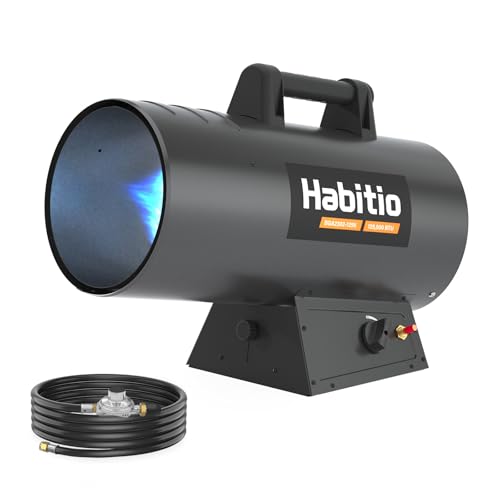
Habitio’s 125,000 BTU model covers large spaces up to about 3,125 sq ft and ships with an 11-foot hose and regulator for flexible connections. It features pulse ignition and CSA certification for added safety, plus overheat protection and automatic shutdown. Best for large garages and outdoor job sites; caution: assembly and wiring require proper handling to avoid leaks and ensure safe operation in windy conditions.
Buying Guide
- Space size: Match BTU rating to the area you need to heat. Larger spaces require higher BTU and reliable fuel supply for sustainable warmth.
- Ventilation: Propane heaters need adequate airflow. Use in well-ventilated areas; avoid enclosed rooms without ventilation to prevent buildup of carbon monoxide.
- Portability: Consider weight, handle design, and hose length. Higher BTU units are often heavier but may include longer hoses for flexible placement.
- Safety features: Look for automatic shutoffs, flame-out protection, tip-over shutoff, and CSA or similar certifications for safer operation.
- Fuel logistics: A longer runtime on a 20 lb tank means fewer refuels in continuous use. Check the included hose and regulator lengths and whether tanks are sold separately.
- Noise considerations: Some models advertise quieter operation. If noise is critical, prioritize units with Quiet Burner Technology or similar features.
FAQ
- What size propane heater do I need for a 1,000 sq ft workshop?
– Look for a model in the 60,000–125,000 BTU range with efficient airflow to maintain consistent warmth; select one with a longer runtime and good safety features. - Are propane forced air heaters safe for indoor use?
– They require proper ventilation and adherence to manufacturer safety guidelines. Use outdoors or in well-ventilated spaces to minimize risk of carbon monoxide buildup. - What should I consider when choosing between 60k and 125k BTU?
– Compare space size, ceiling height, and how quickly you need heat. Higher BTU offers faster heating in larger areas but increases fuel use. - Do these heaters require a special fuel tank?
– Most units use standard propane tanks (like 20 lb or larger). Some may include hoses and regulators; check what’s included before purchasing. - Can I use these heaters in a garage or barn year-round?
– Yes, if the area is ventilated and safe for propane use. Monitor temperature, fuel supply, and ensure proper clearance from combustibles.