
If you need reliable underground pipe freeze protection, these pre-insulated and in-pipe heating options offer safe, self-regulating performance for different pipe types and installation needs. This guide highlights five practical choices, who they’re best for, and why they stand out for underground or enclosed applications.
Buyer profile snapshot: ideal for homeowners and small businesses seeking internal or buried pipe heat protection with clear certifications, durable construction, and straightforward installation. The table below compares core specs to help narrow choices quickly.
| Product | Best For | Key Benefit |
|---|---|---|
| HEATIT NSF/ANSI/CAN 61 150 Ft | Drinking-water lines in underground pipes | Full NSF61 safety certification with in-pipe installation |
| Heat Mizer Insulated PEX Pipe – 50 ft | Pex piping in outdoor or open-to-ground runs | Three-layer insulation reduces heat loss |
| HEATIT 30ft Self-Regulating | Short-length, internal pipe protection | ETL/UL-certified safety along the whole cable |
| TOPDURE In-Pipe Heating Cable – 10 ft | Hidden or underground pipelines needing fast protection | CSA NSF61 certified with internal heating |
| HEATIT In Pipe 65 ft | Longer underground sections with in-pipe install | Fully certified and durable fluoropolymer sheath |
HEATIT NSF/ANSI/CAN 61 150 Ft In-Pipe Heat Tape
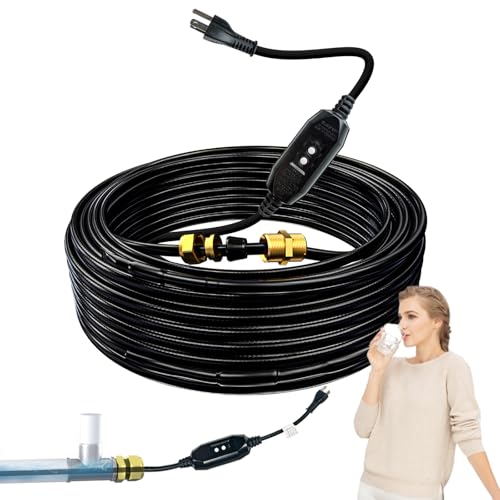
This in-pipe self-regulating heating cable uses a fluoropolymer sheath for durable protection. It is CSA NSF61 certified for drinking water safety, ensuring that water remains safe while pipes receive reliable freeze protection. Best for underground or enclosed pipes where external cables are impractical, and where water safety certification matters. Caution: external power connections require careful routing and adherence to local codes.
Heat Mizer Insulated PEX Pipe – 50 Ft

Designed with three-layer insulation around PEX pipes, this option emphasizes heat retention for outdoor boiler or heating system runs. Its two-pipe separation with insulation further reduces freezing risk. It’s suitable for both Oxygen Barrier (O2) and Non-Oxygen Barrier (Non-O2) configurations, depending on system needs. Choose this if you’re protecting longer PEX runs in exposed or outdoor settings and want strong insulation performance. Limitation: version availability may vary by pipe size and barrier type.
HEATIT 30ft Self-Regulating Pipe Heating Cable

This 3 W/ft heat cable maintains water flow down to -40°F and includes a power cord with strong insurance coverage. It emphasizes full-cable ETL safety certification (the plug alone is not sufficient). It works with metal and plastic pipes, offering flexibility across materials. Best for shorter runs and where a fully certified product matters most. Caution: ensure total cable length matches installer needs to avoid overheating in tight spaces.
HEATIT In Pipe Heating Cable – 65 Ft
This in-pipe heating cable offers a longer in-pipe installation option with the same NSF61 safety framework and durable fluoropolymer sheath as shorter formats. Best for longer underground runs or concealed piping where a robust internal heating solution is advantageous. Choose this if you need extended protection without external exposure; caution on fit with smaller pipes where length may exceed space for routing.
Buying Guide
- For drinking-water safety, prioritize products with CSA NSF61 or equivalent full-cable certifications. This reduces risk around potable water lines.
- In-pipe designs protect hidden or underground pipes from the inside, while external cables are mounted outside. Choose based on exposure, accessibility, and risk of physical damage.
- Match cable length to the protected run. Self-regulating cables adjust heat with temperature, but verify total wattage to avoid inefficiency or overheating.
- Some cables work across metal and plastic pipes; others are optimized for specific materials. Confirm compatibility with your pipe types.
- Pre-insulated options reduce heat loss. Consider additional insulation or wrap for exposed underground segments to maximize efficiency.
- Look for ETL/UL certifications for safety. Some products offer liability coverage against product failures; factor this into risk assessment.
Frequently Asked Questions
- What certification is essential for drinking-water safety? CSA NSF61 certification ensures the entire heating Cable is certified for use with drinking water systems.
- Should I choose in-pipe or external heating cables? In-pipe cables are protected from external damage and are ideal for underground runs; external cables are easier to retrofit but may be exposed to environmental risks.
- Can self-regulating cables overheat? No; self-regulating cables adjust heat output based on ambient temperature, helping prevent overheating when properly sized for the run.
- Are there safety certifications beyond certifications for the cable itself? Some products include UL or ETL-listed plugs and full-cable certifications; verify that the entire assembly is certified, not just parts of it.
- What length should I buy for a long underground run? Measure the pipe length under protection and add a small margin for routing and turns. Longer runs may require multiple continuous sections or parallel runs.
- Can these cables be used with all pipe materials? Many are compatible with metal and plastic pipes, but always check the product’s compatibility notes to ensure reliable performance.