
In this guide
If you’re looking to control space heaters or heater-related devices efficiently, a plug-in timer is the best solution. These timers let you schedule heat on and off, save energy, and keep rooms comfortable without constant monitoring. Ideal buyers include: homeowners seeking energy savings, renters needing temporary scheduling, and those who want automated safety for heaters in bedrooms or offices. Below are five top options chosen for versatility, simplicity, and reliability. A quick buyer’s guide follows to help you compare features, durability, and best-use scenarios.
Buyer’s quick reference table (selected products):
| Product | Best For | Key Benefit |
|---|---|---|
| BN-LINK Indoor Digital Timer Outlet | Users needing 8 ON/OFF programs | Two outlets, daylight savings, backup battery |
| BN-LINK 24 Hour Plug-in Mechanical Timer | Simple, reliable automation | Pin dial with no loose parts |
| ENERLITES 8-Hour Countdown Timer | Quick setup with multiple presets | Easy 8-hour options, repeats daily |
| Fosmon 24 Hour Programmable Timer (2 Pack) | Two-device control, LCD display | Backup battery, ETL listed |
| VIVOSUN 7 Day Programmable Timer (2 Pack) | 7-day scheduling with dual outlets | 20 on/off programs, large display |
BN-LINK Indoor Digital Timer Outlet

Best for: users who want eight adaptable programs and power-outage resilience. This model supports two grounded outlets with simultaneous control and a flexible 1-minute minimum interval. A daylight savings setting and a full backup battery help maintain timing when power is interrupted.
Why selected: It provides versatility for heaters, lamps, and fans, with eight on/off programs and a random vacation mode to simulate occupancy. The dual outlets enable controlling two devices in tandem, which can be useful for heating a small area with two devices.
Limitation: Some users may prefer a mechanical dial for simplicity; the digital interface may require initial setup for best performance.
BN-LINK 24 Hour Mechanical Timer

Best for: users seeking a sturdy, straightforward timer with no programming complexity. The built-in pin dial allows quick ON/OFF scheduling by pushing pins to mark active periods.
Why selected: It automates lamps, fans, climate devices, and small heaters with reliable 24-hour cycles. The simple design is durable and easy to operate in homes or offices.
Limitation: Lacks advanced presets or day-by-day scheduling; best suited for recurring daily routines rather than weekly variations.
ENERLITES 8-Hour Countdown Plug-in Timer

Best for: quick, repeatable daily settings with minimal setup. This countdown timer provides preset intervals from 15 minutes to 8 hours and repeats automatically for daily cycles.
Why selected: The compact unit is UL listed and simple to use, ideal for activating heaters or lights during specific time windows without ongoing manual control.
Limitation: Fewer days-per-week options; not designed for complex weekly schedules or multiple-device control.
Fosmon 24 Hour Programmable Timer Outlet (2 Pack)
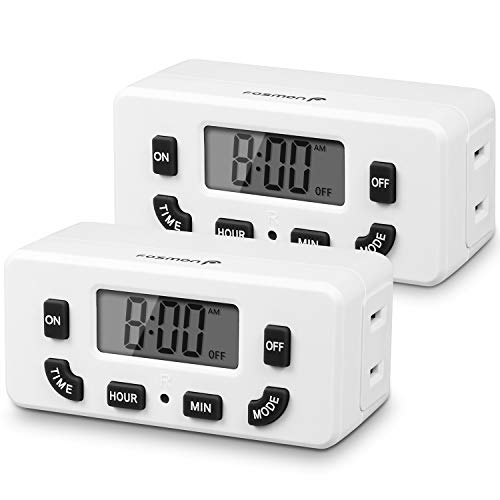
Best for: households that want two programmable outlets with a clear LCD display. It works well for seasonal heaters, lamps, and holiday decorations requiring fixed daily schedules.
Why selected: Features a backup battery to preserve settings during outages and is ETL listed for safety. It accepts 125V/15A loads, making it suitable for common household heaters and lamps.
Limitation: The preset options are straightforward; while adequate for many users, it lacks a broader 7-day planning feature found in some higher-end models.
NEARPOW Timer Outlet

Best for: users who want an infinite daily cycle with a single outdoor or indoor outlet. It offers 15A/1800W capability and an easy-to-understand interface with a countdown and interval options.
Why selected: The device supports multiple cycles per day and an interval feature, which can help regulate heater usage precisely. The user-friendly LCD and safe design add value for homes with children.
Limitation: A single outlet limits simultaneous device control; consider a two-outlet model if you need more than one heater or device to run in parallel.
Simple Touch C30004-Single Auto Shut-Off
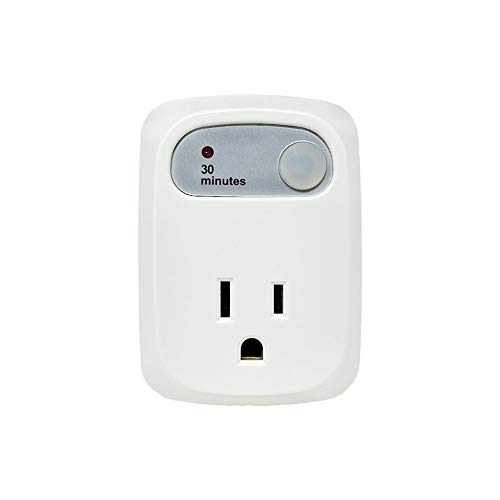
Best for: quick, short-duration heating tasks where precise cut-off is needed, such as curling irons or small personal heaters.
Why selected: The 30-minute shut-off window helps minimize energy waste with devices that don’t require longer runs. It is simple to operate and reduces standby usage for occasional heating needs.
Limitation: Very limited run time; not suitable for long heating sessions or devices needing longer operation windows.
Buying Guide: How To Choose A Plug-In Timer For Heaters
- What type of timer fits your routine? Mechanical timers are simple and robust; digital timers offer multiple programs and easier adjustments for complex schedules.
- How many devices need scheduling? If you want to control two heaters or a heater plus a fan, choose a dual-outlet model with independent or simultaneous control.
- How precise should be the timing? Short intervals (minutes) are helpful for heater safety; longer presets work well for overnight or daytime heating.
- Is safety a priority? Look for ETL or UL listings, fireproof housing, and child-safe design when used around bedrooms or living spaces.
- What’s your powering scenario? Consider back-up memory, power outage protection, and the ability to handle high wattage heaters (check the rated amperage).
- What is the display and usability like? A large LCD and easy navigation help in low-light conditions or for seniors and kids who program devices.
FAQ
- Do plug-in timers work with space heaters? Yes, most timers can control space heaters as long as the heater’s wattage is within the timer’s rated load.
- Can I use a timer for outdoor heaters? Some timers are rated for indoor use only; check the product’s IP rating and enclosure suitability before outdoor use.
- How many devices can I control with a dual-outlet timer? It depends on the model; some timers control both outlets in tandem, others allow independent scheduling.
- Will a timer save energy? Yes, by turning heaters off automatically when not needed, reducing standby and runtime waste.
- What if the power goes out? Look for timers with a backup or battery-preserved memory to retain schedules after outages.
- How hard is it to program these timers? Mechanical timers require manual pin setting; digital timers vary from simple presets to daily scheduling with a display.