
Plug-in electric baseboard heaters offer fast, targeted warmth for specific rooms or zones. This guide highlights top plug-in models ideal for bedrooms, home offices, or small living areas. Each option is selected for energy efficiency, safety features, and ease of use. The best pick depends on whether you prioritize silent operation, smart control, or simple, reliable heat. The table below compares five strong choices to help buyers decide quickly.
| Product | Brand | Type |
|---|---|---|
| Envi Plug-in Electric Panel Wall Heaters | ENVI | Wall heater with safety sensor |
| Comfort Zone Electric Baseboard Space Heater CZ600 | Comfort Zone | Baseboard space heater with adjustable thermostat |
| Dreo Smart Wall Heater WH719S | DREO | Smart wall-mounted space heater |
| Comfort Zone 1500W Convection Baseboard Heater CZ650B | Comfort Zone | Convection baseboard with digital thermostat |
| Cadet F Series 72 in. Baseboard Heater (Plug-In option not specified) | Cadet | High-heat baseboard heater (hardwired appearance) |
Envi Plug-in Electric Panel Wall Heaters
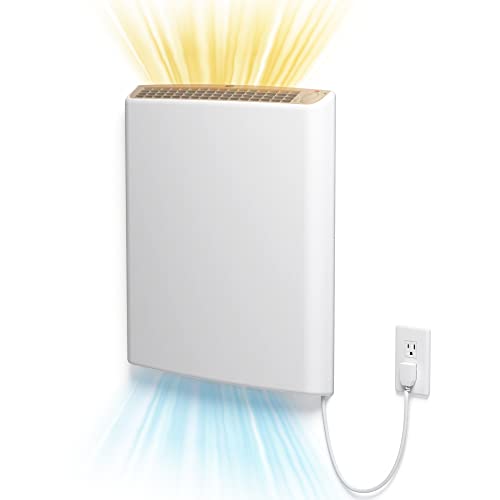
Best for targeted comfort in small-to-medium rooms. The Envi unit emphasizes energy efficiency and safe, quiet operation with a fan-less design and a wall-sense safety sensor that cuts power if the device is removed. It operates at a cool 90°F, making it suitable for spaces used by children or pets. Its design helps maintain humidity and minimize dust, which can benefit allergy sufferers. A potential limitation is that it provides focused heat rather than broad room warming, so it’s best used as a supplemental heater or in zones.
Who it’s best for: small living spaces, nurseries, bedrooms needing steady, quiet warmth without noise or drafts.
Comfort Zone Baseboard Space Heater CZ600

Best for versatile heating of mid-sized rooms. This 1500W unit provides two heat settings and an adjustable thermostat, enabling customizable comfort. Safety features include a tip-over switch and stay-cool body with overheat protection. It operates quietly, making it suitable for bedrooms or offices where silence is valued. A caution: with higher wattage, it may consume more energy; use zoning to maximize efficiency by avoiding full-room operation when not needed.
Who it’s best for: spaces needing reliable, adjustable warmth with strong safety protections.
Dreo Smart Wall Heater WH719S

Best for smart control and whole-room convenience. Dreo WH719S offers 120° vertical oscillation for even heat distribution, a programmable thermostat, and remote control. It also works with voice assistants like Alexa and Google Home through compatible platforms. Its ability to schedule heating hours helps match routine, reducing energy use when rooms are empty. Practical limit: smart features may require setup through a mobile app and stable Wi-Fi to maximize value.
Who it’s best for: tech-friendly buyers who want remote access, voice control, and scheduled heating.
Comfort Zone CZ650B Baseboard Heater with Digital Thermostat

Best for modern bedrooms or home offices that require precise digital temperature control. The CZ650B provides a 1500W heating element with a clear temperature display and two heat settings, plus safety features like overheat protection and a tip-over switch. It operates quietly, suitable for late-night activities or study. A limitation is that it relies on proper floor clearance and outlet placement for optimal air flow, so positioning matters.
Who it’s best for: users who want precise digital control and quiet operation in medium-sized rooms.
Cadet F Series 72-Inch Baseboard Heater

Best for permanent installation needs with flexible control options. While designed for hardwired use, Cadet baseboards deliver steady heat in larger applications. It supports connections to wall thermostats and optional built-in thermostat kits for room control. Not a plug-in unit by default, which is a limitation for buyers seeking mobile, plug-in flexibility. Consider for retrofit projects where long-term, fixed heat is intended.
Who it’s best for: homeowners planning permanent heating in larger spaces or when integrating with a central thermostat system.
Buying Guide
Key considerations when choosing a plug-in electric baseboard heater include heat output, room size, and whether you prefer smart control or simple operation. Below are practical questions to guide decisions.
- What room size will be heated? Choose higher wattage for larger spaces, but avoid over-heating small rooms.
- Do you need silent operation? Fan-less or convection-based units minimize noise for bedrooms and studies.
- Is safety a priority? Look for tip-over switches, overheat protection, and cool-to-touch exteriors.
- Is remote or app control important? Smart models offer scheduling, voice control, and energy management.
- How easy is installation? Plug-in models are typically easiest; consider wall mounting versus floor-standing options.
- Energy usage strategy? Use zoning to heat only occupied areas and combine with proper insulation for efficiency.
FAQ
- Are plug-in baseboard heaters safer for homes with kids or pets? Yes, many models include cool surfaces and safety sensors, but supervision is still recommended.
- Can plug-in baseboard heaters be used in small bedrooms? Yes, with appropriate wattage and space; ensure adequate clearance around the unit.
- Do smart baseboard heaters reduce energy consumption? They can, by enabling schedules and remote control to avoid heating empty rooms.
- Are there quiet plug-in baseboard options? Yes, many models feature fan-less or low-noise convection designs.
- What is the best way to position a plug-in baseboard heater? Place it against walls with space for air to circulate and avoid obstruction by furniture.
- Do plug-in baseboard heaters require professional installation? Most plug-in models do not; hardwired options require professional installation.