
Answers buyers seek: Which pilot line is right for my gas appliance? This guide highlights five top options for American homes, ranging from flexible stainless steel lines to bendable copper tubes and complete pilot assemblies. The selections emphasize compatibility with natural gas and propane systems, ease of installation, and durability. Ideal buyers include DIYers replacing pilot lines, service pros needing reliable replacements, and homeowners seeking simple, compatible components for specific gas appliances.
| Product | Best For | Key Benefit |
|---|---|---|
| ETERMETA 1/4″ Pilot Tube With Fitting Kit | General propane/natural gas appliances | Flexible stainless steel line with compression fittings |
| Pilot Tubing w/ Compression Fittings, 22-3/4″ Long | Standard-length runs in residential systems | Compact 1/8″ OD tube for tight spaces |
| MCAMPAS Pilot Tube 3/16″ OD x 25.6″ Bendable Copper | Commercial kitchen or heavy-duty ranges | Bendable copper for precise routing |
| Water Heater Pilot Assembly For Natural Gas | Water heater replacement | Complete pilot assembly with thermocouple |
ETERMETA 1/4″ Pilot Tube With Fitting Kit

The ETERMETA kit includes two 1/4″ brass compression sleeves and nuts, offering a direct stainless steel replacement for rigid lines. The flexible 1/4″ OD stainless line reduces time on site by enabling manual bending and eliminating flaring. It suits natural gas and propane pilot assemblies and replacements for common gas valve brands. Best for installers needing a ready-to-use, corrosion-resistant pilot line with dependable compression fittings.
Best for: Professionals replacing pilot lines in gas appliances where flexibility and compression fittings improve installation speed.
Caution: Verify thread compatibility (M10x1 female) and ensure the line length fits your appliance’s clearance.
Pilot Tubing w/ Compression Fittings, 22-3/4″ Long

This Weil-McLain pilot tube provides a compact 22 3/4″ length with 1/8″ outer diameter. It’s suited for standard residential installations where space is limited and a short, rigid-to-flexible transition is sufficient. The product is best for homeowners or technicians performing routine gas appliance service that requires a straightforward, shorter run.
Best for: Small to mid-sized residential projects with limited clearance where a compact tube is needed.
Caution: Confirm compatibility with your specific valve model and ensure no tight bends exceed the tube’s bend radius.
MCAMPAS Pilot Tube 3/16″ OD x 25.6″ Bendable Copper
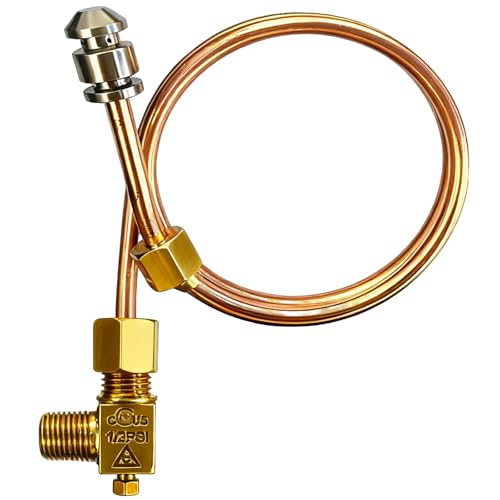
The MCAMPAS copper pilot tube offers a 3/16″ OD with a 25.6″ bendable length, designed for compatibility with Tri-Star and several other commercial kitchen configurations. It features a right-angle 3/16″ CC to 1/8″ NPT connection and supports up to 65 mbar (1/2 psi). Best for commercial ranges and ITG/IR series appliances where flexible copper routing is advantageous.
Best for: Commercial kitchens and service technicians replacing pilot tubes in compatible Tri-Star and related valve families.
Caution: Check exact model compatibility and ensure proper copper bending to avoid kinks that could impede gas flow.
Water Heater Pilot Assembly With Pilot Thermocouple And Tubing Natural Gas

This water heater pilot assembly includes a pilot thermocouple and tubing for natural gas water heaters. The standard 24-inch overall length fits a wide range of common residential units. It is a direct replacement option for many water heaters needing a reliable pilot assembly. Best for: Homeowners or technicians performing a water heater service that requires a complete pilot assembly with thermocouple.
Caution: Not all water heaters are fully compatible; only qualified personnel should attempt gas equipment repairs or replacements.
Buying Guide
What size and material should I choose?
Length and outer diameter affect installation ease and gas flow. Stainless steel lines offer corrosion resistance and flexibility, while copper tubes provide bendability for tight spaces. Match OD and connection types (compression, NPT) to your valve inlets.
Compatibility matters
Check the appliance model and valve compatibility. Some tubes are designed for specific brands or valve families (for example, Tri-Star or ITG/IR series). Ensure the tube ends and fittings match your gas valve threads and pilot assembly.
Installation considerations
Flexible lines reduce field labor by adapting to irregular routes. Avoid sharp bends and kinks, which can restrict gas flow. Use proper compression fittings and verify tightness to prevent leaks after installation.
Safety and qualifications
Gas line work can be hazardous. When in doubt, rely on qualified technicians for replacement or installation of pilot lines and assemblies. This reduces fire risk and ensures code compliance.
Choosing between kits and complete assemblies
Use fitting kits when you already know the tube length you need and want to upgrade compression connections. Choose complete assemblies when replacing an entire pilot setup for a reliable, install-ready option.
Quick comparison at a glance
- Best for flexibility: ETERMETA 1/4″ Pilot Tube With Fitting Kit
- Better for tight residential spaces: Weil-McLain pilot tubing, 22-3/4″ length
- Best for commercial kitchens: MCAMPAS bendable copper pilot tube
- Best for water heaters: Water Heater Pilot Assembly with Thermocouple
FAQ
- What is the typical use for a pilot tube in gas appliances?
Pilot tubes supply the ignition flame and maintain a stable pilot light in ranges, ovens, and water heaters. - Can I replace a pilot tube myself?
Yes for simple, compatible systems, but ensure gas service safety and correct fittings; consult a professional if unsure. - What material is best for longevity?
Stainless steel offers corrosion resistance, while copper provides bendability in tight spaces. - How do I know which length to buy?
Measure the run distance between the valve and the pilot point, allowing extra length for routing and joints. - Are compression fittings safer than flared fittings?
Compression fittings are common for pilot tubes and can be safer when properly tightened and sealed. - What warning signs indicate a faulty pilot line?
Gas odors, hissing sounds, or inconsistent ignition indicate potential issues requiring inspection.