
Looking for overhead radiant gas heaters to warm garages, workshops, or outdoor utility spaces? This guide compares five options to help you pick the right model for your square footage, ceiling height, and fuel preference. Each heater is evaluated for efficiency, heat area, and safety considerations to fit different buyers—from DIY enthusiasts to professional shop operators. The top picks are best for enclosed spaces with high ceilings, open workshops, or outdoor covered areas that need quick, directional warmth.
| Product | Fuel | Best For | Why It Stands Out |
|---|---|---|---|
| Heatstar By Enerco MH25NG | Natural Gas | Medium garages | Overhead installation with direct radiant heat for consistent warmth |
| Mr. Heater 40,000 BTU Propane | Propane | Medium to large spaces | High output with wide heating area |
| SunStar 80,000 BTU Infrared | Natural Gas | Large garages | Heavy-duty build with corrosion resistance |
| Tangkula 9,500 BTU Tabletop | Propane | Small patios or entryways | Compact, portable option for outdoor warmth |
| Mr. Heater 30,000 BTU Vent Free Blue Flame | Blue Flame (Dual Fuel) | Vent-free spaces | Flexible fuel type and vent-free operation |
Heatstar By Enerco MH25NG Radiant Overhead Heater

The Heatstar MH25NG is an overhead radiant gas heater designed for natural gas supply in garages and utility spaces. It provides steady, directional warmth from above, helping to minimize drafts and cold spots near work areas. Best for buyers who prefer a fixed installation and a straightforward natural gas connection in moderate-sized spaces.
Who it’s best for: DIYers and workshop operators with existing natural gas lines and ceilings suitable for overhead mounting. Why chosen: reliable overhead radiation and a compact footprint suit shorter or medium-height garages.
Limitations to consider: Requires natural gas supply and proper mounting hardware; installation clarity should come from the product’s installation guidelines or professional assistance.
Mr. Heater 40,000 BTU Garage/Workshop Radiant Propane Heater
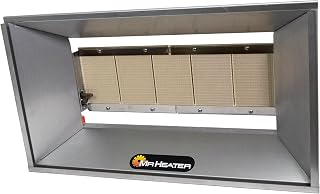
This overhead radiant heater runs on propane and delivers up to 40,000 BTU, capable of heating up to about 1,000 square feet with high efficiency. Its design suits larger garages and workshops with tall ceilings where a strong, consistent heat source is required.
Who it’s best for: Property owners needing a robust, wall-to-ceiling radiant solution for mid-to-large spaces. Why chosen: high heat output helps reduce cold work zones quickly.
Limitations to consider: Propane is the fuel; ensure proper ventilation in enclosed spaces and adherence to safety guidelines for ignition systems.
SunStar Infrared Ceramic Heater – 80,000 BTU Natural Gas

The SunStar unit is constructed from aluminized steel for corrosion resistance and long life, with aluminum reflectors to maximize radiant efficiency. It supports horizontal angle mounting up to 30 degrees to tailor heat direction in larger, open garages or warehouses.
Who it’s best for: Operators needing a durable, high-output natural gas heater with flexible mounting. Why chosen: strong materials and angle-adjustable heat distribution improve comfort over broad work zones.
Limitations to consider: Heavier build may require robust mounting points; ensure ceiling and mounting support meet load requirements.
Tangkula 9,500 BTU Tabletop Patio Heater

This compact propane tabletop heater delivers 9,500 BTU and is designed for outdoor use. The 360-degree crystal glass tube provides broad heat distribution, with safety features including a tip-over shutoff and flameout protection for portable warmth near entryways, patios, or decks.
Who it’s best for: Homeowners seeking portable, small-scale warmth for outdoor spaces or supplemental heat near entrances. Why chosen: portability and safety features make it a practical tiny-space option.
Limitations to consider: Not ideal for large enclosed spaces; outdoor weather exposure can affect performance and durability over time.
Mr. Heater 30,000 BTU Vent Free Blue Flame Dual Fuel Heater

This vent-free option supports dual-fuel operation and provides 30,000 BTU per hour, heating up to about 1,000 square feet. It features a battery-operated electronic spark ignition and does not require a venting system for operation in suitable spaces.
Who it’s best for: Spaces without a dedicated venting path where flexibility of fuel type matters. Why chosen: vent-free capability and dual-fuel versatility offer convenient installation options in certain layouts.
Limitations to consider: Vent-free heaters require careful room sizing and gas appliance clearances; ensure the space is suitable and compliant with local codes.
Buying Guide: Key Considerations For Overhead Radiant Gas Heaters
- Space and ceiling height: Overhead units are most effective when ceiling heights support radiant heat distribution to the working area. Large, open garages benefit from higher-output models.
- Fuel type and availability: Natural gas units are convenient where a gas line exists; propane is portable but requires storage and regular refills. Dual-fuel options offer flexibility where one fuel source is intermittent.
- Heat coverage and BTU: Larger spaces typically need higher BTU ratings. Match BTU to square footage and insulation quality to avoid overheating or underheating.
- Ventilation and safety: Vent-free options require ventilation considerations and adherence to local codes. For vented models, ensure proper clearances and safe installation practices.
- Mounting and durability: Overhead installation demands sturdy mounting points. Corrosion-resistant materials and protective features extend life in workshops with dust and humidity.
- Flexibility and placement: Angle mounting, tilt capabilities, and adjustable heat direction help tailor warmth to workstations, benches, and tool areas.
Frequently Asked Questions
- What should I consider when choosing overhead radiant gas heaters?
Consider space size, fuel availability, mounting options, heat distribution, and safety features to ensure efficient warmth and compliant installation.
- Are vent-free heaters safe for garages?
Yes, when properly sized for the space and installed according to local codes and manufacturer guidelines. Proper ventilation and carbon monoxide considerations are important.
- Which fuel is best for a home workshop?
Natural gas is steady and convenient where a gas line exists; propane offers portability for remote locations or temporary setups.
- Can these heaters heat an entire large garage?
Yes, but you should select higher BTU models with appropriate mounting and ensure the space is adequately insulated to maximize efficiency.
- Do overhead heaters require maintenance?
Periodic inspection of mounting hardware, gas connections, and ignition components is recommended for safe operation and longevity.