
Answering the search: On-demand heating systems provide instant hot water or space heating with high efficiency and scalable installation. This guide highlights five reliable on-demand solutions suitable for homes seeking immediate hot water or efficient climate control. Best for whole-house setups, compact spaces, or point-of-use needs, these options balance energy use, ease of installation, and ongoing comfort.
Buyer profile overview:
- Best for whole-house hot water: Tankless electric or gas systems with higher flow rates.
- Best for compact spaces: Slim, wall-mounted designs with minimal footprint.
- Best for budget-conscious setups: Efficient models with smart controls and low standby loss.
- Best for remote control enthusiasts: Models offering remote or memory features for easy operation.
Selected products at a glance:
| Product | Key Benefit | Best For |
|---|---|---|
| APUS 27kW Tankless Electric | High flow up to 6.5 GPM; memory function; compact | Whole-house or multi-point use |
| Daordaer Electric Tankless (110V/3000W) | Simple 110V hookup; compact; fast hot water | Sinks, small kitchens, remote baths |
| Stiebel Eltron Tempra 12 Trend | European design; digital display; compact | Single- or multi-point households seeking quiet operation |
| ThermoMate CZ422NG Gas Tankless | High BTU; strong flow; multiple protections | Whole-house gas-powered hot water |
| RVMP Flex Temp On-Demand | On-demand hot water; anti-freeze and anti-scald features | Flexible placement, safety features |
APUS 27kW Tankless Electric On-Demand Water Heater
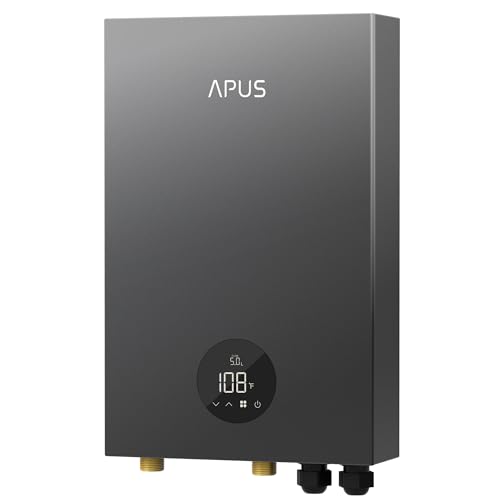
Best for: Homes needing robust on-demand hot water with multiple simultaneous uses. This 27kW unit delivers up to 6.5 GPM, making it suitable for 3–4 simultaneous uses such as showers and multiple sinks or appliances.
Why selected: The model uses a cast aluminum heating element for rapid, efficient heating without preheating. Its self-modulating technology adjusts energy use to maintain comfort while reducing waste. The LED display allows precise temperature control (86°F–140°F) with 1°F steps and a memory function that preserves settings after power cycling.
Limitations: Installation requires 3×40 A breakers and appropriate gauge wiring (6 AWG). Space-saving design helps in tight spaces but check local electrical capacity before purchase.
Daordaer Electric Tankless Water Heater

Best for: Small to medium households needing instant hot water at sinks or bathrooms with compact installation needs.
Why selected: This 110V unit provides instant hot water in about 20 seconds and offers a maximum temperature around 131°F. It supports remote or touch control for ease of use and includes a three-level power setting. Its compact, wall-mounted form saves space and emphasizes energy efficiency by heating only when called.
Limitations: It cannot reach boiling water (100°C) and is best for moderate hot-water demand. Remote control reliance may require line-of-sight or stable control range in some layouts.
Stiebel Eltron Tempra 12 Trend Electric Tankless

Best for: Homes seeking a quiet, space-saving electric tankless heater with reliable continuous hot water.
Why selected: The Tempra 12 Trend uses auto-modulation to adjust output for energy efficiency, delivering continuous hot water without energy waste. Its compact design and digital temperature display provide straightforward control and a low-noise operation, making it a strong all-around performer for moderate hot-water demand.
Limitations: As a 12 kW unit, its maximum flow is suitable for smaller homes or lower simultaneous demand; households with higher concurrent usage may need a higher-capacity model.
ThermoMate CZ422NG Gas Tankless Water Heater

Best for: Whole-house hot water in homes with natural gas lines seeking high efficiency and strong flow with safety features.
Why selected: The CZ422NG delivers up to 5 GPM with 113,000 BTU, suitable for multiple showers simultaneously while maintaining stable temperature with a smart flow sensor. It includes multiple protections for safety and a high thermal efficiency with a robust copper heat exchanger, contributing to energy savings over time.
Limitations: Requires adequate gas supply and venting; installation is more complex than some electric models and should be performed by a licensed professional.
RVMP Flex Temp On-Demand Tankless Water Heater
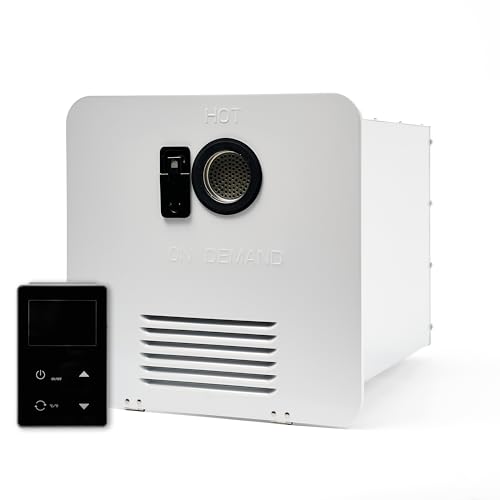
Best for: Flexible placement and safety-focused installations where anti-freezing and anti-scald features add value.
Why selected: The RVMP model emphasizes on-demand hot water with a flexible temperature control panel. It offers precise temperature management and is designed to prevent scalding, making it suitable for households with children or elderly residents. Its anti-freeze feature helps protect the system in cold environments.
Limitations: As with many on-demand units, high flow demands across multiple fixtures may require larger capacity models or multiple units in parallel.
Buying Guide
What to consider when choosing an on-demand heating system
- Fuel type and availability: Electric models are simpler to install in many homes, while gas-powered units require venting and gas line compatibility. Choose based on existing infrastructure and energy costs.
- Flow rate and capacity: Estimate simultaneous hot-water needs. If multiple bathrooms or appliances run at once, pick a higher GPM rating or a gas unit with higher BTU output.
- Electrical requirements: Electric tankless heaters may need dedicated breakers and heavy gauge cabling. Verify panel capacity and available space for wiring runs.
- Temperature control: Look for units with a digital display, memory function, and precise temperature adjustments to maintain comfort without overshooting.
- Space and installation: Wall-mounted, compact designs suit tight spaces. Factor in venting (gas models) and access for maintenance.
- Safety features: Anti-freeze, anti-scald, boil-dry protection, and over-temperature sensors improve reliability in varied climates and households with children.
- Longevity and maintenance: Copper heat exchangers and self-modulating controls typically offer durable performance and lower energy waste over time.
FAQ
What is the main advantage of on-demand water heaters?
They heat water only when needed, reducing standby energy losses and saving space compared with storage tanks.
Can I install an on-demand heater myself?
Electrical models may require a licensed electrician for wiring and breaker upgrades. Gas models require venting and gas fittings handled by a professional.
How do I calculate the right GPM for my home?
Estimate peak simultaneous usage (showers, sinks, appliances) and choose a unit with a higher GPM rating than your combined demand.
Are there safety considerations with tankless systems?
Yes. Look for features like anti-freeze, anti-scald, boiler protection, and frost protection to prevent damage in cold conditions.
Do electric tankless heaters require space for venting?
No venting is required for electric units, which is a benefit for interior installation; gas models need venting to the outside.