
If you’re searching for a normally open zone valve to maintain constant flow and enable simple fail-safe behavior, these five options cover common sizes, voltages, and configurations. This guide helps buyers choose based on valve type, voltage, and application. The best picks here are suitable for residential zoned heating systems, small-scale irrigation, and automated fluid control in light industrial setups. Each product is evaluated for who benefits most, potential limitations, and why it was selected for this list.
| Product | Best For |
|---|---|
| Honeywell V8043B1019 1/2″ Normally Open Zone Valve | Residential zoned heating with sweat connections |
| SNS DC12V 1/4″ NPT Normally Open Solenoid Valve | Compact, low-voltage applications for water, air, or oil |
| Baomain 1/2″ PT Brass DC 12V Normally Open Solenoid Valve | Tight-flow control in DC systems requiring quick response |
| Baomain 1/2″ PT Brass AC 110V Normally Open Solenoid Valve | AC-powered systems needing reliable, high-compatibility operation |
| SNS AC110V 1/4″ NPT Normally Open Solenoid Valve | Industrial-style automation with standard AC supply |
Honeywell V8043B1019 1/2″ Normally Open Zone Valve
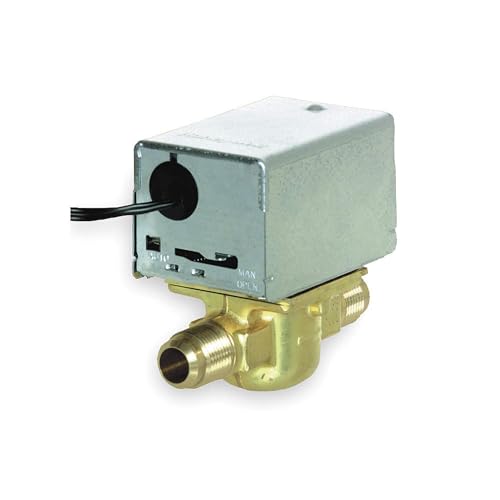
Best for: Residential zone control with sweat connections. This is a motorized zone valve designed for 1/2 inch piping and a 3.5 Cv capacity, suitable for standard heating systems that use low-voltage control. It is ideal for homeowners upgrading a zoned heating circuit or integrating with a boiler or boiler controller. The topic-specific feature is its compatibility with standard sweat connections for a straightforward install. Caution: ensure your control signal and wiring are compatible with the valve’s low-voltage requirements.
U.S. Solid Motorized Ball Valve (3/4″ N/O) 9-36V

Best for: Small to mid-scale automated water control with a broader voltage range. This 2-wire motorized ball valve includes indicator lights to show open, close, or stuck status and allows auto-return to open when power is removed. It supports a wide voltage span (9-36V), making it versatile for various control systems. Limitation: the more complex mechanism can demand careful wiring and protection against water ingress. Choose this if you need easier status visibility and a wider operating voltage.
SNS DC12V 1/4″ NPT Normally Open Solenoid Valve

Best for: Compact, versatile valve for water, air, or light oil systems with DC12V control. It uses a brass body and 1/4″ NPT ports, making it suitable for small plumbing projects, irrigation, or lab setups requiring reliable normally open operation. Limitation: limited to DC 12V control; ensure the supply matches your system’s voltage and pressure requirements.
Baomain 1/2″ PT Brass DC 12V Normally Open Solenoid Valve

Best for: DC 12V direct-acting control in larger 1/2″ systems. The all-brass construction with a copper coil supports quick response and consistent flow. Selecting this valve is advantageous when a robust DC solution is required for irrigation lines or process piping. Limitation: ensure coil voltage and duty cycle align with application to avoid overheating in continuous operation.
Baomain 1/2″ PT Brass AC 110V Normally Open Valve
Best for: AC-powered systems needing reliable normally open operation in a 1/2″ line. The valve’s 110V copper coil supports robust actuation for industrial or workshop applications. Caution: confirm your control circuit is isolated and protected for AC voltages to avoid electrical hazards. This is a solid pick for higher-voltage setups requiring direct-acting control.
SNS AC110V 1/4″ NPT Normally Open Solenoid Valve
Best for: Industrial-grade AC control with 1/4″ NPT ports. This valve is well-suited for automation lines, water or oil circuits, and environments with standard AC supply. Limitation: ensure voltage stability and environmental conditions meet the valve’s operating range for long-term reliability.
Buying Guide
Key purchase considerations
- Voltage and power: Choose DC or AC based on your control system. DC coils are common in low-voltage automation, while AC is standard in many industrial environments.
- Port size and connection: Match 1/4″ or 1/2″ NPT/PT connections to your piping. Sweat connections fit certain residential setups; threaded connections are typical in commercial equipment.
- Valve type: Normally Open (NO) valves stay open until energized. This behavior suits constant-flow systems and immediate fail-safe operation if power is interrupted.
- Material and pressure: Brass bodies provide durability for water, air, or oil. Check pressure ratings for your application to avoid leaks or failures.
- Control logic and compatibility: Ensure your controller supports the valve’s voltage, coil resistance, and response time. Consider auto-return features if power loss should reset the valve.
- Environment and duty cycle: For continuous or frequent cycling, select valves designed for reliable, repeated actuation with proper heat dissipation.
How to compare options
- Best for small residential zones: Honeywell V8043B1019, due to compatibility with common heating systems and sweat connections.
- Better for compact, low-voltage systems: SNS DC12V 1/4″ NPT and Baomain DC 12V models.
- Choose this if you need AC operation: Baomain AC 110V or SNS AC110V, for heavier-duty or standard industrial power.
- Avoid this if you require high-frequency cycling: All options here are suitable, but verify duty cycle limits for prolonged continuous use.
Installation and support tips
- Follow manufacturer wiring diagrams and use proper connectors to prevent leaks.
- Use strain relief on cables to avoid accidental disconnections in active systems.
- In pressure-sensitive lines, consider a test run with a temporary bypass to observe valve behavior.
FAQ
- What is a normally open zone valve? A valve that remains open by default and closes when energized, used to sustain a continuous flow until controlled otherwise.
- Do these valves work with standard homeowners’ control systems? Many can, especially those designed for 12V DC or 110V AC control in residential and light commercial setups.
- Which valve should I choose for irrigation? A DC 12V or AC 110V model based on your irrigation controller power supply is generally suitable; match voltage to the controller.
- Can I mix valve sizes in a single system? Yes, but ensure compatibility with your piping, pressure, and control logic to avoid flow imbalances.
- What maintenance is required? Periodic inspection for leaks, coil insulation integrity, and clean connections helps maintain reliable operation.