
In this guide
Finding a reliable non vented heater can improve comfort in bedrooms, bathrooms, offices, and small living areas without the hassle of venting ducts. This guide reviews five top non vented heaters, including electric space heaters and vent-free gas options, focusing on safety, heating performance, and ease of use. Each product is evaluated based on its heater capacity, noise levels, and build quality to help you choose confidently for American homes.
Summary of chosen products:
| Product | Type | Key Feature | Approx. Heat Output |
|---|---|---|---|
| Broan-NuTone Non-Lit PowerHeat 80 CFM | Bathroom Exhaust Fan / Heater | Independent or combined operation; 1300-watt heater | 80 CFM / 1300W |
| Broan-NuTone Non-Lit PowerHeat 110 CFM | Bathroom Exhaust Fan / Heater | Independent or combined; 1500W heater | 110 CFM / 1500W |
| Dyna-Glo 10,000 BTU Vent Free Wall Heater | Natural Gas Vent Free | Blue Flame technology for convective heating | 5,000–10,000 BTU/hr |
| Dura Heat EUH1465 Electric Forced Air Heater | Electric Space Heater | 1500W PTC ceramic heating; pivoting base | Up to 1500W |
| Amazon Basics Ceramic Space Heater | Electric Space Heater | Three heat settings; tip-over and overheat protection | Up to 1500W |
Broan-NuTone Non-Lit PowerHeat 80 CFM Bathroom Heater

This Broan-NuTone model combines a bathroom exhaust fan with a non-lit heater, offering flexible climate control for spaces up to 75 square feet. The unit operates at 80 CFM with a quiet 1.5-sone rating, making it suitable for mid-sized bathrooms. The 1300-watt heater provides efficient warming, while the rugged galvanized steel housing resists moisture. The white grille blends with most bathroom décors, and the heater can run independently or in tandem with the fan for quick moisture removal and warmth when needed.
Broan-NuTone Non-Lit PowerHeat 110 CFM Bathroom Heater

This higher-capacity Broan-NuTone model handles bathrooms up to about 105 square feet with 110 CFM and a 2.0 sones noise level, maintaining comfort without being intrusive. It sports a decorative white grille and a robust 1500-watt non-lit heater, designed to deliver steady heat across larger spaces. Like the 80 CFM version, the heater and fan can operate separately or together, giving flexibility for venting moisture and warming air as needed.
Dyna-Glo 10,000 BTU Vent Free Wall Heater

This vent-free natural gas heater from Dyna-Glo uses Blue Flame technology to gently convect heat throughout a room, delivering 5,000–10,000 BTU per hour sufficient for spaces up to around 300 square feet. It’s designed for indoor use without a vent, making it a practical option where gas supply is available and venting is impractical. The unit is rated for continuous warmth, but installation must follow local codes and manufacturer guidelines for safe operation in living spaces.
Dura Heat EUH1465 Electric Forced Air Heater
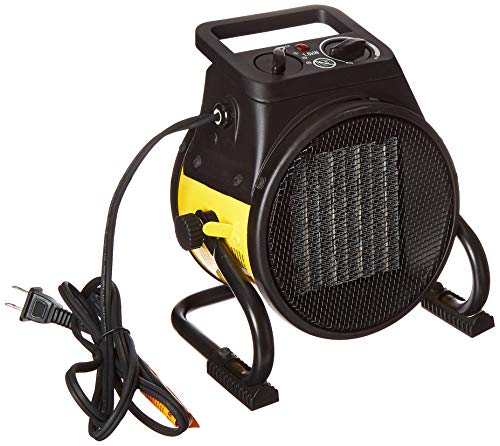
The Dura Heat EUH1465 offers robust electric heating with 1500W of PTC ceramic warmth, ideal for small workshops, garages, or utility rooms. Its pivoting base adds directional flexibility, letting users target heat where it’s most needed. The steel body provides durability suitable for more demanding environments. With heat and fan-only modes, it serves as both a heater and a circulating-air device, enabling flexible space heating options in non-living areas.
Amazon Basics Ceramic Space Heater

The Amazon Basics ceramic space heater provides a compact, portable heating option with up to 1500W, making it suitable for personal use in offices or bedrooms. It features three heat settings, a fan mode for air circulation, and built-in safety protections including tip-over and overheat safeguards. Its small footprint and lightweight design support easy relocation around the home while delivering reliable warmth when needed.
Buying Guide: Non Vented Heaters — What To Consider
- Heat output and room size: Electric models list wattage (e.g., 1500W) suitable for small to medium spaces, while gas vent-free units specify BTU output and square-foot coverage. Match the heater’s output to your space for efficient comfort.
- Ventilation and air quality: Non vented heaters must manage air quality and moisture. Vent-free gas units require proper installation and clearances; electric models rely on safe placement and adequate airflow.
- Noise level: Sones or decibel ratings indicate quiet operation. For bathrooms or bedrooms, prioritize lower noise (e.g., 1.5–2.0 sones) to minimize disturbance.
- Safety features: Look for tip-over protection, overheat protection, and sturdy housings. A built-in thermostat or multiple heat settings enhances control and safety.
- Portability and installation: Consider whether you need a wall-mounted, floor-based, or portable unit. Some products offer pivoting bases or dual-function as fans, improving flexibility.
- Maintenance and durability: Electric units typically require little maintenance; gas vent-free units require periodic inspection and adherence to venting and clearance guidelines.
- Energy efficiency: Electric heaters consume power based on wattage; gas units’ efficiency is measured by combustion performance. Compare energy use relative to space needs to avoid overspending on heat.
- Safety certifications: For gas units, CSA or other safety certifications indicate compliance with performance and safety standards. Check for labeling and installation manuals that align with local codes.
- Price versus value: While costs vary, prioritize units with robust warranties, durable materials, and features that align with your specific space and usage patterns.