
If you’re seeking reliable stove temperature monitoring, a magnetic wood stove thermometer offers a simple, secure way to track heat without wiring or mounting hassles. These devices attach to the stove or chimney pipe and provide quick readings to help you optimize fuel use and prevent overheating. They’re ideal for homeowners who want an easy, hands-off way to protect their stove, improve efficiency, and extend the life of stove fans and ventilation. Below are five top options, each chosen for readability, magnetic mounting, and durable construction. A quick buyer’s table follows to compare core specs at a glance.
| Product | Best For | Key Range | Magnetic |
|---|---|---|---|
| Hanaoyo Wood Stove Thermometer | General use; long-distance readability | 100–900°F | Yes |
| Midwest Hearth Top Thermometer | Stove-top surface monitoring | Room/Surface range | Yes |
| GALAFIRE 2-Pack | Budget set; two measurements | 100–800°F | Yes |
| Wood Stove Thermometer (B09Q2VZ6D8) | Durable, high-accuracy reading | 100–900°F | Yes |
| Weewooday Magnetic Thermometer | Long-term protection from overheating | 100–900°F | Yes |
Hanaoyo Wood Stove Magnetic Thermometer
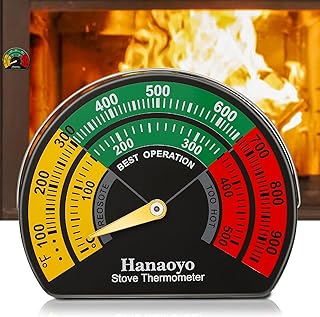
The Hanaoyo thermometer features an aluminum dial, a metal sensor, a brass pointer, and a sturdy metal handle. Its large 3.34-inch dial improves readability from a distance, helping you monitor stove operation at a glance. The back magnet lets you mount the device on the stove top, side, or single-wall flue, supporting quick checks without lifting the stove cover. Best for households prioritizing clear visibility and simple magnetic mounting, especially when you want to judge overall burn efficiency and prevent overheating. A potential limitation is that users should avoid mounting near heat sources that could damage the magnet over time.
Midwest Hearth Magnetic Top Thermometer

Made in the USA, this thermometer uses a porcelain enamel finish for lasting color and a robust magnetic attachment that holds up to 800°F. It’s calibrated for stove-top surface readings, making it ideal for homeowners who want a durable, easy-to-see gauge on the heat surface. Best for readers who prioritize a refined finish and steady magnetic hold. It’s best to avoid situations where the dial is frequently exposed to direct flames or excessive vibration that could affect readings.
GALAFIRE 2-Pack Magnetic Stove Thermometers
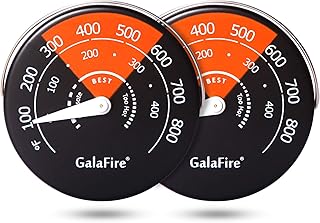
This two-pack offers an exclusive white needle for high visibility. The magnets allow placement on stove-top or side surfaces and on single-wall flue pipes (avoid direct attachment to grilles). Temperature ranges span 100–800°F, making them versatile for typical wood-burning, gas, and pellet stoves. Best for buyers who want a budget-friendly pair that remains readable at distance. A caveat is that both units should not be placed directly on grilles where airflow or heat cycling could affect accuracy.
Wood Stove Thermometer Magnetic (B09Q2VZ6D8)
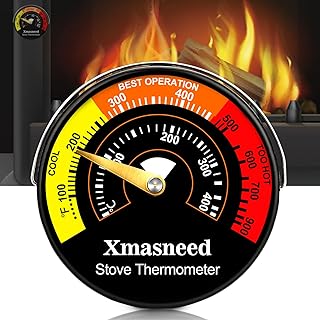
Built with an aluminum dial, a bimetal sensor, and a brass pointer, this gauge emphasizes durability and precision. The face reads 100 to 900 °F, which helps builders and homeowners fine-tune burn temperatures for efficiency. The bright, exclusive golden needle improves readability in various lighting conditions, aiding quick checks while the stove is hot. Choose this if you want a high-accuracy instrument with a classic design; note that extreme, rapid temperature spikes may require recalibration or repositioning.
Weewooday Magnetic Stove Thermometer

Weewooday’s thermometer emphasizes protective monitoring to prevent overheating. It features a large dial with a 100–900°F range and a magnetic backing suitable for stove tops and sides. The device uses an aluminum dial with a bimetal sensor and brass pointer, designed for long-term reliability. Best for households that want a clear overheating warning and easy readability, especially when fuel efficiency depends on maintaining steady burn zones. A limitation is the need to avoid sticking the unit on sections of the stove where heat distribution is inconsistent.
Buying Guide: Magnetic Thermostats For Wood Stoves
What should you look for when buying a magnetic thermometer for a wood stove? Start with readability, mounting versatility, and temperature range. Larger dials and bright needles improve visibility from across a room. Magnetic mounting is essential for quick attachment without tools, but ensure the magnet supports your stove’s metal surface and heat exposure. Temperature range matters: most wood stoves operate best within 100–900°F, so aim for gauges that cover that span.
Which features matter most for your usage scenario? If you burn wood seasonally and want quick checks, a single, prominent dial mounted on the side or top is ideal. If you use multiple fuel types (wood, gas, pellets), a dual-pack offers flexibility and a simple way to compare readings in different zones. For busy households, durability and finish (porcelain enamel, aluminum dial) reduce maintenance and keep readings accurate over time.
Placement tips: attach the thermometer where it’s easy to read without opening the stove door. Avoid placing gauges directly on grill grates or in locations with direct flame contact. If you notice erratic readings, check for magnetic misalignment or heat-induced drift, and reposition if necessary.
Frequently Asked Questions
- Are magnetic stove thermometers accurate enough for safe operation? Yes, when used within their stated range; readouts help you keep burn temperatures in safe, efficient zones.
- Can I place the thermometer on any stove? Most magnetic models work on metal wood stoves and single-wall pipes. Avoid non-metal surfaces or thick casing where magnets won’t hold well.
- What temperature range should I monitor for wood stoves? Commonly 100–900°F is suitable for most wood-burning operations.
- Do these require batteries? No; most use a bimetal sensor that measures temperature passively.
- How do I know if I placed it correctly? Ensure the dial is readable from your typical sitting area and that the magnet has a secure grip on a clean, flat surface.
- Can multiple thermometers be used together? Yes; placing one on the stove top and another on the flue can help compare readings and optimize efficiency.