
When you need targeted, energy-efficient warmth, a low wattage wall heater is a smart choice. This guide highlights five compact options that balance cost, quiet operation, and safe features. Best for small living spaces, bedrooms, or offices, these heaters provide reliable comfort without running up your energy bill. The table below helps you compare core strengths at a glance.
| Product | Best For | |
|---|---|---|
| Envi Plug-in Electric Panel Wall Heaters | Allergy-sensitive spaces; bedrooms | Low wattage, fan-less design, 90°F operation, safety sensor, Made in USA |
| DREO Smart Wall Heater (IP24) | Offices and living rooms; tech-friendly homes | PTC heat, 30° oscillation, remote + app, Alexa compatibility, energy modes |
| JNDRO Wall-Mounted Space Heater | Medium-sized rooms; versatile direction control | LED display, ECO thermostat, 60/90/120° oscillation, timer |
| EconoHome Wall Heater Panel | Cost-conscious heating; small to medium rooms | 400W convector, 120V, 3-year warranty, hard-wiring option, heat reflector |
| Heat Storm Wall Gray HS-1000-WX | Bathrooms, offices, bedrooms needing infrared warmth | Infrared heat, safe-to-touch grill, wall-mount design |
Envi Plug-in Electric Panel Wall Heater
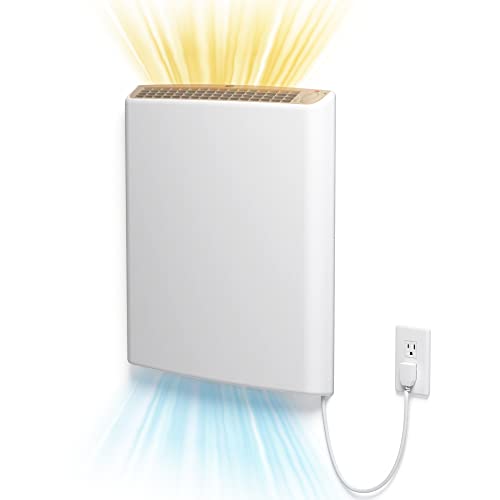
The Envi wall heater offers an energy-efficient, low-wattage footprint with a fan-less design. It uses Stack Convection to quietly warm spaces and reduces dust circulation compared to forced-air units. The cool-running surface (around 90°F) and wall-sense safety sensor provide peace of mind for homes with children or pets. Best for small rooms or zones needing quick, unobtrusive heat. A practical choice for bedrooms or home offices where quiet operation matters. Limitation: heating coverage is best in compact areas rather than large rooms.
DREO Smart Wall Heater (IP24)

This DREO model emphasizes smart control with remote, app, and voice options via Alexa. It combines a robust PTC heating system with a 30° oscillation for directed warmth and elevated comfort in offices or bedrooms. Best for tech-friendly spaces where temperature presets and remote operation are valued. Choose this if you want hands-free control and precise adjustments; avoid if you prefer a purely manual heater.
JNDRO Wall-Mounted Space Heater

The JNDRO heater features ECO mode for energy-conscious operation and three oscillation angles (60°, 90°, 120°) to spread warmth evenly. With an LED display and a 24-hour timer, it suits bedrooms and living spaces where daytime warmth and nighttime quiet are priorities. Best for rooms where wide heat distribution matters; better for larger areas than compact nooks. Limitation: higher power options may draw more electricity than small, single-zone heaters.
EconoHome Wall Heater Panel

The EconoHome panel is a 400-watt convector designed for rooms up to about 120 square feet. It emphasizes energy efficiency, with a low current draw and heat reflector to direct warmth. Suitable for steady ambient warmth in well-insulated spaces. Best for those seeking a hard-wired installation option or a budget-friendly, space-saving solution. Caution: installation may require electrical work and professional assistance.
Heat Storm Wall Gray HS-1000-WX Deluxe

Heat Storm delivers infrared warmth that heats objects and people rather than just air. The safe-to-touch grill and automatic tip-over shutoff enhance safety in bedrooms, bathrooms, or home offices. Best for spaces where quick, targeted warmth is desired and where air movement should be minimized. A limitation is that infrared heaters can feel different in very drafty rooms or spaces with high ceiling volumes.
DREO Smart Wall Heater WH719S

The WH719S model brings 1500W power and 120° vertical oscillation for broad, even coverage. It integrates a remote, app control, and voice compatibility with smart assistants. Best for bedrooms or studios needing consistent, large-space warmth with flexible control. Choose this if you want wide-area warmth and smart features; otherwise, a lower-wattage unit may suit small rooms better.
Buying Guide: Key Purchase Considerations
- Room size and heat needs: Match wattage to room square footage and insulation to avoid oversizing or underheating.
- Control options: Compare remote, app, and voice controls for convenience and integration with smart homes.
- Thermal technology: Decide between convection (air), infrared (objects), or hybrid methods based on comfort and air quality concerns.
- Safety features: Look for cool-to-touch surfaces, tip-over sensors, and automatic shutoff in compact living spaces with children or pets.
- Installation: Determine whether a plug-in unit or hard-wired panel fits your wall and electrical capacity.
- Noise level: Fan-less or low-noise designs are preferable in bedrooms and study areas.
- Maintenance and durability: Consider models with durable housings and long-term warranty considerations.
FAQ
- What is a low wattage wall heater best used for?
Best for zone heating in small rooms, offices, or bedrooms where you want targeted warmth without heating an entire house.
- Are wall-mounted heaters safe around pets and children?
Most models include safety features like cool surfaces, sensor shutoffs, and tip-over protection. Verify features before purchase.
- What installation options should I consider?
Plug-in panels are easy to install; hard-wired panels or circuits may be needed for higher wattage units or permanent setups.
- Does infrared heating affect humidity or air quality?
Infrared heaters heat objects and people rather than air, which can feel different in dry or drafty spaces.
- How do smart features improve usage?
Remote/app control and voice compatibility allow scheduling, temperature targeting, and integration with smart home routines.
- What should I consider when choosing oscillation angles?
Wider oscillation helps distribute warmth in larger rooms; narrower angles are suitable for single-zone heating.