
Answering the demand for compact, efficient warm water, this guide highlights five low voltage, plug-in or space-saving water heaters ideal for kitchens, apartments, RVs, and offices. Each pick is evaluated for space, safety features, and ease of use. This overview helps buyers choose devices that deliver reliable hot water without expanding your electrical footprint. The top picks target different scenarios—from under-sink installs to wall-mounted systems—so you can match the heater to your layout and hot-water needs.
| Product | Best For | |
|---|---|---|
| Tankless Water Heater Electric, 3000W | Small apartments, kitchens, and RVs | Fast hot water on demand, compact wall-mount |
| 2.5 Gallon Mini Tank Water Heater Under Sink | Under-sink use, narrow spaces | Leak-proof stainless steel design |
| Mini Tankless Instant Water Heater Under Sink | Point-of-use needs, single faucet | LED display, safety features |
| 2.5 Gallon Under Sink Hot Water Heater | Compact office or apartment kitchens | Large LED temp display, sturdy tank |
| 110V Tankless Water Heater Electric, 3000W | Under-sink or kitchenette setups | Low-profile, high efficiency |
Tankless Water Heater Electric, 3000W (110V)

Best for small spaces where wall-mounting frees counter space, this 3000W tankless unit delivers rapid hot water with a compact design. The LED display shows status and temperature clearly, and the unit can switch between Fahrenheit and Celsius by holding the power button. It is compatible with standard 110V circuits, making it suitable for apartments, kitchens, and RVs that require reliable on-demand hot water. Note: Not suitable for showers due to flow rate limitations, which means it’s best for point-of-use needs like sinks.
2.5 Gallon Mini Tank Water Heater Under Sink

Best for ultra-compact under-sink setups, this 2.5-gallon mini tank heater uses a thick 304 stainless steel tank and a 1500W L-shaped heating element to speed warming times. With wall- or floor-mounted install options, it fits narrow spaces in kitchens, RVs, trailers, or offices. It includes two 1/2″ FIP water pipes and a pressure relief valve for straightforward installation. Temperature is adjustable via a mechanical knob from roughly mid-80s to near 150°F. Caution: capacity is limited for simultaneous hot-water taps.
Mini Tankless Instant Water Heater Under Sink (3kW, 120V)

Best for single-faucet use or small countertops where space is at a premium, this 3kW plug-in unit offers an LED digital display and a single control knob. It’s designed for low-flow applications, with a temperature range of 30–55°C and multiple safety protections, including IPX4 waterproofing and dry-heating protection. It is a practical choice for under-sink installations and spaces that require quick, localized hot water. Limitation: not ideal for showers or concurrent taps due to lower flow capacity.
2.5 Gallon Under Sink Hot Water Heater (Stainless Steel)

Best for modern kitchens or offices needing a visible temperature display, this 2.5-gallon stainless steel mini-tank brings precise temperature control via a large LED readout and a robust control knob. Its corrosion-resistant 304 stainless steel tank supports a steady supply of hot water for limited use, with an auto-reset feature for overheat protection. It’s a strong pick for compact spaces that still want a reliable, easy-to-read interface. Caution: ensure installation space aligns with the 13″ W x 12″ D x 13″ H footprint.
110V Tankless Water Heater Electric, 3000W
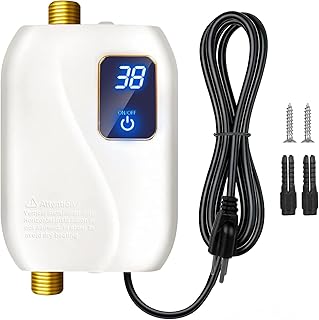
This 110V tankless model mirrors the performance of higher-wamp units with on-demand heating and a compact, wall-mounted design. The 3000W rating allows a rapid temperature rise (82°F to 131°F depending on flow) and supports easy switching between Fahrenheit and Celsius via a six-second hold. It includes safety protections—water/electric isolation, leakage and dry-boil protection, and automatic shutoff on overheating. Best for under-sink or kitchenette setups where speed and space efficiency matter. Limitation: performance can vary with inlet water temperature and flow rate.
Buying Guide
What should I consider when choosing a low voltage water heater?
Space availability, installation type (wall-mounted vs. under-sink), and the desired flow rate are key. For tight areas, wall-mounted tankless units save space; for single taps, a compact under-sink model is ideal.
How important is wattage and voltage?
Higher wattage rapidly heats water but may require dedicated circuits. Many low-voltage options run on standard 110V or 120V outlets and still deliver adequate performance for point-of-use needs. Ensure your electrical system can support the unit’s load.
What safety features matter?
Look for IPX rating, leakage protection, dry heating protection, auto shutoff on overheating, and automatic fault diagnosis. These features reduce risk in compact installations.
What about durability and maintenance?
Stainless steel tanks resist corrosion and leaks, while easy-to-read digital displays simplify temperature adjustments and monitoring. Consider model life, ease of installation, and availability of replacement parts.
How do I choose between tankless and small-tank options?
Tankless models provide endless hot water and save space but may have lower flow with certain fixtures. Small-tank units offer a quick standby supply and predictable temperature, but require a larger footprint than some wall-mounted tankless options. Choose based on typical usage and space constraints.
Installation tips
- Verify space clearance and mounting method before purchase.
- Check inlet/outlet pipe sizes (often 1/2″ NPT) and valve requirements.
- Plan for wiring: some units need a dedicated circuit or specific breaker size.
Frequently Asked Questions
- Can these heaters supply hot water to multiple fixtures at once? – Most under-sink or low-flow units are designed for single-tap use or small pockets of water. For multiple fixtures, choose higher wattage or a unit designed for greater flow.
- Are low voltage heaters safe for bathrooms? – Yes, with proper IP rating and electrical isolation, these units can be used in damp areas when installed correctly.
- Do these units require professional installation? – Some installations may be DIY-friendly if plumbing and electrical work meets local codes. Others may require a licensed professional, especially where electrical wiring or venting is involved.
- What maintenance is needed? – Regular inspection of connections and valves, plus periodic descaling if water is hard, helps longevity. Follow manufacturer guidance for replacement parts.