
In this guide
Answering the buyer’s search, these fuel pumps help you move kerosene and other liquids quickly and safely, with minimal spills. The top picks are suited to homeowners, garage workshops, generators, and outdoor enthusiasts who need reliable, portable transfer for kerosene and compatible fuels. Below you’ll find five hand-picked pumps, each with a clear use case, plus a practical buying guide and FAQs to help comparison.
| Product | Best For |
|---|---|
| Luigi’s Siphon Pump | Home or light-duty DIY, fast manual transfer |
| HORUSDY Battery Portable Pump | Emergency or on-the-go pumping with batteries |
| TERA PUMP Durable Manual | Budget-friendly, versatile liquids, no electricity |
| DeWay Battery-Powered Stick Pump | Long reach, hands-free operation, varied liquids |
| DH-20 Kerosene Pump (Dyna-Glo) | Kerosened-focused, sturdy, simple use |
Luigi’s Siphon Pump – Siphon Hose for Water & Gasoline

Best for: Homeowners and hobbyists needing quick manual transfer. Features quick siphoning at roughly 10 liters per minute, a durable PE plastic body, and broad compatibility with fuels and other liquids. It’s a simple, hands-on option for transferring kerosene, diesel, or water without electricity. Limitation: flow rate is slower than battery-powered units, and not ideal for long-term continuous pumping.
HORUSDY Battery Portable Pump

Best for: Quick transfers where electricity isn’t readily available. Battery-powered with a portable design, this pump supports gas, water, and other compatible liquids. A caution: battery setup requires correct polarity and assembly; batteries are not included, and the hose length is relatively short for distant containers.
TERA PUMP Durable Manual Siphon
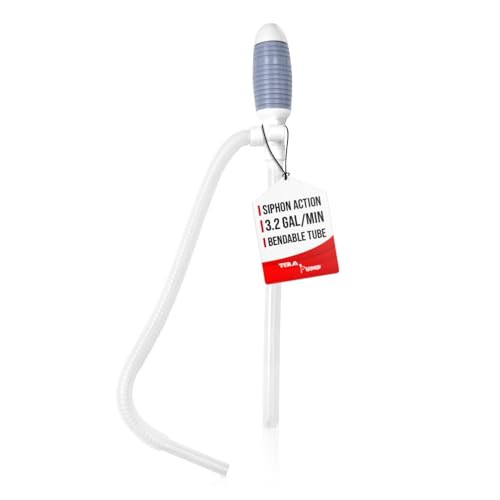
Best for: Those who want a rugged, affordable siphon with no power source. It handles kerosene, light oils, diesel, and more, with a 5 GPM flow rate and a bendable 15.3-inch suction tube. It’s a reliable everyday tool but may require more manual effort than powered units.
Kero World 602A Manual Siphon Pump

Best for: Basic, straightforward kerosene or fuel transfer without electronics. It emphasizes easy operation and a simple kit, produced in China. Limitation: this model may lack some of the more advanced features found in higher-end pumps or multiple-nozzle setups.
DEWAY Fuel Transfer Pump with Auto-Shutoff

Best for: Quick, mess-free transfers of gasoline, kerosene, diesel, and even non-potable water. Features an auto-shutoff nozzle, a long 51-inch discharge hose, and a motor capable of about 2.4 GPM. It’s a good fit for garages, workshops, and roadside tasks. Caution: ensure compatibility with the liquid you’re transferring and note battery operation requires AA cells.
Buying Guide: Key Purchase Considerations
- Fuel compatibility: Verify the pump is designed for kerosene and other fuels you plan to move. Some units are rated for a broad range, others are kerosene-focused.
- Power source: Choose between manual, battery-powered, or rechargeable options based on available outlets, portability needs, and transfer speed goals.
- Flow rate: For kerosene heaters, a higher flow rate reduces fueling time but may require more powerful motors or batteries. Balance speed with control to avoid spills.
- Discharge hose length: A longer hose reduces the need to move containers. Ensure the hose length fits your typical setup (drums, cans, and storage spots).
- Auto-shutoff and spill control: Auto-stop features help prevent overfills. Consider nozzles with built-in shutoff for cleaner transfers.
- Durability and materials: Look for PE plastic, corrosion-resistant components, and robust fittings for long-term use, especially with kerosene and solvents.
- Maintenance: Check whether components are easy to clean, dry, and store after use to prevent clogs or residue buildup.
Practical Tips for Safe Use
- Always work in a well-ventilated area and away from open flames when transferring kerosene.
- Use the appropriate container and avoid overfilling; leave headspace for expansion.
- Inspect hoses and fittings for cracks or wear before each use.
Frequently Asked Questions
- What is the best pump for kerosene only?
– A manual siphon or a kerosene-rated pump with a sturdy build tends to be reliable for kerosene-only tasks; models like the Kero World 602A fit this niche. - Do I need electricity to transfer kerosene?
– No. Manual siphons work without electricity, while battery-powered options provide faster transfers when power is available. - Can I use these pumps for water as well as fuel?
– Many pumps are versatile, but check the product features to ensure compatibility with water and non-potable liquids if needed. - Is auto-shutoff essential?
– It helps prevent spills and overfills, especially for larger cans or drums. On pumps without it, monitor progress carefully. - What safety features should I look for?
– Look for corrosion-resistant materials, leak-free fittings, clear-flow design, and robust nozzles with secure attaching clips.