
In this guide
Finding a dependable kerosene heater for indoors or workshops requires comparing heat output, safety features, fuel compatibility, and efficiency. This guide highlights five top models that balance power with practical use, from compact indoor units to high-capacity portable heaters. Each option supports emergency warmth, garage comfort, and off-grid reliability, with safety features like automatic shut-off and tip-over protection. Explore detailed sections for each product, then read our buying guide to compare capabilities and purchase considerations.
| Product | BTU / Area | Fuel | Best For |
|---|---|---|---|
| VEVOR Kerosene Forced Air Heater | 215,000 BTU | Kerosene & Diesel | Large spaces & workshops |
| Dyna-Glo Indoor Kerosene Convection Heater WK95C8 | 23,800 BTU | Kerosene | Smaller spaces up to 1,000 sq ft |
| Sengoku Indoor & Outdoor Kerosene Heater (KeroHeat) | 23,500 BTU | Kerosene | Indoor/outdoor versatility |
| HeatMate Sengoku Portable Kerosene Heater | 23,500 BTU | Kerosene | Mobile warmth for home/garage |
| Windpost Indoor & Outdoor Kerosene Heater | 9,000 BTU | Kerosene | Compact, portable emergency heat |
The following products are evaluated for energy efficiency, safety features, ease of operation, and suitability for indoor or semi-outdoor use. Each section includes a concise overview, key features, and how the unit fits into typical home or workshop heat scenarios.
VEVOR Kerosene Forced Air Heater

The VEVOR unit delivers 215,000 BTUs, designed to heat large workspaces such as barns, workshops, or industrial spaces. It supports both kerosene and diesel fuels (use only one type at a time) and includes a fuel gauge, dual fuel filters, and a pressure gauge for monitoring. A thermostatic control lets users set a room temperature from 40°F to 110°F, with an automatic shutoff on overheating at 176°F. This model is intended for environments where rapid, uniform warming is essential to keep equipment operating reliably and workers comfortable. It’s well-suited for building-wide comfort in uninsulated or partially insulated areas.
Dyna-Glo Indoor Kerosene Convection Heater WK95C8

Designed for portable indoor use, the WK95C8 provides 23,800 BTU and heats up to 1,000 square feet without electricity. This convection heater focuses on steady, draft-free warmth, making it a practical choice for spaces with limited or no electrical access. Its simple operation and no-electricity requirement appeal to garages, cabins, and emergency applications where a reliable heat source is needed even during power outages. The unit emphasizes safe operation with straightforward fuel access and ignition.
Sengoku Indoor & Outdoor Kerosene Heater (KeroHeat)

This portable 23,500 BTU kerosene heater offers indoor and outdoor versatility with a 1.9-gallon reservoir, capable of delivering warmth for up to 12 hours per fill. It features automatic safety shut-off, a push-to-start ignition, and a tip-over protection system. The design prioritizes easy mobility and reliable operation in garages, basements, or campsites, while safety grills help guard against contact with hot surfaces. The unit’s dual-mode use makes it a flexible choice for varying heating needs across spaces that require quick warmth and extended operation between fills.
HeatMate Sengoku Portable Kerosene Heater
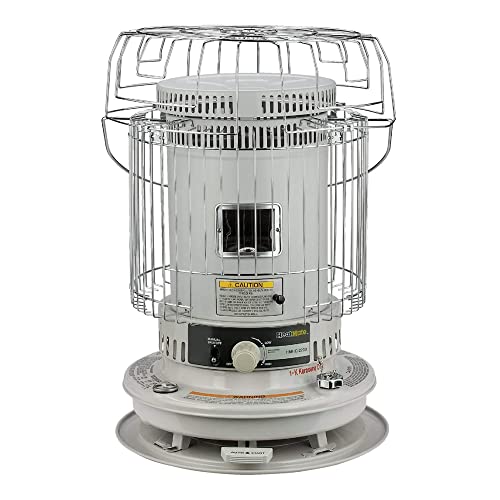
The HeatMate model is a versatile 23,500 BTU heater designed for both indoor and outdoor use, with portability at its core. It offers up to 1,000 square feet of heating capacity, a 1.9-gallon fuel tank, and an automatic safety shut-off. The device is aimed at garages, workshops, and camping scenarios where mobility and reliable heat are critical. Its push-to-start feature and safety grills contribute to safer operation in diverse environments, making it a practical pick for emergency warmth and flexible space heating.
Windpost Indoor & Outdoor Kerosene Heater

The Windpost compact kerosene heater delivers 9,000 BTU and is designed for portable use in small spaces or as a backup heat source during power outages. It emphasizes energy efficiency, low emissions, and a smoke-free operation. With dimensions approx. 13 x 13 x 14 inches and weighs under 7.5 pounds, it’s suitable for camping, small rooms, or emergency kits. While less powerful than larger units, its portability and simple ignition make it a practical option for quick, localized warmth without electricity.
Buying Guide: Key Purchase Considerations
- Heat output and space coverage: Choose BTU ratings aligned with the intended area. Higher BTU models are better for large workshops, while smaller spaces benefit from compact units to avoid overheating.
- Fuel type and compatibility: Most kerosene heaters use kerosene; some models support diesel or dual-fuel configurations. Ensure you select a fuel type you can safely source and store.
- Safety features: Look for automatic shut-off, tip-over switches, protective grills, and built-in temperature controls. Safety is critical for indoor use and spaces with occupants.
- Electrical requirements: Some units require electricity for ignition or fans, while others operate without power. Consider power availability in your space or during outages.
- Portability vs. permanence: If you need mobility, prioritize lighter, handle-equipped models. For stationary workshops, larger heaters with robust fuel capacity may be preferable.
- Fuel economy and odor control: Features like thermostats, fuel gauges, and dual filters help optimize efficiency and reduce smoke or odor during operation.
- Maintenance needs: Regular fuel and wick maintenance, cleaning schedules, and safe storage practices extend heater life and performance.
- Regulatory and safety compliance: Ensure models meet local safety standards and are appropriate for indoor use in your jurisdiction.
When selecting a kerosene heater, balance heat requirements with safety, availability of fuel, and the environment where the heater will operate. The products listed here offer a range of capacities and use cases, from large-space industrial warmth to portable emergency heat. Assess your space, climate, and fuel sourcing to determine which model provides the best combination of safety features, reliability, and operation ease.