
In this guide
- Dr Infrared Heater Portable Space Heater Original
- Heat Storm Phoenix Infrared Space Heater with Attachable Feet
- Dr Infrared Heater DR-238 Carbon Infrared Outdoor Heater
- Pure Enrichment PureRelief Pro XL Far Infrared Heating Pad
- Ballu Mica Infrared Space Heater
- Buying Guide: Key Considerations for Infrared Heaters
For reliable warmth, infrared heaters from top manufacturers offer quick, energy-efficient heat with reduced air movement. This guide highlights five leading products designed for living rooms, patios, and workspaces, focusing on safety features, energy efficiency, and user convenience. Explore options from DR. Infrared Heater, Heat Storm, Pure Enrichment, and Ballu, each backed by solid design and consumer-focused features. The table below provides a quick snapshot of the chosen models to help you compare at a glance.
| Product | Brand | Power (W) | Usage |
|---|---|---|---|
| Dr Infrared Heater Portable Space Heater Original | DR. INFRARED HEATER | 1500 | Large rooms, with dual infrared/PTC heating and timer |
| Heat Storm Phoenix Infrared Space Heater | Heat Storm | 750-1500 | Versatile floor or wall placement, energy efficient |
| Dr Infrared Heater DR-238 Carbon Outdoor Heater | DR. INFRARED HEATER | 900-1500 | Indoor/outdoor use with IP55 rating |
| Pure Enrichment PureRelief Pro Far Infrared Heating Pad (XL) | Pure Enrichment | N/A | Targeted far-infrared therapy for pain relief |
| Ballu Mica Infrared Space Heater | Ballu | 900-1500 | Large rooms with 180° heating coverage and app control |
Dr Infrared Heater Portable Space Heater Original

The Dr Infrared Heater combines an infrared quartz tube with a PTC heating element to deliver rapid warmth for large living spaces. Its Auto Energy Saving Model adjusts heat output to maintain comfort while reducing energy use. Safety features include tip-over and overheat protection, with a 12-hour timer for extended sessions. The unit operates with a quiet 39 dB blower and an infrared remote for convenient control. This model emphasizes robust heating performance and user-friendly operation in a single portable unit.
Heat Storm Phoenix Infrared Space Heater with Attachable Feet

This portable Heat Storm model delivers up to 1500 watts of infrared heat for small to medium rooms. It features two power modes (750W and 1500W) and HMS Technology to balance humidity and heat, promoting a comfortable environment without depleting oxygen. The heater is safe to touch, with a compact footprint that supports floor placement or wall mounting via removable feet and back mounting points. The combination of efficient heating and flexibility makes it suitable for diverse spaces.
Dr Infrared Heater DR-238 Carbon Infrared Outdoor Heater
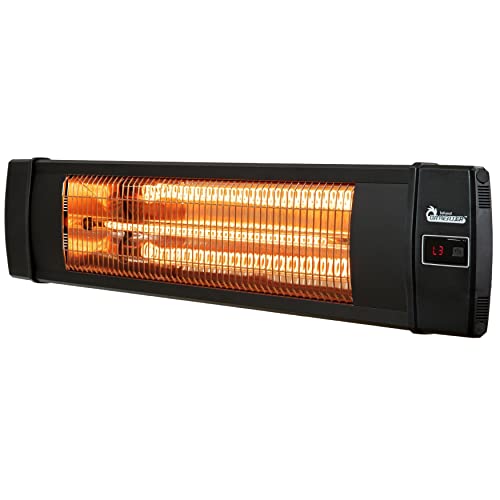
Designed for both indoor and outdoor use, the DR-238 Carbon Infrared Heater is IP55 rated for weather exposure. It provides clean, instant heat with three power settings (900W, 1200W, 1500W) and uses a standard 120V supply. Remote control simplifies adjustments while maintaining a compact, weather-resilient form factor. This model emphasizes outdoor versatility without compromising on rapid warmth or ease of use in open-air spaces.
Pure Enrichment PureRelief Pro XL Far Infrared Heating Pad

Pure Enrichment’s PureRelief Pro XL uses InfraWave technology to deliver far infrared heat with ceramic beads that penetrate deeper than traditional pads. While not a space heater, this device targets deep tissue relief for back, neck, shoulder, and knee pain, offering four heat settings and both dry and moist heat options. The extra-long 12” x 24” size provides broad coverage for larger muscle groups, with a soft micromink fabric for comfort and durability.
Ballu Mica Infrared Space Heater

The Ballu Mica Infrared Heater emphasizes wide-area warmth with 180° panoramic heating and a durable all-metal design. It provides 900-1500W of heat with a quick 10-second heat-up, plus remote control, a digital panel, and app-based scheduling. The unit is designed for large rooms, offering flexible placement as a stand-alone heater or wall-mountable option, and it includes a two-year warranty to assure long-term reliability. The combination of mica-panel technology and smart features supports consistent comfort in bigger spaces.
Buying Guide: Key Considerations for Infrared Heaters
Choosing an infrared heater requires evaluating space, safety, efficiency, and control options. Consider the following perspectives to inform a balanced purchase:
- Room Size and Heat Output: Match wattage and BTU ratings to the target space. Larger rooms typically benefit from higher power (900-1500W) and broader heat distribution.
- Heating Technology: Infrared quartz, carbon, and ceramic elements offer distinct warmth profiles. Quarts and carbon provide fast heat; ceramic modules can deliver steadier, longer-lasting warmth.
- Safety Features: Look for tip-over and overheat protection, thermostat control, and cool-to-touch surfaces for households with pets or children.
- Installation and Flexibility: Portable units are easy to move between rooms; floor-standing models offer portability, while wall-mounted variants save floor space.
- Energy Efficiency: Auto energy-saving modes, timers, and remote controls reduce consumption. Dual heating systems can balance comfort and efficiency.
- Outdoor vs Indoor Use: Outdoor-rated models (IP55 or higher) handle moisture and weather exposure, expanding usable areas like patios and decks.
- Noise Levels: Blowers with low dB ratings minimize disruption in bedrooms or offices.
- Smart Features and Connectivity: Wi-Fi or app control enables scheduling and remote adjustments, useful for multi-room setups or energy management.
- Warranty and Support: Longer warranties reflect product durability and manufacturer confidence; verify parts availability for maintenance.
When evaluating options from DR. Infrared Heater, Heat Storm, Pure Enrichment, and Ballu, consider how each model’s features align with your priorities—speed of heat, coverage, portability, and smart controls. For spaces requiring flexible placement, combined floor and wall options enhance adaptability. For sensitive environments, prioritize models with low noise and gentle heat distribution. Outdoor spaces demand weather-resistant construction and reliable performance in varying temperatures.