
If you need reliable off‑grid warmth for indoor spaces, a kerosene heater can be a practical option. This guide highlights five well-suited models, explains who they’re best for, and notes any limitations to consider. The top picks cover portable, convective, and hybrid designs ideal for small-to-medium rooms, emergency heating, camping, or workshops. The buyer’s table below summarizes each option for quick comparison.
| Product | Best For | BTU / Coverage | Fuel Tank | Notes |
|---|---|---|---|---|
| Comfort Glow Indoor Kerosene Convection Heater (KW-24J) | Small to medium living spaces | Up to 23,800 BTU | 1.9 gal | Portable, no electricity needed; 12-hour runtime |
| Dyna-Glo Indoor Kerosene Convection Heater WK95C8 | Emergency and backup heating | Up to 23,800 BTU | Not specified | No electricity needed; broad coverage |
| VEVOR 9000 BTU Portable Kerosene Heater | Medium rooms and camping/outdoors | 9000 BTU | 1.3 gal | 2-in-1 heater and stove; long runtime |
| Sengoku HeatMate Portable Kerosene Heater | Compact spaces and portability | 10,000 BTU | 1.2 gal | Cordless use; 14 hours runtime |
| AHUAWA 10,000 BTU Kerosene Heater | General indoor warmth and emergencies | 10,000 BTU | 1.4 gal | Emergency heater; up to 20 hours |
Comfort Glow Indoor Kerosene Convection Heater KW-24J

The Comfort Glow KW-24J offers convection heating for spaces up to about 1,000 square feet, delivering even warmth with a 360-degree radius. Best for small living rooms or open-plan areas that don’t rely on electrical power, this model uses a battery-powered ignition and a pin-type wick system for reliable heat anywhere. It runs up to 12 hours on a full 1.9-gallon tank, helping reduce heating bills in quiet, low-tech environments. Best for households without consistent electricity or for emergency use where corded heat isn’t an option.
Who it’s best for: buyers seeking a simple, electricity-free heat source for medium rooms and temporary spaces. Why selected: strong convection performance, portable design, and long runtime with a visible fuel gauge. Caution: performance depends on room ventilation; monitor for odors and ensure proper clearance around combustibles.
Dyna-Glo Indoor Kerosene Convection Heater WK95C8

The Dyna-Glo WK95C8 provides a high-convection heating option with similar BTU capacity to the KW-24J, covering up to 1,000 square feet. It operates without electricity, making it a strong choice for power outages or off-grid settings. The model’s robust heating is well suited for larger rooms or open spaces where consistent warmth is required. Best for: users who need reliable heat offline and want a straightforward, no-fuel-waste approach. Caution: ensure adequate ventilation and follow manufacturer guidance for safe operation in enclosed areas.
VEVOR 9000 BTU Portable Kerosene Heater
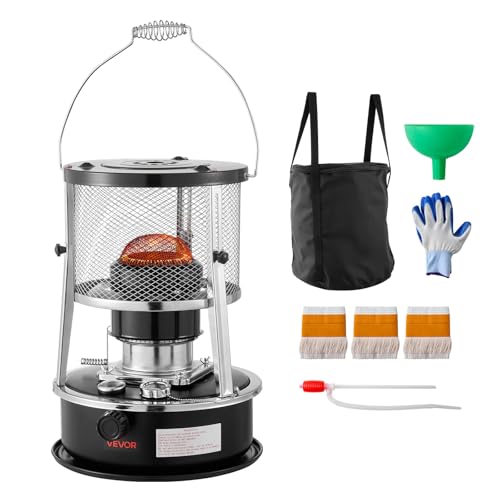
The VEVOR 9000 BTU heater blends heating and portability with a 360-degree surround design, suitable for a 30㎡ area. It promises quick warmth, reaching comfortable temperatures in about 10 minutes, and has a sizable 1.3-gallon tank offering up to 20 hours of runtime. It’s a strong pick for campers, garages, or living spaces that require a compact, longer-lasting heat source. Best for: households needing a quick, reliable heat source with outdoor cooking compatibility. Limitation: heavier use may require careful handling and fuel management.
Sengoku HeatMate Portable Kerosene Heater

The Sengoku HeatMate offers a compact, cordless design with a 1.2-gallon tank capable of running up to about 14 hours. It’s designed for easy transport, indoor and outdoor usage, and quick setup with a push-button start. Best for: users needing a portable, lightweight heater for small rooms or temporary spaces. Caution: capacity is modest, so plan refills for longer sessions or larger areas.
AHUAWA 10,000 BTU Kerosene Heater
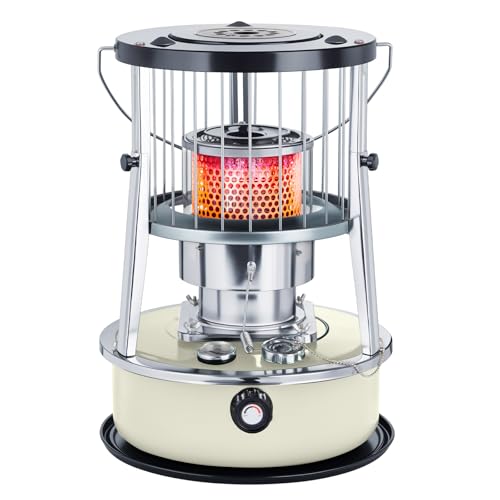
The AHUAWA model delivers 10,000 BTU and up to 20 hours of warmth on a 1.4-gallon tank. It’s positioned as a general indoor heater with emergency capability, suitable for garages, living rooms, or bedrooms during outages. Best for: users seeking a straightforward heating solution with solid run time. Limitation: ensure adequate ventilation when operating in enclosed spaces and follow safety instructions for wick adjustments.
Buying Guide: Choosing The Right Indoor Kerosene Heater
- Purpose and space: Match BTU and heater radius to the room size. Larger rooms benefit from higher BTU models, while smaller spaces can use compact units with steady convection.
- Electricity needs: If power outages are common, prefer non-electric or battery-assisted ignition designs for continued warmth.
- Fuel capacity and runtime: Look for tanks that offer enough hours to cover your typical winter stretch without frequent refuels.
- Ventilation and safety: Operate kerosene heaters only in well-ventilated areas. Check for safety features such as automatic shut-off and chimney systems where available.
- Portability vs. permanence: Choose lighter, portable models for temporary warmth or durable units for workshop and garage use.
- Maintenance: Some models include built-in fuel gauges and easy wick replacement—these simplify long-term use and reliability.
Frequently Asked Questions
- Are indoor kerosene heaters safe for my home?
Most models are designed for indoor use with safety features, but proper ventilation and distance from combustibles are essential. - Do I need electricity to run these heaters?
Some models require no electricity, while others use basic ignition systems that may rely on battery power. - What is BTU, and how does it affect heating?
BTU measures heat output. Higher BTU provides more warmth and covers larger areas, but uses more fuel. - How long does a full tank last?
Runtime varies by tank size and burn rate; always consult the product’s fuel capacity and stated hours. - Can kerosene heaters cook or boil water?
Some models combine stove and heater functionality, enabling basic cooking, though this is not universal. - What maintenance steps are important?
Regular wick checks, fuel quality, and proper storage help ensure consistent performance and safety.