
The top choice for a house water heater system depends on your home size, fuel type, and installation constraints. This guide highlights five popular electric or gas-powered tankless options, tailored for whole-house reliability, energy efficiency, and space savings. Each product is suited for different household needs—whether you’re maximizing showers, sinks, and appliances or fitting tight spaces. Below is a quick comparison, followed by in-depth product sections and practical buying guidance.
| Product | Fuel | Typical Use | Best For |
|---|---|---|---|
| WINTEMP 27kW 240V (B0DLSL2FW3) | Electric | 2–3 bathrooms, moderate climate | Energy efficiency and WiFi control |
| APUS 27kW 240V | Electric | Whole-home with multiple simultaneous uses | Smart memory and compact build |
| MIZUDO 199,000 BTU | Natural Gas | Large households with many fixtures | High GPM and remote management |
| WINTEMP 36kW 240V | Electric | 3–5 bathrooms, mild climate | High flow with strong energy savings |
| VEVOR Propane 100,000 BTU | Propane | Off-grid or backup heat with whole-house needs | Fast hot water and simple controls |
WINTEMP 27kW Electric Tankless — 6.5 GPM

This 27 kW electric tankless unit provides up to 6.5 GPM, suitable for 2–3 bathrooms in mild to moderate climates. It features a self-modulating design for energy efficiency and a stable output, with a LED temperature display and WiFi control for remote management. Best for homes with a 200 A service and dedicated electrical planning. Caution: Requires 3 x 40 A breakers and proper wiring; consult a qualified electrician before purchasing.
- Max output: 6.5 GPM
- Self-modulating power with real-time adjustments
- LED temperature display; WiFi control
Who this is best for: Small to mid-sized homes with mild climates and 2–3 bathrooms that want smart control and energy efficiency.
APUS 27kW 240V Tankless — Memory & LED
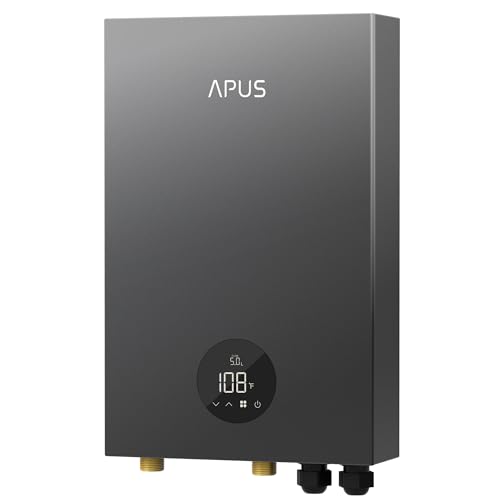
This 27 kW electric unit delivers up to 6.5 GPM with a memory function that preserves temperature settings after power cycles. The LED display allows precise 1°F adjustments and self-modulating technology boosts efficiency. It is compact enough to fit in tight spaces and uses 3/4″ NPT connections. Best for households needing reliable, on-demand hot water with smart controls. Caution: Installation requires 3×40 A breakers and appropriate 6×8 AWG wiring.
- Up to 6.5 GPM
- Memory function; precise temperature control
- Compact design; space-saving
Who this is best for: Homes needing steady hot water with smart memory features and a smaller footprint.
MIZUDO Gas Tankless — 199,000 BTU

With 10.3 GPM capacity, this gas-powered unit targets large households with multiple fixtures simultaneously. It includes WiFi connectivity for remote management and robust safety features like 16+ integrated protections, freeze protection, anti-dry firing, and flame failure detection. Best for big homes in need of reliable, high-flow hot water. Caution: Gas installation requires professional handling; ensure venting and clearances meet local code.
- High flow: up to 10.3 GPM
- WiFi remote management
- Extensive safety protections
Who this is best for: Large families or homes with high simultaneous hot water demand seeking convenient remote control.
WINTEMP 36kW Electric — 8.7 GPM
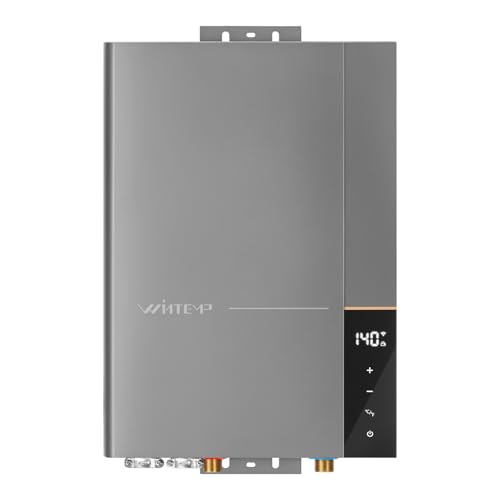
This 36 kW electric model pushes up to 8.7 GPM, designed for 3–5 bathroom homes in mild climates. It requires a 300 A service and four 40 A breakers with 8 AWG cables. It offers self-modulating technology for energy savings and stable temperature. Best for larger homes that still prioritize energy efficiency. Caution: Requires substantial electrical service capacity and professional electrical planning.
- High flow: up to 8.7 GPM
- Self-modulating energy savings
- Space-saving design; heavy-duty electrical requirements
Who this is best for: Medium-to-large homes where electrical capacity is available and even water temperature is essential.
VEVOR Tankless Propane — 100,000 BTU

Efficient propane-powered unit with 4.3-gallon capacity and 100,000 BTU, designed for whole-house use with smart temperature control and multiple protections. Best for off-grid scenarios or homes without reliable natural gas access, balancing performance and fuel versatility. Caution: Propane units require proper ventilation and local code compliance.
- Instant hot water on demand
- ±1°F temperature precision
- Large interface for easy use
Who this is best for: Off-grid homes or residences needing flexible fuel options and straightforward control.
Buying Guide: Key Considerations for Choosing a House Water Heater System
- Fuel type and availability: Choose electric for simpler electrical upgrades or gas/propane where fuel access and efficiency justify installation costs.
- Flow rate needs: Estimate GPM for simultaneous uses (showers, sinks, appliances). Higher GPM models suit larger homes; smaller homes can opt for mid-range outputs.
- Electrical service: Electric systems require adequate service capacity (often 200–300 A). Confirm breaker and wiring requirements with a licensed electrician.
- Space and installation: Tankless systems save space but may need multiple units or complex venting. Ensure installation aligns with local codes and clearances.
- Temperature control: Look for self-modulating technology for energy savings and stable output. LED displays or memory functions improve usability.
- Remote management: WiFi-enabled units offer schedule settings and monitoring, useful for energy planning and maintenance.
- Safety features: Prioritize units with freeze protection, flame sensing, anti-dry firing, and pressure/temperature safeguards.
- Maintenance considerations: Some models require periodic professional servicing; check for component accessibility and warranty terms (where provided).
Frequently Asked Questions
- What size tankless water heater do I need for a 2–3 bathroom home? – Look for models delivering around 6–7 GPM, balancing simultaneous uses with climate and temperature rise expectations.
- Is electric or gas better for a whole-house system? – Electric units are easier to install where gas lines are unavailable; gas units tend to handle higher flow but require venting and fuel considerations.
- Do tankless heaters save energy? – Yes, due to self-modulating technology that adjusts power to actual demand, reducing standby energy loss.
- Can I install a tankless heater myself? – Installation often requires licensed professionals for electrical, gas, and venting work to meet code and safety requirements.
- Will a larger unit always deliver more hot water? – Not necessarily; output depends on water temperature rise, incoming water temperature, and simultaneous usage. Matching unit capacity to demand is crucial.
- What maintenance is needed? – Most units benefit from periodic venting, filter checks, and professional inspections to ensure safe operation and efficiency.