
If you’re looking to protect a hydronic heating system from rust, sludge, and magnetite buildup, a magnetic filter is a practical choice. This guide highlights five magnetic filtration options that are well-suited for closed-loop boiler and radiant heating setups. Each product is evaluated for typical homeowner or small-business uses, from compact residential installs to larger, serviceable systems. The sections below explain who each filter is best for, along with concrete reasons to choose or avoid them.
| Product | Best For | Key Benefit |
|---|---|---|
| DN20 Magnetic Boiler Filter | Small to medium residential systems | Precise DN20 connection for secure, leak-proof fit |
| 3/4″ Magnetic Boiler Filter Assembly | Systems needing robust magnetic removal | Large valve bodies reduce flow speed to help particle settlement |
| FilterLock Magnetic Seal Cover | Sealing and leak prevention for existing filters | Magnetic seal cover to cut HVAC air leaks |
| Industrial Magnetic Sludge Separator | Mid-to-large heating loops | 1-stage filtration with DN20 to DN32 threaded connections |
| Brass Magnetic Filter for Compact Spaces | Space-constrained installations | Brass body with 5 μm filtration and magnetic cleaning |
DN20 Magnetic Boiler Filter for Hydronic Heating Systems

This filter uses a magnetic separator to capture magnetite, rust particles, sludge, and circulating debris before they reach boilers, pumps, valves, or radiators. It’s designed for closed-loop hydronic systems and features a DN20/3/4 inch threaded connection for a secure, leak-proof fit. Best for small to mid-sized residential installations where reliable, ongoing protection is needed. Limitation: compatibility and performance depend on proper sizing within the system’s loop design.
3/4″ Magnetic Boiler Filter Assembly For Eliminates Scale Rust and Sludge
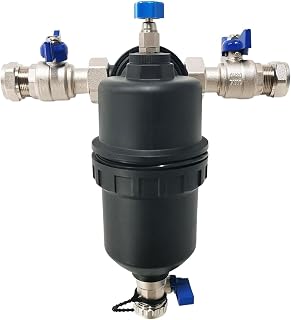
Engineered from plastic and metal, this filter is durable and corrosion-resistant. The magnetic rods attract rust and trap debris, keeping it from flowing back into the system. Large internal valve bodies slow flow to encourage particles to settle toward the bottom. Best for mid-sized heating networks where rust and sludge are common concerns. Caution: ensure compatibility with plastic components in the current loop to avoid material expansion issues.
FilterLock Furnace Filter Slot Seal

This magnetic seal cover fits any 1″ furnace filter up to 25″ long, reducing HVAC air leaks. It’s designed to help maintain system integrity in environments where tighter seals and minimal bypass are needed. Best for retrofit scenarios where improving seal integrity is a priority. Limitation: does not itself filter the water but complements filtration by reducing air leaks that can affect overall system efficiency.
Industrial Boiler Filter With Magnetic Sludge Separator

One-stage filtration for scale, rust, and sediment removal with DN20 to DN32 threaded connections. The integrated magnetic ring attracts ferrous particles, helping keep boilers and pumps cleaner. Best for larger heating loops or commercial-style residential systems where robust filtration is preferred. Caution: installation may require additional clearance for pipe and filter access.
Heating System Magnetic Filter With Brass Body

Made of high-quality brass, this filter offers durability and high-temperature and high-pressure resistance in compact installations. It uses magnetic filtration to remove oxide slag and magnetic impurities, extending HVAC equipment life. Best for space-constrained setups where reliability and corrosion resistance are important. Limitation: brass versions may require careful matching with other brass components to avoid galvanic issues in some water chemistries.
Buying Guide — Key Purchase Considerations
- System size and flow rate: Match the filter’s nominal size (DN20, DN25, etc.) to your heating loop to ensure effective flow and filtration without excessive pressure drop.
- Filtration vs. magnetic removal: All listed items emphasize magnetic capture of ferrous particles; some also include physical filtration elements. Decide whether you need purely magnetic capture or additional particulate filtration.
- Installation and compatibility: Check thread standards and whether a sealed, leak-proof fit is required for your setup. Consider space for valve bodies and access for maintenance.
- Maintenance simplicity: Features like built-in drainage or quick-access magnet rings can reduce service time. Assess how often you expect to service the filter based on water quality and system use.
- Material durability: Brass and robust plastics offer different advantages in terms of heat resistance and corrosion performance. Choose based on water chemistry and operating temperatures.
- Space considerations: For tight equipment rooms, compact brass or DN20 options may fit more easily without sacrificing filtration performance.
Frequently Asked Questions
- What does a magnetic filter remove in heating systems?
It captures ferrous particles, magnetite, rust, and sludge that can clog components and reduce efficiency.
- Do magnetic filters affect water flow?
They can introduce a small flow resistance; select a size appropriate for your loop to minimize pressure drop.
- Can a magnetic filter prevent boiler damage?
By reducing debris reaching boilers and pumps, it helps reduce wear and potential clog-related issues.
- Are magnetic filters compatible with all water chemistries?
Most are designed for standard hydronic water; if you have aggressive water chemistry, verify materials and seals for corrosion resistance.
- How often should a magnetic filter be serviced?
Service frequency depends on debris load; schedule inspections during routine maintenance and after seasonal heating use spikes.
- Is installation best performed by a professional?
For best results, ensure correct sizing, thread type, and leak-proof connections according to your system plan.