
If you’re outfitting an RV or trailer for winter travel, the right heater can mean the difference between cozy nights and icy mornings. This guide highlights five reliable options designed for RV living, ranging from high-output furnaces to portable diesel heaters and bunk-area parking heaters. Each pick targets a specific use case, such as large 28–38 ft rigs, quiet sleeping environments, or flexible installation. Read on to find the best match for your vehicle size, climate, and energy setup.
A quick summary of the featured products is below. This table helps you compare key attributes at a glance.
| Product | Best For | Key Benefit |
|---|---|---|
| KINGRVER 35,000 BTU RV Furnace | Large RVs and travel trailers | High heat output and 320 CFM airflow |
| FOGATTI RV Furnace 35,000 BTU | Quiet sleepers and versatile modes | 3 modes and low noise |
| 30FT Heated Water Hose for RV | Cold climates needing water supply | Prevents freezing to -45°F |
| Diesel Heater 8KW Portable | Off-grid or multiple vehicle use | Multi-voltage, long runtime |
| White & Black Split Air Heater Parking Heater | Compact RVs and bunk areas | LCD/remote control with low noise |
KINGRVER 35,000 BTU RV Furnace for Camper

The KINGRVER 35,000 BTU RV furnace is designed for larger RVs and travel trailers, delivering strong heat output with a 320 CFM airflow for rapid warming and even air distribution. Best for: owners of 28–38 ft RVs who need dependable heat in cold weather. The unit emphasizes efficient propane use and stable warmth with a heat exchanger that helps maintain consistent output up to 104°F. It includes a thermostat for precise temperature control and fault alerts for quick troubleshooting. Caution: installation and venting should follow manufacturer guidelines to ensure safe operation in your specific RV layout.
FOGATTI RV Furnace 35,000 BTU

The FOGATTI 35,000 BTU furnace is ideal for campers, motorhomes, and trailers requiring robust heating with quiet operation. It offers rapid heating with 320 CFM airflow and a choice of three modes (quick heat, standard, sleep). The built-in fault monitor supports easier troubleshooting. Best for: users who prioritize rapid heat and quiet nights. A potential limitation is that the sleep mode operates at lower noise levels but still may be perceptible in extremely quiet environments.
30FT Heated Water Hose for RV
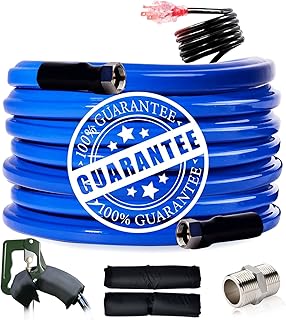
This heated water hose helps prevent water line freezing down to -45°F, making it a practical year-round RV accessory for cold climates. Best for: RV owners who need reliable water supply in freezing temperatures. It includes a self-regulating thermostat and dual end washers to help prevent leaks. Limitation: heating performance depends on ambient power availability; ensure an adequate power source to maintain warmth along the hose length.
Diesel Heater 8KW Portable for Car RV

The 8KW portable diesel heater provides versatile heating for cars, RVs, trucks, and campers. It supports 12V/24V vehicle power with a 110–240V transformer for home use, making it adaptable to different setups. Best for: travelers who need extended runtime and multi-environment installation. It features a 9L fuel tank for up to about 24 hours of continuous heat. Caution: ensure proper ventilation when operated indoors or in confined spaces to avoid fumes buildup.
White & Black Split Air Heater Parking Heater

This 5KW 12V bunk heater is a compact option designed for car, truck, RV, bus, and trailer use. It includes a smart LCD display and remote control, plus low-noise operation and controlled fuel pump output for efficient heating. Best for: smaller RVs or bunk areas where space is at a premium. Limitation: as a smaller unit, heat output may be less sufficient for very large interiors or extremely cold conditions without supplemental heating.
Buying Guide
What should you consider when choosing an RV heater?
- R_V size and layout: Large rigs benefit from high-output furnaces, while smaller trailers can be adequately heated with bunk-type or portable options.
- Gas vs. diesel vs. electric: Propane furnaces are common in RVs, but diesel or portable electric heaters offer flexibility for off-grid or dual-power setups.
- Heat source efficiency: Look for units with efficient heat exchange, integrated thermostats, and fault monitoring to maintain steady indoor comfort.
- Noise level: If overnight comfort is a priority, opt for models with low noise ratings or sleep modes.
- Installation and safety: Ensure proper venting, ventilation clearance, and compliance with RV space requirements. For water hoses, ensure compatibility with climate and power sources.
FAQ
- Q: Which heater is best for a large 38 ft RV?
A: A high-output furnace like the 35,000 BTU models is typically suitable for larger rigs due to higher airflow and heat capacity. - Q: Can I run a diesel heater indoors safely?
A: Diesel heaters require proper ventilation and following manufacturer guidelines to avoid fumes buildup; use in well-ventilated areas or outdoors as recommended. - Q: Do these heaters require a separate thermostat?
A: Some units include built-in thermostat controls; others may require an external thermostat or remote control integration for precise temperature management. - Q: Is a quieter heater better for sleeping?
A: Yes. Models with sleep or quiet modes (around 40 dB or lower) are better for sleeping environments. - Q: Should I choose a heated water hose in cold climates?
A: Yes, when freezing risk is high, a heated hose helps prevent ice blockage and ensures water supply, though it requires power and proper installation. - Q: What is a key trade-off when selecting a bunk heater?
A: Smaller heaters save space and power but may deliver less warmth for larger interiors; choose based on room volume and climate severity.