
In this guide
Winter on the course can be more comfortable with a heater that works seamlessly in a golf cart. This guide highlights top options, with a focus on electric models and reliable propane variants for comparison. Learn how to choose based on power, safety, and compatibility with 48V golf carts, and discover practical mounting and energy considerations for cold-weather golf.
| Product | Brand | Power Type | Approximate Coverage | Key Benefit |
|---|---|---|---|---|
| UNIGT Golf Cart Electric Heater | UNIGT | Electric | Up to 120 sq ft | Fast heat, quiet operation |
| Xislet 48V Golf Cart Heater | Xislet | Electric | Up to 120 sq ft | Efficient carbon fiber heating |
| Mr. Heater F242010 MH4GC | Mr. Heater | Propane | Up to 5.5 hours runtime | Wind-resistant heat, safety features |
| 6500-BTU Golf Cart Heater (OLFANIX) | OLFANIX | Propane | Up to 4-6 hours | 2-in-1 heater with cup holder adapter |
| KOMAN Golf Cart Heater | KOMAN | Propane | 4100 BTU | Self ignition, adjustable heat |
Note: This article focuses on a mix of electric and propane golf cart heaters to help readers compare electric-only options with popular propane choices. Be sure to follow manufacturer installation instructions and local safety guidelines when mounting heaters on a golf cart.
UNIGT Golf Cart Electric Heater

Brand: UNIGT
Power: Electric, 400W carbon fiber heating for 48V golf carts. It heats up to 120 square feet with a quick 3-second warm-up. The unit is designed for battery-powered operation, minimizing energy drain while delivering silent, efficient warmth. A waterproof inline fuse enhances safety for hard-wired installations. This model avoids propane, reducing carbon monoxide concerns and noise, and fits standard 48V golf cart systems.
Xislet 48V Golf Cart Heater

Brand: Xislet
Power: Electric, 400W carbon fiber heater wired directly to the 48V battery. It provides rapid, even warmth up to 120 sq ft. The system is designed for efficiency, with 98% energy use and no fuel refueling required. Features a low-surface-temperature design and a built-in fuse for electrical protection, ensuring safe operation around families and pets on the course.
Mr. Heater F242010 MH4GC

Brand: Mr. Heater
Power: Propane, 4,000 BTU radiant heat with a runtime up to 5.5 hours. This unit includes wind resistance and an oxygen depletion sensor (ODS) with a tip-over safety switch for on-the-go stability. It is designed to operate at higher altitudes and provides consistent warmth even while driving on breezy cart paths. This is a traditional propane option that many golfers rely on for dependable heat without electrical connections.
6500-BTU Golf Cart Heater (OLFANIX)

Brand: OLFANIX
Power: Propane, up to 6,200 BTU with coverage around 200 sq ft. This heater is compatible with most golf cart cup holder adapters and is designed for use with standard 1 lb propane tanks (tank not included). A robust gas valve enables precise heat control, making it a versatile option for colder rounds or camping scenarios where a portable heat source is desired.
KOMAN Golf Cart Heater

Brand: KOMAN
Power: Propane, 4100 BTU with self-ignition and adjustable heat output. This unit is designed for compatibility with most golf cart models and includes a cup holder adapter for stable mounting. It offers a quick setup for golfers who want reliable warmth without electrical wiring, suitable for EZGO, Club Car, and Yamaha carts. As with other propane heaters, fuel is not included, and safe handling is essential in windy or crowded conditions.
Golf Cart Heater Portable Propane (LOFUKI)
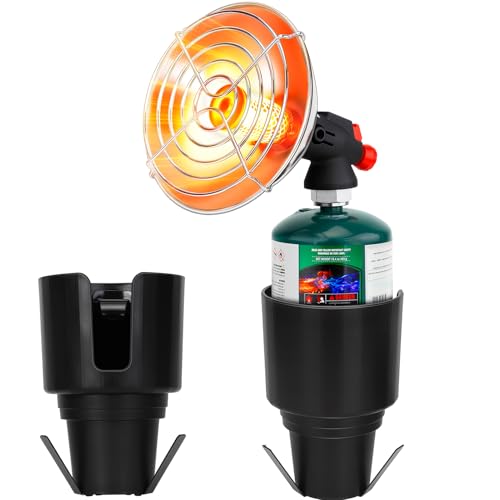
Brand: LOFUKI
Power: Propane, heats up to 200 sq ft with flame-based heat. Includes a cup holder adapter to fit most golf carts and doubles as a car or tent heater in other settings. Safety features include a protective grid and a compact portable design, making it a versatile option for golfers who want warmth on and off the course. Note that propane tanks are not included in most listings.
Portable Propane Golf Cart Heater With Foldable Base (LOFUKI)

Brand: LOFUKI
Power: Propane, 200 sq ft heating capacity with foldable base for stability. It features a golf cart cup holder base and a windproof design suitable for outdoor use. Compatible with standard 1 lb tanks (tank not included) and designed for portability during camping or golf rounds. The foldable base enhances stability on uneven surfaces and in tents or campers.
Buying Guide: Key Purchase Considerations And Comparisons
- Power source and compatibility: Electric heaters require a 48V connection to the cart battery and efficient wiring for safe operation. Propane units do not rely on the cart’s electrical system but require a fuel source and proper mounting to avoid leaks.
- Heat output and coverage: For golf carts, target heaters rated for up to 120 sq ft for consistent warmth inside the cabin. Propane units can be very powerful (BTU ranges from ~4,000 to 6,200 BTU) and are effective in open or windy conditions, but may heat larger spaces more quickly than some electric models.
- Safety features: Look for oxygen depletion sensors (ODS), tip-over switches, built-in fuses, and protective grids. Electric models should have low-surface-temperature designs to reduce burn hazards, while propane models should include secure cup-holder adapters and stable mounting.
- Installation and maintenance: Electric heaters need proper hard-wiring and a secure power connection; installation ease matters for 48V carts. Propane heaters require proper fuel handling, venting awareness, and replacement tanks. Always follow the manufacturer’s installation instructions.
- Noise and comfort: Electric heaters typically offer quiet operation, which is advantageous for a peaceful ride on winter courses. Propane heaters may create more sound and airflow—balance heat with comfort and cart noise preferences.
- Portability and versatility: Some models include foldable bases or cup-holder adapters that enable use outside the cart, such as tents or camping setups. Consider whether you want a heater that doubles as a portable outdoor heat source.
- Safety and maintenance costs: Electric heaters generally have lower ongoing fuel costs and fewer fire risks in enclosed spaces. Propane models require refills and ongoing fuel purchase, but can be reliable in off-grid scenarios.
- Warranty and support: Check warranty length and availability of replacement parts or service centers, especially for specialized golf cart applications and hard-wired electric installations.