
When selecting a baseboard heater for a heat pump or supplementary heating setup, look for quiet operation, clear temperature control, and strong safety features. This guide highlights five top options suited for medium to larger rooms, home offices, and bedrooms. Each choice is evaluated for best-use scenarios, with practical cautions to help you choose confidently.
Summary comparison of selected products:
- — Best for medium rooms needing solid convection heating with precise thermostat control.
- COMFORT ZONE Digital Convection Baseboard Heater with Timer — Best for rooms where timed operation adds convenience.
- Garystat Non-Programmable Thermostat — Best for existing, compatible HVAC setups that require a simple control device.
- EasyAcc 1200W Wall Heater — Best for ultra-compact spaces like bathrooms or small offices with wall-mount placement.
- Fahrenheat FBE15002 Portable Baseboard Heater — Best for flexible space heating across multiple rooms.
Comfort Zone CZ650B 1500W Baseboard Heater
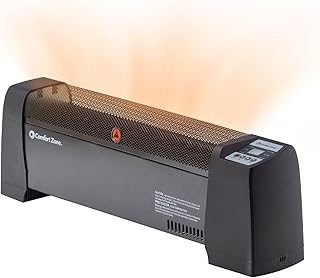
Best for medium rooms requiring strong convection heat with precise temperature control. This unit uses a 1500-watt heating element and dual heat settings, complemented by a digital thermostat with a clear display for easy adjustments. It operates quietly, supporting relaxed activities without distraction. The design emphasizes safety with a tip-over switch, a stay-cool exterior, and overheat protection. A cautioned note: ensure adequate clearance around the heater to maximize both safety and performance.
Who it’s best for: individuals seeking reliable, powerful warmth in living rooms or home offices where quiet operation and accurate temperature maintenance matter most.
Why selected: It combines high heating output with reliable safety features and user-friendly controls, making it a practical baseboard solution for everyday comfort.
Caution: Not ideal for spaces with limited wall space or where constant airflow could disturb nearby electronics or fabrics.
COMFORT ZONE Digital Convection Baseboard Heater with Timer

Best for spaces where timed heating is advantageous, such as bedrooms or home offices with routine schedules. This convection heater uses natural air circulation to deliver even warmth along walls, featuring a low-profile design that blends with most interiors. It provides two heat settings for customizable comfort. Caution: verify room size compatibility to prevent under- or over-heating in larger areas.
Who it’s best for: buyers who value a sleek, unobtrusive footprint and predictable heating cycles driven by a built-in timer.
Why selected: The timer feature adds energy-aware control without relying on external smart devices, making it a straightforward choice for simple climate management.
Caution: Performance may vary if placed far from the room’s center or next to large open doorways, potentially creating temperature inconsistencies.
Garystat Non-Programmable Thermostat For Heat Pumps
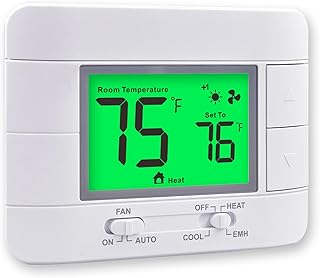
Best for homes with existing heat pump setups that require a reliable, non-programmable control solution. This thermostat supports two heating stages and one cooling stage, with compatibility notes across different HVAC configurations. It is not compatible with electric baseboard heat or certain high-voltage systems, so compatibility verification is essential. Caution: confirm system compatibility with your current equipment before purchasing.
Who it’s best for: homeowners who want a straightforward thermostat option for a standard heat pump or central HVAC system without programmable features.
Why selected: It provides essential control for temperature management in mixed HVAC environments, helping maintain consistent comfort without extra complexity.
Caution: Incompatibility with some baseboard or line-voltage setups means it’s not a universal solution.
EasyAcc 1200W Wall Heater with Ceramic PTC

Best for compact spaces where wall mounting is preferred, such as bathrooms, small offices, or dorm rooms. This 1200W ceramic PTC heater offers three operation modes (high, low, and fan-only) and a 30-degree adjustable airflow, enabling directed warmth without occupying floor space. Caution: use in bathrooms only if the unit is rated for wet or damp environments and follow wiring guidelines to avoid electrical hazards.
Who it’s best for: people needing a space-saving heating solution that can be mounted on a wall for easy placement and quick warmth in tight areas.
Why selected: Its wall-mount design saves floor space and provides flexible heat distribution with adjustable airflow for targeted comfort.
Caution: Not ideal as a sole heating source for large rooms; best used as supplemental warmth in smaller areas.
Fahrenheat FBE15002 Portable Baseboard Heater

Best for flexible warmth across multiple rooms or temporary heating needs. This portable baseboard heater offers 1500 watts of heat and a low-profile, mobile design. It operates via 120-volt plug and relies on natural convection for quiet, evenly distributed warmth. A caution: ensure proper clearance around the unit and avoid blocking air intakes to prevent overheating.
Who it’s best for: households requiring portable, easy-to-move heating that can address cold spots in different rooms without installing fixed units.
Why selected: The portability and universal plug compatibility make it a versatile option for renters or homes needing quick, temporary warmth without permanent installation.
Caution: Portable units can be less efficient for long-term use in large spaces compared with fixed baseboard heaters.
Buying Guide
What to consider when choosing heat pump baseboard heaters:
- Room size and heat load: Larger rooms need higher wattage and even heat distribution. Match the heater’s output to the space to avoid under- or over-heating.
- Heating type and airflow: Convection vs. radiant designs affect warmth distribution and noise. Convection heaters are generally quiet and even, while some portable units use natural convection with less noise.
- Thermostat options: Digital vs. non-programmable controls impact how precisely you manage temperatures. Timers add convenience for daily routines.
- Safety features: Look for overheat protection, tip-over switches, and stay-cool casings to reduce burn risks and accidents.
- Installation type: Wall-mounted, baseboard-style, or portable units each offer different space-saving or flexible-use benefits. Consider room layout and electrical wiring.
- Power compatibility: Ensure the device’s voltage and circuit requirements align with your home’s electrical system and any existing baseboard or HVAC configurations.
- Energy efficiency: Consider models that provide consistent heat with low noise and balanced airflow to optimize energy use over time.
Frequently Asked Questions
- Do baseboard heaters work with heat pumps? Yes, many baseboard heaters pair with heat pump systems as supplemental or zone-based heating solutions, but always verify compatibility with your specific setup.
- Is programmable heating better for energy savings? Timers and programmable thermostats can save energy by aligning heat output with your daily schedule.
- Are wall-mounted heaters safe for bathrooms? Only if specifically rated for damp or wet environments and installed according to electrical codes and safety guidelines.
- Can I use a portable baseboard heater for primary heating? Portable models are best for supplemental warmth in smaller spaces or temporary heating needs, not as the sole heat source for large rooms.
- What maintenance is required? Regularly check for dust buildup, ensure clear air paths, and verify safety features are functioning properly.
- How do I choose the right wattage? Calculate the room’s square footage and climate zone; when in doubt, opt for a model with higher wattage within safe electrical capacity to maintain comfortable temperatures.