
In this guide
Answering your search for a heat air exchange system, this guide compares top options for single rooms to whole-house setups. Suitable buyers include homeowners upgrading ventilation, apartment dwellers seeking improved air quality, and small-office managers needing energy-efficient fresh-air exchange. Below, you’ll find five strong picks with clear reasons to choose each, plus a practical buying guide and quick FAQ.
| Product | Best For |
|---|---|
| 6 Inch Heat Recovery Ventilator With Ceramic Heat Exchanger | Single rooms that want high heat recovery and smart control |
| Aprilaire V22BEC Energy Recovery Ventilator | Whole-house fresh air with balanced exchange for larger homes |
| VENTS-US Micra 100 (FreshBox) | Smaller spaces needing efficient energy recovery and filtration |
| ROVSUN 9000 BTU Mini Split AC/Heating System | Air conditioning + heat pump with flexible climate control |
| Panasonic FV-06VE1 WhisperComfort 60 ERV | Balanced, energy-efficient ventilation with adjustable airflow |
6 Inch Heat Recovery Ventilator With Ceramic Heat Exchanger

This single-room HRV uses a ceramic heat exchanger to recover up to 90% of heat from exhaust air. Best for compact spaces where you want efficient heat reuse and remote control, including a Tuya app integration for on-the-go adjustments. It supports Fresh Air, Exhaust, and Recirculation modes for flexible air management.
Best for: small living areas or bedrooms where intelligent, room-specific ventilation is prioritized. Better for: users who want WiFi-enabled control and heat recovery in a compact unit. Choose this if: you need strong heat recovery and home automation in a single-room setup. Caution: ceramic cores can be sensitive to long-term moisture management; ensure proper installation and sealing.
Aprilaire V22BEC Energy Recovery Ventilator

The Aprilaire V22BEC ERV delivers balanced ventilation for homes up to 6,000 sq. ft., exchanging stale indoor air with fresh outdoor air to improve overall air quality. Their energy recovery core tempers incoming air with heat and moisture from exhaust air, potentially easing HVAC loads and reducing heating and cooling demands. A solid choice for whole-house ventilation with reliable energy efficiency.
Best for: larger homes needing balanced, energy-efficient air exchange. Better for: homeowners seeking a dedicated whole-house ERV solution. Choose this if: you want reliable, balanced ventilation with potential HVAC load reductions. Caution: installation requires adequate mounting space and integration with existing systems for optimal performance.
VENTS-US Micra 100 (FreshBox) – Single-Room HRV

The Micra 100 offers continuous ventilation for single-room spaces with up to 98% thermal energy recovery. It emphasizes warmed incoming air in cool weather and reduces heat gain in warm seasons, helping minimize HVAC losses. It includes advanced filtration (MERV 8 and MERV 14) for incoming air and an additional MERV 8 extract filter.
Best for: offices, studios, living spaces, or small cafés needing constant fresh air with strong energy recovery. Better for: environments where filtration of incoming air is important. Choose this if: you want a compact unit with high energy transfer efficiency and robust filtration. Caution: single-room design means it won’t ventilate multiple rooms automatically without additional units.
ROVSUN 9000 BTU Mini Split AC/Heating System

This 9000 BTU mini-split system combines air conditioning with a heat pump, offering efficient cooling and heating for spaces up to roughly 400 square feet. It features inverter technology and a remote control for flexible operation, and is AHRI-certified. It’s a practical option when both climate control and some degree of air exchange are desired in a small-to-medium space.
Best for: small apartments or rooms needing both cooling and heating with ventilation considerations. Better for: users who want an all-in-one climate solution with smart remote control. Choose this if: you prioritize cooling/heating versatility over dedicated air-exchange-only performance. Caution: this unit is primarily a climate control system, not a dedicated ERV/HRV; ventilation functionality may be limited without additional components.
Panasonic FV-06VE1 WhisperComfort 60 ERV
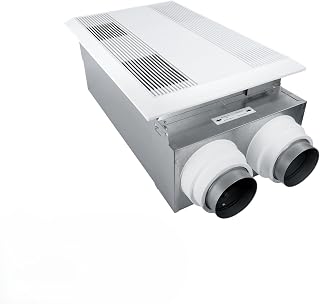
The WhisperComfort 60 ERV provides tempered fresh air with balanced exhaust flow to maintain neutral pressure. It features a multi-speed airflow selector (20–60 CFM) and an occupant-controllable boost function. HVI-certified for energy recovery and sound, it is designed for easy ceiling or wall mounting with ASHRAE 62.2 compliance considerations.
Best for: homes seeking adjustable, energy-efficient ventilation with sound considerations. Better for: users wanting a proven, quiet ERV with flexible installation options. Choose this if: you need a balanced ERV with customizable airflow in a residential setting. Caution: ensure proper installation and duct routing to meet standards and achieve optimal performance.
Buying Guide
Key factors to consider when selecting a heat air exchange system include space size, ventilation type, energy recovery efficiency, and installation constraints. For single-room needs, HRVs and ERVs with compact footprints and smart controls are ideal. For whole-house ventilation, prefer units with a robust energy recovery core and balanced air exchange. When choosing between ERV vs HRV, consider your climate: ERVs temper humidity and are often better in mixed climates; HRVs focus on heat transfer, suitable for colder environments.
- Space and zoning: Do you need ventilation for a single room or an entire home? Choose accordingly.
- Energy recovery efficiency: Look for high heat or moisture transfer efficiency (percent recovery) and certified cores (HVI).
- Filtration: Consider filters (MERV ratings) to reduce allergens and particulates entering indoors.
- Control and connectivity: Smart apps and remote controls add convenience and may improve daily usage.
- Installation considerations: Some systems require wall or ceiling mounting, ducting, or compatibility with existing HVAC layouts.
- Noise: Check sound ratings, especially for units in bedrooms or living spaces.
FAQ
- What is a heat recovery ventilator (HRV) vs. energy recovery ventilator (ERV)?
- Will a small-room HRV provide enough ventilation for a large space?
- Do ERVs cool or heat the space directly?
- What maintenance is required?
- Is filtration important in ventilation systems?
- Can these systems be DIY installed?
HRVs transfer heat between outgoing and incoming air to save energy in cold climates. ERVs also manage moisture, improving humidity balance in mixed climates.
Single-room units are designed for one space; for larger areas, a whole-house ERV/HRV or multiple single-room units may be needed.
ERVs don’t primarily cool or heat; they transfer heat and moisture to balance indoor air while bringing in fresh air. Use them with an HVAC system for climate control.
Regular filter checks and cleanings, and periodic core inspections per manufacturer guidelines improve efficiency and lifespan.
Yes. Filtration helps remove dust, smoke, and allergens from incoming air, benefiting indoor air quality.
Installation complexity varies. Some units are designed for DIY setup with basic duct work, while others require professional installation for optimal performance and compliance.