
If you’re selecting glycol for boiler systems, you want a fluid that protects against freezing, corrosion, and overheating while remaining compatible with your specific heating setup. The following five products are well-suited for closed-loop hydronic and heating systems, including Aqua-Hot and similar installations. This guide helps identify who benefits most from each option and why it was chosen. A quick buying table follows to compare key points at a glance.
Intended buyers: homeowners with residential hydronic systems, property managers overseeing boiler rooms, and DIY enthusiasts who need reliable freeze protection and corrosion control. The top picks balance concentration, corrosion inhibitors, and ease of use, making them practical for different system sizes and maintenance routines.
| Product | Best For | Key Benefit |
|---|---|---|
| STAR BRITE Premium -100° Boiler System Antifreeze | All-around residential systems needing strong freeze protection | Very low temperature protection (-100°F) with corrosion inhibitors |
| ChemWorld Boiler Antifreeze Concentrate (95% Inhibited PG Pink) | Customers who want high concentration and adjustable dilution | 95% PG with corrosion inhibitor; easy dilution to target protection |
| ChemWorld Inhibited Propylene Glycol 95% Solution (Clear) | Systems requiring clear fluid for leak detection visuals | 95% inhibited PG, customizable with water dilution |
| HD Premix 40% (5 Gallon) | Systems needing a ready-to-use premix with additives | 40% PG with performance additives and water; easy handling |
| Freeze Safe 5 gal HD Propylene Glycol Antifreeze (Blue) | Open-and-flexible applications including diverse hydronic setups | Bursts protection to -80°F; red color aids leak detection |
STAR BRITE Premium -100° Boiler System Antifreeze

Best for: residential boiler systems needing robust freeze protection and corrosion control. This formula is designed for Aqua-Hot and Hydro-Hot setups, offering protection down to -100ºF at full strength and premium corrosion inhibitors to safeguard internal components. Use when you require strong low-temperature performance without sacrificing system longevity.
Caution: At full strength, ensure proper dilution for your system’s design temperatures to avoid unnecessary concentration-related issues.
ChemWorld Boiler Antifreeze Concentrate (95% Inhibited PG Pink)

Best for: users who want a highly concentrated glycol that can be diluted to fit system needs. The 95% PG concentration plus 5% corrosion inhibitor allows precise control over freeze protection temperatures when diluted between 30% and 50% with water.
Limitation: Requires careful dilution to achieve desired protection levels; miscalculations can affect performance.
ChemWorld Inhibited Propylene Glycol 95% Solution (Clear)

Best for: installations where clear fluid is preferred for leak detection and visual inspection. This 95% inhibited PG solution is ideal for systems where visibility of leaks and color-based identification aids maintenance.
Limitation: Requires dilution with water to reach target freeze protection; ensure compatibility with seals and equipment materials.
HD Premix 40%, 5 Gallon Pail

Best for: buyers seeking a ready-to-use premixed glycol solution with additives. The 40% PG premix offers a straightforward option with additives and water for balanced system protection, plus a visually distinct appearance to help identify leaks.
Limitation: Higher initial glycol concentration may be more costly; verify compatibility with your boiler seals before use.
Freeze Safe 5 gal HD Propylene Glycol Antifreeze (Blue)
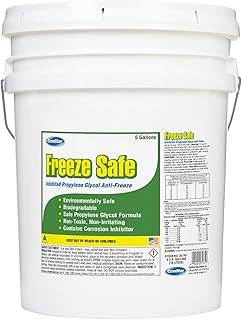
Best for: a versatile option for hydronic systems and seasonal properties requiring reliable burst protection. The formulation supports closed-loop heating and is easy to visually confirm with its blue color for leak detection. The recommended protection reaches down to -80°F.
Limitation: Not as low a temperature protection as some other options; plan protection level around local climate and system design.
Buying Guide: Glycol For Boiler Systems
What concentration should I choose?
Concentration directly affects freeze protection and corrosion control. Concentrated fluids (e.g., 95%) are often diluted to a target range (30%–50%) for typical residential systems. Premixed or premix products offer easier handling but may limit dilution flexibility.
How important are corrosion inhibitors?
Corrosion inhibitors protect internal metal surfaces and extend system life. If your boiler or radiators use susceptible alloys, choose products explicitly labeled with corrosion inhibitors and compatible with the system materials.
Is color important for maintenance?
Color coding aids leak detection and maintenance. Clear fluids help visibility of leaks, while colored fluids (blue, pink) provide quick visual cues during inspections.
Which fluids are best for specific systems?
- Residential hydronic boilers: balanced combinations of freeze protection and corrosion inhibitors are ideal.
- Aqua-Hot or Hydro-Hot setups: formulas offering very low temperature protection may be preferred.
- Seasonal or RV and marine applications: color visibility and flexible dilution support easier winterization.
What are common cautions?
Always follow manufacturer dilution guidelines. Avoid mixing fluids that are not designed to be compatible. Verify that seals, gaskets, and pump materials are compatible with the glycol type.
Frequently Asked Questions
- What is glycol used for in boiler systems? Glycol acts as an antifreeze and heat-transfer fluid, preventing freezing and providing corrosion protection in closed-loop systems.
- How do I know the right dilution? Check the system design temperature and the glycol product’s recommended dilution range; use a hydronic mixture calculator if available.
- Can I mix different glycol brands? Mixing is not recommended unless the manufacturer approves it for your specific system.
- Why is a clear glycol option useful? Clear glycol helps you see leaks quickly during inspections, aiding preventive maintenance.
- What maintenance should I perform with glycol? Regularly test the concentration, inspect for leaks, and replace glycol according to your system’s maintenance schedule.
- Is there a difference between blue and pink glycol? Color is mainly for identification; ensure the product meets your system’s compatibility and protection needs.