
When selecting a gas pilot safety valve, consider compatibility with your system, connection size, and valve type. This guide highlights five relevant products that address common safety and control needs for gas-fired appliances. It helps buyers choose the right valve for replacement, upgrade, or retrofit, with clear indications of who each product is best for and potential limitations.
Summary table of selected products:
- Best overall compatibility — Robertshaw TS11K-4521-1-0 Safety Valve Replacement
- Best for Robertshaw systems — TS11K-4511-1-0 Compatible with Robertshaw Gas Pilot Safety Valve 4610800000
- Best modular option — ROBERTSHAW GAS SAFETY VALVE, TSJ pilot inlet-out 3/16″ (1720-005)
- Best for Baso systems — For Baso Gas Automatic Pilot Valve H15HR-2 Safety
- Best thermocouple-operated option — White Rodgers 764-742 Thermocouple Operated Gas Pilot Safety/Gas Fireplace Valve
Best Overall Compatibility: Robertshaw TS11K-4521-1-0 Safety Valve Replacement

The TS11K-4521-1-0 Safety Valve Replacement from Robertshaw is positioned for straightforward substitutions in compatible gas pilot systems. Best for homeowners seeking a direct replacement part with minimal fitment risk, this valve aims to maintain system safety and consistent pilot operation. Use this when the existing valve closely matches TS11K family specifications. A potential limitation is that exact fitment depends on matching model numbers and inlet/outlet arrangements.
Best for Robertshaw Systems: TS11K-4511-1-0

TS11K-4511-1-0 is listed as a compatible unit for Robertshaw gas pilot safety valves, including variants like 4610800000. It features a 1/2″ NPT inlet and outlet and a 1/4″ CCT pilot connection. This option is better for systems already using TS11K series parts and where the exact valve body and magnet match the existing setup. Best for Robertshaw-driven installations seeking a reliable, similar form factor. Caution: verify 1/2″ NPT and 1/4″ pilot connections align with your furnace or fireplace configuration to avoid incompatibility.
Robertshaw TSJ Pilot Inlet-Out: 3/16″ Body, 1/4″ (1720-005)

This model emphasizes a TSJ designation with a 3/16″ pilot inlet-out and a 1/4″ body connection. It suits installations requiring a modest inlet size and a compact valve profile. Best for older or custom setups where pilot tubing dimensions differ from standard 1/4″ valve bodies. Limitation to note: not all 1/4″ body configurations will accept a 3/16″ pilot inlet without adapter or modification.
Baso System: For Baso Gas Automatic Pilot Valve H15HR-2

The H15HR-2 safety valve is described as a Baso-compatible automatic pilot valve. This option may be appropriate for Baso-brand systems or compatible retrofit projects where the valve is designed to control the gas pilot with automatic safety features. Best for Baso-equipped units or when replacing a Baso-style valve. A potential limitation is that cross-compatibility with non-Baso systems may require adapters or additional components.
White Rodgers 764-742 Thermocouple Operated Valve
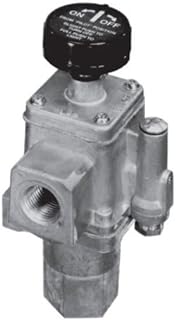
This model is a thermocouple-operated gas pilot safety valve from White-Rodgers. It is best for systems designed to be controlled via a thermocouple signal (20-30 mV). The 1/2″ x 1/2″ connections align with standard piping found in many gas fireplaces and heaters. Choose this if your setup relies on a thermocouple signal for pilot safety. Limitation: compatibility with non-thermocouple ignition systems may be limited.
Buying Guide
What to consider when choosing a gas pilot safety valve:
- : Confirm valve model numbers and connection sizes (inlet/outlet, pilot line) match your current system. Some valves are direct replacements, others require adapters.
- : Decide between 1/4″ pilot lines or smaller 3/16″ options. Ensure tubing and fittings align with your gas log set, furnace, or fireplace.
- : Thermocouple-operated valves rely on thermocouple generated millivolts, while other valves use electronic or mechanical actuation. Pick based on your ignition system design.
- : Look for durable, corrosion-resistant materials suitable for indoor heat and potential exposure to moisture or dust.
- : While some listings don’t state certifications, prioritize valves designed for home heating equipment to ensure safe operation and compatibility with typical venting and clearance requirements.
- : Identify whether you need a compact valve for tight spaces or a larger unit for a retrofit. Some valves are better for standard fireplaces, others for furnaces with specific clearance.
- : Consider how easy it is to inspect and service the valve in place, including access to the pilot line and shutoff features.
FAQ
- What is a gas pilot safety valve? A valve that controls gas flow to the pilot light and provides a safety shutoff if the pilot fails to ignite or stay lit.
- How do I know which valve fits my system? Check the existing valve’s model number, inlet/outlet sizes, and pilot connection; match these with the replacement part’s specifications.
- Are thermocouple-operated valves safer? They are designed to respond to a thermocouple signal and are common in older or specific fireplace systems; ensure your ignition setup matches the valve type.
- Can I mix brands? Mixing brands is possible if the specifications align (dimensions, connections, pilot size). Verify compatibility with your appliance manual or a professional.
- What maintenance is required? Regular inspection of pilot alignment, connections, and any signs of leakage or corrosion helps maintain safety and performance.
- Do these valves require professional installation? Installation can involve gas lines and ignition wiring; professional installation is recommended if you are not experienced with gas work.