
Answering the common question, ventless garage gas heaters provide quick, direct heat for spaces like garages, barns, and workshops without ductwork. This guide compares top options for natural gas or propane, highlighting best uses, installation needs, and practical trade-offs. Ideal buyers include DIY garage renovators, workshop owners, and contractors seeking fast space heating with simple setup.
| Product | Fuel | BTU | Best For |
|---|---|---|---|
| Mr. Heater 30,000 BTU Vent Free Blue Flame Natural Gas Heater | Natural Gas | 30,000 | Medium garages up to 1,000 sq ft |
| Mr. Heater F260550 Big Maxx MHU50NG | Natural Gas | 50,000 | Large garages up to ~1,667 sq ft |
| ProCom Dual Fuel Ventless Blue Flame Garage Heater MNSD300TGA | Natural Gas or Propane | 30,000 | Flexible fuel setups, thermostatic control |
| Mr. Heater 30,000 BTU Vent Free Blue Flame Propane Heater | Propane | 30,000 | Small to mid-size spaces needing propane option |
| Mr. Heater F260560 Big Maxx MHU80NG | Natural Gas | 80,000 | Large workshops or multi-car garages |
Mr. Heater 30,000 BTU Vent Free Blue Flame Natural Gas Heater
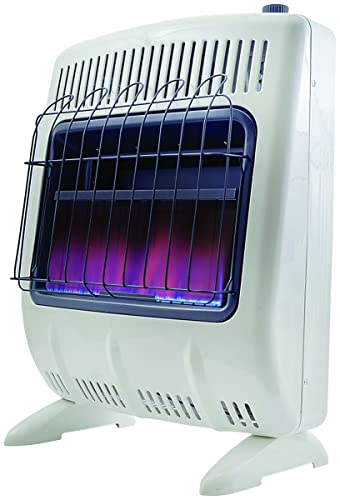
The unit delivers 30,000 BTU per hour and heats up to about 1,000 square feet, making it a solid middle-ground option. It uses a battery-operated electronic ignition (battery included) for easy startup. Best for mid-sized garages or workshops that run on natural gas. Caution: vent-free heating adds humidity and requires proper room ventilation per safety guidelines.
Mr. Heater F260550 Big Maxx MHU50NG Natural Gas Unit Heater

This ceiling-mounted forced-air unit heater provides 50,000 BTUs and can heat up to roughly 1,667 square feet, suitable for larger garages or barns. It supports standard 24-volt thermostats or newer Wi-Fi enabled thermostats (sold separately). Best for large spaces needing robust, centralized heating. Limitation: installation requires appropriate mounting and electrical compatibility.
ProCom Dual Fuel Ventless Blue Flame Garage Heater – 30,000 BTU (MNSD300TGA)
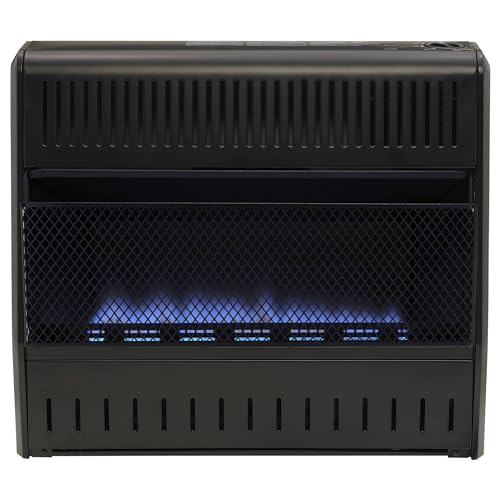
Dual fuel technology lets you run on natural gas or propane. It delivers 30,000 BTUs with thermostatic control and high efficiency. Best for garages or workshops that require flexibility in fuel source. Choose this if you want to switch fuels easily. Caution: ensure proper fuel type is selected and vent-free operation is suitable for your space and local codes.
Mr. Heater 30,000 BTU Vent Free Blue Flame Propane Heater

Propane version with 30,000 BTU output heats up to 1,000 square feet and uses a AAA battery for ignition. Best for LP-favored setups or spaces where propane is the preferred fuel source. Limitation: propane availability and cylinder management should be planned for continuous use. Consider this for smaller garages needing reliable LP heat.
Mr. Heater F260560 Big Maxx MHU80NG Natural Gas Unit Heater
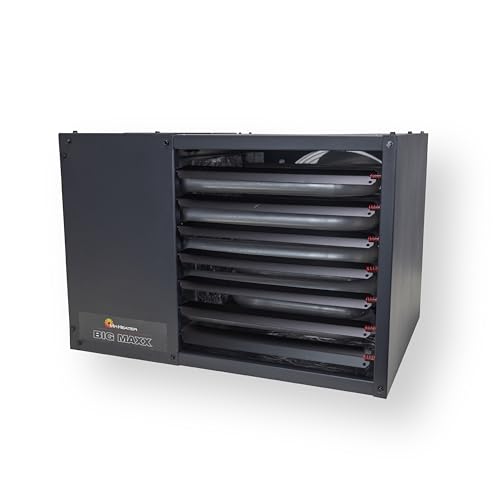
This high-capacity model delivers 80,000 BTUs for very large spaces, including bigger garages or multiple vehicles. It’s designed for natural gas and includes a conversion kit for flexibility if needed. Best for commercial-like garages or workshops requiring rapid, wide-area heating. Limitation: higher BTU output may require careful space planning and vent-free considerations.
Buying Guide
Key questions to guide your purchase:
- What space am I heating? Choose higher BTU for larger areas and look for models designed for up to your square footage.
- What fuel is available? Natural gas offers steady supply in many properties; propane is common for detached spaces or homes without gas service.
- Do I need thermostatic control? Thermostats help maintain steady comfort and save energy; some models include built-in controls, others require separate thermostats.
- What installation considerations apply? Vent-free heaters require proper clearance, ventilation awareness, and, for some models, wall mounting or ceiling mounting.
- Is dual-fuel flexibility important? A dual-fuel unit lets you switch between natural gas and propane, providing reliability in varying scenarios.
- What safety features matter? Look for flame supervision, oxygen depletion sensors, and clearances recommended by the manufacturer.
Practical tips
- Place heaters away from flammable materials and ensure adequate clearance around the unit.
- Regularly inspect ignition components, vents, and connections for corrosion or leaks.
- Keep a fire extinguisher accessible and install carbon monoxide detectors if your space lacks proper ventilation.
Install considerations by space type
- Detached garages: A larger BTU unit provides faster warming; consider ceiling or wall-mount units to save floor space.
- Wide workshops: Split heating zones with multiple units can maintain even temperature and reduce hot spots.
- Small garages or sheds: A compact 10,000–30,000 BTU model can efficiently handle the area with lower energy use.
FAQ
- Q: Are ventless heaters safe for enclosed garages? A: When installed and ventilated according to the manufacturer’s guidelines and local codes, ventless units are designed for enclosed spaces. Always follow safety instructions and ensure proper clearances.
- Q: Can I use these heaters year-round? A: They are primarily designed for heating; use during cold seasons and follow local regulations regarding operation in specific months or weather conditions.
- Q: Do these units require electricity? A: Most models use electricity for ignition or thermostatic control; some are battery-operated and others require a standard power source.
- Q: Can I install a dual-fuel heater in a garage? A: Yes, dual-fuel models support natural gas or propane, offering flexibility depending on fuel availability.
- Q: Do ventless heaters need venting? A: Ventless does not require a vent for operation, but always adhere to safety standards, room size, and manufacturer guidance.
- Q: Which heater is best for a large 2-car garage? A: For larger spaces, consider an 80,000 BTU unit or multiple units designed for wide coverage; the Big Maxx 80NG is a strong option in this category.