
If you need quick, powerful heat for open garages, workshops, job sites, or outdoor-adjacent spaces, a propane-powered forced-air heater is often the most effective option. This guide compares five top choices, highlighting who each model is best for and practical considerations like runtime and safety features. The selections aim to help contractors, DIY enthusiasts, and homeowners pick a heater that fits their space and fuel comfort level.
The table below summarizes five strong options to consider. It includes the heater name, approximate BTU range, best-use scenario, and a quick note on standout strengths.
| Product | BTU Range | Best For | Why It Stands Out |
|---|---|---|---|
| Mr. Heater MH60QFAV | 30,000–60,000 | Medium-to-large garages, well-ventilated spaces | QBT technology for quieter operation; long runtime on larger tanks |
| Flame King 60,000 BTU | 60,000 | Outdoor patios, well-ventilated garages, job sites | Integrated safety features and auto ignition for quick heat |
| Anrain 150,000 BTU | 120,000–150,000 | Very large spaces, professional job sites | High heat output with extended runtime and strong safety package |
| Mr. Heater 125,000 BTU | 125,000 | Large workshops, barns, construction spaces | Heavy-duty build with long hose and regulator included |
| Remington 60,000 BTU | 60,000 | Garages, small-to-medium shops | Solid steel construction with adjustable heat and safety features |
Mr. Heater MH60QFAV 60,000 BTU Portable Heater

BTU: 60,000 on high; 30,000 on low. This model provides a wide range to temper mid-sized spaces. It uses QBT Technology to run quieter than typical propane forced-air heaters, making it favorable for user comfort in semi-enclosed areas. Best for contractors who need flexible heat output and extended runtime on larger propane tanks.
Best for: Medium-to-large workshops or garages where noise needs to be minimized. Choose this if you want a balance of power and quieter operation. Limitation: Runtime on low can be lengthy but higher settings will consume fuel faster.
Flame King 60,000 BTU Portable Propane Heater

BTU: 60,000. This unit is designed for outdoor-friendly spaces and well-ventilated areas. Features include a built-in safety shutoff and a fire detection system, along with a simple auto-piezo ignition for quick heat. Best for: Outdoor patios, garages with good airflow, and job sites where a straightforward heat option is needed. Limitation: Not ideal for enclosed spaces without proper ventilation.
Anrain 150,000 BTU Forced Air Propane Heater

BTU: 120,000–150,000; supports heating large areas up to around 4,305 sq ft. This torpedo-style heater is designed for extended operation with an 11-foot hose and regulator, facilitating connection to a propane tank and long runtimes in low power. Best for: Large workshops, barns, and expansive job sites requiring sustained heat. Limitation: Higher heat output comes with greater fuel consumption and potential noise considerations.
Mr. Heater 125,000 BTU Forced Air Heater

BTU: 125,000; includes a 10 ft hose and regulator. Suitable for large spaces like garages, barns, and construction zones. It is built as a robust option for sustained heat delivery and is designed to handle demanding environments. Best for: Large commercial spaces or professional job sites needing high heat output. Limitation: Higher BTU models may require more fuel and careful venting planning in confined spaces.
Mr. Heater Portable Propane Forced Air Heater

BTU: 125,000 per hour; heats up to 3,125 sq ft and operates up to 11.5 hours. This model is a strong choice for mid-to-large spaces where extended operation is crucial. Best for: Busier workshops or temporary spaces requiring durable heat delivery. Limitation: Larger models may need a steady fuel source and proper clearance from combustibles.
Reddy Heater Hybrid Cordless 60,000 BTU
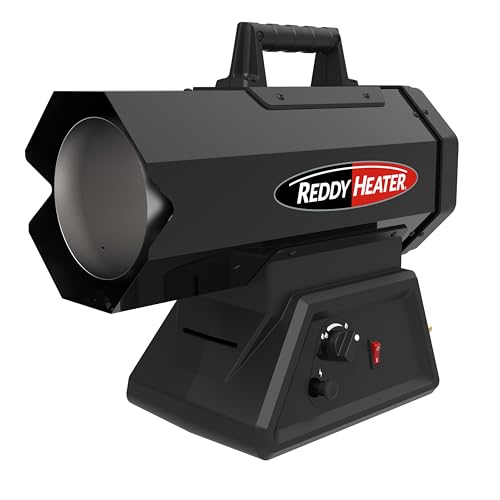
BTU: Up to 60,000; cordless compatibility via select batteries, enabling flexible setup for large spaces up to 1,500 sq ft. Best for: Job sites and garages where power access is variable and mobility matters. Limitation: Battery compatibility and availability can affect operation in some environments.
Buying Guide
What size space do you need to heat? For spaces under 1,500 sq ft, a 60,000 BTU model can cover effectively, while larger spaces may require 120,000–150,000 BTU units. Consider ventilation and safety features such as tip-over shutoff, flame-out protection, and automatic shutoffs. If you need quiet operation, look for models with anti-noise features like QBT. For outdoor use or uninsulated spaces, ensure adequate airflow and clearance from combustibles.
Fuel and runtime matter. Heaters with larger tanks or efficient burn control offer longer runtimes between fills. If you’re operating on a job site, consider models that include hoses and regulators or offer easy hose compatibility. Cordless or battery-assisted options add flexibility when electricity is a limiting factor, but they can limit peak BTU output.
Safety and build quality should align with your environment. Steel construction supports durability in tough workspaces. Look for built-in safety systems, such as tilt shutoff, high-temperature limits, and gas-control features to reduce risk during use. Always use in well-ventilated areas and follow manufacturer recommendations for clearances and setup.
FAQ
- What space size is best for a 60,000 BTU heater? – Suitable for mid-to-large garages or workshops, typically up to around 1,200–1,500 sq ft depending on insulation and airflow.
- Do these heaters require electricity? – Most models operate on propane and do not require continuous electricity, though some may have electronic ignition or safety shutoffs that use limited power.
- Is 125,000 BTU too powerful for a small shop? – Yes, for small spaces you may overheat quickly; choose a lower BTU model or ensure proper ventilation and zoning to avoid waste and heat imbalance.
- Are cordless/heated battery options effective for large spaces? – They offer mobility and flexibility but may not deliver sustained high BTU as consistently as corded propane models; use in appropriate settings.
- What safety features should I look for? – Tilt shutoff, flame-out protection, overheat protection, and a robust regulator/hoses designed for outdoor use are key safety considerations.
- Can I run these indoors? – Only in well-ventilated spaces with appropriate exhaust or ventilation; always follow local codes and manufacturer guidelines.